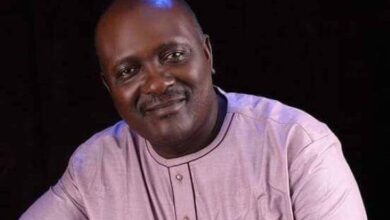
The Ugwumba Leadership Centre for Africa has urged the Federal Government to publish the names of expected beneficiaries of the subsidy removal palliatives before disbursing funds.
Mr Uche Nwosu, the President of the centre, made the call during a virtual news conference on Tuesday in Abuja.




Nwosu said that there was the need for the government to publish the names of the expected beneficiaries of the palliatives before the disbursements for transparency and accountability.
“There are a lot of things that will not be acceptable by majority of Nigerians as it was during the COVID-19 palliatives disbursements.
“What the president needs to do now is to form a committee made up of people that have integrity and that are ready to serve.
“The committee members should be from the Nigeria Labour Congress, farmers association, traders and market women associationa, studentsand traditional and religious leaders.
“The committee will be responsible for identification and compilation of beneficiaries from all wards and local government areas.
”The names pf the beneficiaries must be published before the disbursements and not after. This will members of the society and the immediate communities the opportunity to confirm the names on the list before the disbursements to curb funds diversions and fraud,” he said.
He also urged the federal government not to rely on the Ministry of Humanitarian Affairs, Disaster Management and Social Development.
Nwosu further urged the federal government to also partner with Non-governmental Organisations, Civil Societies groups for technical advice and monitoring of the entire process to ensure a transparent and accountable.
He adviced the government to make plans and intensify efforts to introduce other long-term palliatives to cushion the effects of the subsidy removal.
Nwosu also urged Nigerians not to politicise every government effort towards the citizenry but to be patient and cooperate with the government to ensure a people-centric government.
The News Agency of Nigeria (NAN) reports that the Senate on July 13 at plenary approved the request of president Bola Tinubu for a N500billion palliative to cushion the effect of fuel subsidy removal.
Consequently the upper chamber approved the sum after amending the 2022 supplementary Appropriation Act to accommodate N500 billion for provision of palliatives for Nigerians, following the fuel subsidy removal by the Federal Government.
Accordingly, the President of the Senate, Godswill Akpabio, during the plenary session, read the letter on the floor of the apex legislative Assembly and thereafter amended it’s rules to consider and approved the request the same day.
President had clarified in the letter, that the request became imperative, to enable the government to provide palliatives for Nigerians to cushion the effects of the removal of fuel subsidy.
The letter reads, “I write to request for the amendment of the 2022 supplementary appropriation act. The request became necessary among others things, to source for funds to provide necessary palliatives to mitigate the effects of the removal of fuel subsidy on Nigerians.
“Thus, the sum of N500 billion only has been extracted from the 2022 supplementary appropriation act of N819 billion, 536 million, 937 thousand 803 naira only for the provisions of palliatives for Nigerians to cushion the effects of subsidy removal”, Tinubu said.
Tinubu implored the Senate to give his request “expeditious” consideration and approval to enable his administration to provide palliatives for Nigerians.
President said the request was to scale up the national social safety net programme.
He assured that the federal government will transfer the sum of N8,000 monthly to 12 million poor and low-income households for six months.
He said the money would be transferred directly to identified beneficiaries’ accounts.