

Jannah Theme License is not validated, Go to the theme options page to validate the license, You need a single license for each domain name.
BRAND REPORTBUSINESSLATEST NEWSNEWS

National Single Window at Apapa: Trade Reform in Motion, Friction in Transition

A Digital Fix for a Structural Problem

National Single Window at Apapa: Trade Reform in Motion, Friction in Transition
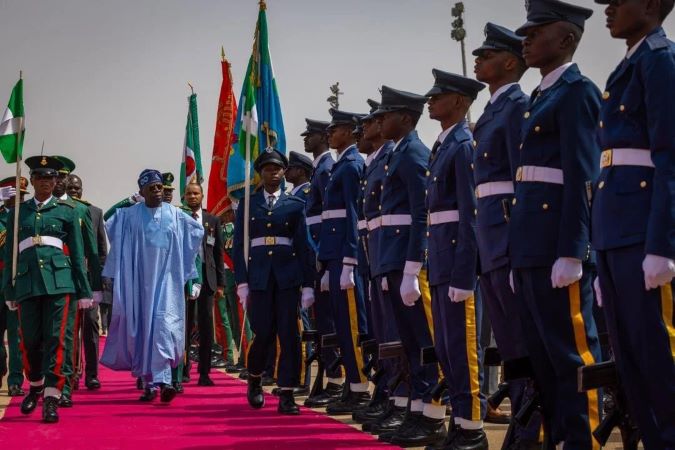
Wale Edun, the minister of finance and coordinating minister of the economy, speaking at the launch of the National Single Window

Nigeria’s long-promised port reform is no longer theoretical. At Apapa—the country’s busiest maritime gateway—the National Single Window (NSW) has moved from policy aspiration to operational reality, albeit with the familiar turbulence of a system in transition.

A joint assessment by the Nigeria Customs Service, Nigerian Revenue Service and Presidential Enabling Business Environment Council underscores both the promise and the growing pains of a platform designed to rewire Nigeria’s trade architecture.

A Digital Fix for a Structural Problem

For decades, Nigeria’s ports have been weighed down by bureaucratic duplication, fragmented agency processes and costly delays. The NSW seeks to collapse this complexity into a single digital interface—where importers, exporters and regulators submit, process and track documentation through one unified system.

It is, in essence, an attempt to replace a labyrinth with a dashboard.

Backed by the reform agenda of Bola Tinubu, the platform aims to eliminate the inefficiencies that have historically cost the economy billions annually in lost trade value, leakages and congestion-induced costs.

Early Glitches, Strategic Patience

As expected with large-scale digital migrations, the rollout has not been seamless. Integration challenges—particularly involving key regulatory agencies such as National Agency for Food and Drug Administration and Control and Standards Organisation of Nigeria—have slowed cargo clearance, leaving over 10,000 containers stranded at various stages of processing.

In response, authorities have opted for a pragmatic intervention: waiving demurrage charges on affected consignments. The move, championed by NRS Chairman Zacch Adedeji, is both a relief mechanism for traders and a tacit acknowledgment of transitional inefficiencies.

Yet officials insist the disruption is partial, not systemic. A significant proportion of transactions, they argue, are already being processed seamlessly—a sign that the platform’s core architecture is holding.

The Economics of Efficiency

The stakes are considerable. Nigeria’s ports are not merely logistics nodes; they are fiscal engines and gateways to regional trade competitiveness.

The NSW promises:

  • Reduced cargo dwell time—potentially to 3–4 days from current extended timelines
  • Lower transaction costs through elimination of duplicate documentation
  • Improved transparency and revenue capture via digital tracking
  • Enhanced coordination among agencies operating within the port ecosystem

If realised, these gains could reposition Nigeria within global supply chains and unlock an estimated multi-billion-dollar efficiency dividend annually.

Apapa as Testing Ground

Apapa’s role as the pilot environment is deliberate. As Nigeria’s busiest port corridor, its congestion, complexity and institutional density make it the ultimate stress test for reform.

Here, the success—or failure—of the NSW will be most visible.

Customs Comptroller-General Bashir Adeniyi has framed the current phase as iterative: assess, adjust, stabilise. The language reflects lessons from previous digital reforms—many of which faltered at the execution stage.

This time, officials point to stronger political backing and improved inter-agency coordination as differentiators.

Reform Beyond Technology

The NSW is not merely a technological upgrade; it is an institutional reset. Its success depends as much on behavioural change—among regulators, operators and users—as on software performance.

PEBEC’s leadership emphasises this broader context: aligning Nigeria’s trade processes with global best practices, reducing friction for businesses, and embedding accountability within the system.

The ambition is clear. The challenge is equally so.

BRANDECONOMY Insight

  1. Reform vs Reality: Execution Is Everything
    Nigeria has attempted single-window systems before. What distinguishes this iteration is political will. What will define it is execution discipline.
  2. Apapa Bottlenecks as National Risk
    Delays at Apapa are not localised—they ripple across the entire economy, affecting manufacturing supply chains, inflation and export competitiveness.
  3. Demurrage Waiver: Relief or Signal?
    The waiver on over 10,000 containers provides short-term relief but also signals the scale of disruption. Sustained efficiency gains must quickly follow to restore confidence.
  4. Blue Economy Unlock Potential
    A functional National Single Window could catalyse Nigeria’s broader blue economy—enhancing port throughput, attracting maritime investment and strengthening regional trade leadership.
  5. Digital Trade Is the New Competitive Frontier
    Countries that streamline trade processes win. The NSW positions Nigeria to compete—but only if system uptime, integration and user adoption are sustained.

Back to top button