Dangote, PTML and WACT Back New Investment Drive for Nigeria’s Blue Economy
Fisheries and Logistics Move to Centre Stage

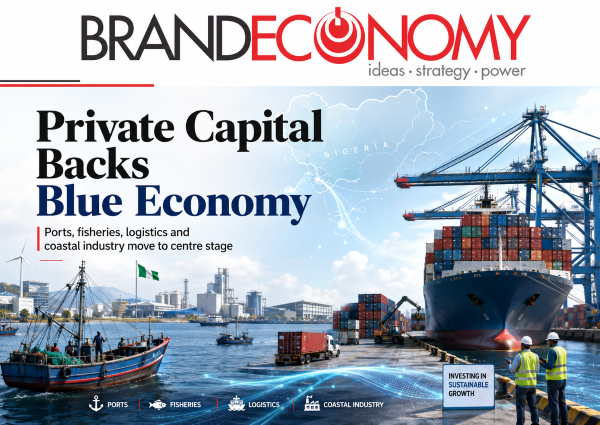 Operators at a Lagos stakeholders’ forum have pledged renewed investment in Nigeria’s marine and blue economy, arguing that the country’s next growth frontier will be determined less by the abundance of its coastline and more by the quality of infrastructure, policy coordination, finance and execution.
Nigeria’s blue economy has reached the point where policy ambition must give way to projects, capital and measurable commercial outcomes.
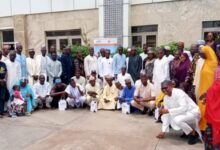



That was the message from private-sector operators at the Federal Ministry of Marine and Blue Economy’s Second Quarter 2026 Citizens and Stakeholders’ Engagement in Lagos, where industry leaders backed government efforts to modernise ports, improve trade facilitation and build a more competitive maritime economy.
The forum, themed “From Policy to Action: Mobilising Sub-National Governments for Effective Implementation of Nigeria’s National Policy on Marine and Blue Economy,” brought together government officials, state representatives, investors, operators, diplomats, academics and development partners. Its central purpose was clear: convert Nigeria’s marine assets into jobs, exports, food security, industrial capacity and sustainable growth.
For decades, Nigeria’s coastal and marine resources have been discussed mainly through the prism of oil, ports and shipping. The blue economy agenda offers a broader proposition. It includes maritime transport, fisheries, aquaculture, shipbuilding, coastal tourism, renewable energy, marine biotechnology, logistics, ports, inland waterways, digital maritime services and climate-resilient coastal development.
The opportunity is considerable. So is the implementation challenge.
From Policy Documents to Investible Projects
President and Chief Executive of Dangote Industries Limited, Aliko Dangote, represented by the Managing Director of Dangote Port Operations, Simeon Akin Omole, argued that Nigeria must now move beyond policy announcements and focus on coordinated execution.
His message was directed at the core weakness that has slowed many infrastructure ambitions: Nigeria has resources, market scale and coastline, but still struggles to create a predictable investment environment around them.
Dangote identified infrastructure gaps, fragmented regulation and limited long-term financing as some of the constraints preventing the sector from fully realising its potential. He maintained that the challenge is not a shortage of opportunities, but the ability to turn those opportunities into bankable projects.
That distinction matters.
A modern port requires more than a quay wall. It needs reliable road and rail evacuation routes, digital customs systems, predictable concession structures, deep-water capacity, safety standards, cargo-processing efficiency and commercial certainty.
A fisheries value chain requires more than water. It needs hatcheries, feed, cold-chain logistics, processing plants, quality assurance, export certification, financing and market access.
A coastal tourism strategy requires more than beaches. It needs security, destination branding, transport, hospitality investment, environmental protection and community participation.
The blue economy succeeds only when these elements work together.
Ports as Industrial Platforms
Dangote called for deeper public-private partnerships, policy consistency, modern port infrastructure, smart-port systems and coastal industrial clusters.
That is a strategic shift from thinking about ports merely as points of cargo entry and exit.
The most competitive ports are not only terminals. They are industrial ecosystems.
They connect manufacturers to global supply chains. They serve logistics parks, free zones, warehouses, agro-processing clusters, ship-repair facilities, cold stores, digital trade platforms and export-oriented businesses.
Nigeria’s ambition to become a preferred maritime gateway for West and Central Africa will depend on whether its ports can reduce dwell time, improve reliability, accommodate larger vessels and compete with regional alternatives in Togo, Ghana, Benin and Côte d’Ivoire.
The Federal Government has pointed to improvement in global port-performance rankings and ongoing plans for new deep seaports in several coastal states. But the decisive measure will be whether traders, shipping lines and investors experience lower costs, faster turnaround and more reliable cargo movement.
PTML’s Expansion Signal
Port and Terminal Multiservices Limited, PTML, represented at the forum by Managing Director Ascanio Russo, reinforced the investment case with a practical example.
Russo said terminal operators had invested more than $1 billion since the port-concession era began, while PTML alone had committed more than $250 million to terminal development. He said the company was expanding its facilities to handle the world’s largest Container/Roll-on Roll-off vessels, a move expected to improve Nigeria’s appeal as a regional maritime and trans-shipment hub.
That strategy has since been sharpened with PTML’s announced plan to invest a further $50 million in expanding berthing capacity and acquiring modern equipment at Tin Can Island Port Complex in Lagos. The company says the upgrade is designed to accommodate next-generation Con-Ro vessels directly in Lagos, improving cargo-handling efficiency and reinforcing Nigeria’s competitiveness for international shipping lines.
The commercial significance is considerable.
Larger vessels can reduce unit shipping costs, create direct-call opportunities and improve cargo throughput. But port-side investment must be matched by improved hinterland logistics. A terminal capable of handling larger ships will still face constraints if cargo evacuation is slowed by road congestion, poor rail links, weak customs integration or inadequate inland dry-port capacity.
Nigeria’s maritime competitiveness will therefore be determined by the full logistics chain, not terminal infrastructure alone.
WACT and the Case for Operational Excellence
Government and Public Relations Manager of West Africa Container Terminal, WACT, Innocent Ogbuji, said the ministry’s support and ongoing modernisation efforts were strengthening investor confidence.
WACT, located in Onne Port within the Oil and Gas Free Zone, has become a major example of the role private terminal operators can play in improving efficiency, deploying equipment and strengthening trade capacity in Nigeria’s eastern corridor.
The terminal has invested in infrastructure, technology, equipment and workforce development since beginning operations in 2006. Its recently launched $115 million upgrade programme includes yard expansion, modern handling equipment and a new administrative complex, signalling the scale of capital required to align Nigerian terminals with global standards.
Ogbuji said WACT would continue supporting operational improvements and broader blue-economy initiatives.
The message from operators is increasingly consistent: private capital is willing to participate, but it needs a stable regulatory environment, coordinated government action and transparent investment rules.
Fisheries: Nigeria’s Undervalued Blue-Economy Opportunity
Beyond ports, Dangote identified fisheries and aquaculture as a major opportunity for employment, food security and foreign-exchange conservation.
Nigeria remains a major consumer of fish, yet domestic output still falls short of demand. This creates a strong case for investment in aquaculture, hatcheries, feed mills, processing plants, cold storage, refrigerated transport and export infrastructure.
Dangote argued that a stronger fisheries value chain could reduce imports, create jobs and build new coastal and inland-waterway enterprises.
This is particularly important because the blue economy must not become a port-only agenda.
A truly inclusive marine economy should create opportunities for coastal communities, women entrepreneurs, fishers, processors, logistics providers, marine technicians, tourism operators, engineers, digital-service firms and young people entering new maritime professions.
The National Policy on Marine and Blue Economy reportedly targets three million jobs within its first four years, annual sector growth of seven per cent and significant youth participation. These targets are ambitious and will require coordinated project pipelines, financing mechanisms and state-level implementation capacity.
Why States Matter
One of the strongest messages from the Lagos engagement was the role of sub-national governments.
Many of Nigeria’s coastal assets, inland waterways, fishing communities, tourism sites and logistics corridors sit within state jurisdictions. Federal policy can provide the framework, but state governments control key elements of land use, local infrastructure, planning approvals, environmental coordination and community engagement.
This means the blue economy cannot be centrally managed from Abuja alone.
Coastal states must develop their own implementation roadmaps. They need marine-economy data, investment maps, shoreline protection plans, industrial-cluster strategies, fisheries regulations, safety standards and partnerships with private investors.
The strongest states will be those that treat their coastline not as a boundary, but as an economic platform.
Market Implications
The private-sector pledges point towards a potential new investment cycle across ports, logistics, fisheries, cold-chain infrastructure, coastal industrial zones, ship services and maritime technology.
For investors, the most attractive opportunities may not always be the largest projects. They may lie in the supporting ecosystem:
- Warehousing and inland logistics
- Reefer and cold-chain facilities
- Port technology and digital customs solutions
- Marine insurance and trade finance
- Ship repair, fabrication and maritime training
- Aquaculture feed, hatchery and processing businesses
- Coastal renewable-energy systems
- Industrial parks linked to ports and free zones
The central risk remains execution.
Investors will watch for consistency in port policy, concession frameworks, customs reform, security, infrastructure protection, foreign-exchange liquidity, environmental standards and the speed at which public agencies approve projects.
The blue economy will attract capital when Nigeria moves from broad opportunity statements to investible, well-structured transactions.
Brand Implications
For Nigeria, the blue economy is also a national-brand opportunity.
A more efficient maritime system can reposition the country from being perceived largely as a difficult import destination to being seen as a regional logistics, processing and trade hub.
For companies such as Dangote Ports Operations, PTML and WACT, investment in port capacity reinforces a brand position around reliability, scale, modernisation and long-term confidence in Nigeria’s economic potential.
For government, the brand challenge is larger.
Nigeria must prove that it can create an investment environment where policy survives beyond announcements, infrastructure projects are completed and private capital is protected by predictable rules.
The most powerful national branding is not advertising.
It is execution.
Investor Relevance
Investors should treat the blue economy as a long-term infrastructure and trade theme rather than a short-term policy headline.
Port investment can generate returns through higher cargo throughput, handling efficiency, logistics services and trade-linked demand. Fisheries and aquaculture offer consumer-market potential, particularly where operators can solve the cold-chain and processing gaps. Digital trade and maritime technology present emerging opportunities around tracking, payments, compliance and port management.
However, investors must assess project economics carefully.
The strongest projects will have clear demand, realistic traffic assumptions, sound concessions, resilient logistics links, credible sponsors, environmental safeguards and predictable regulatory arrangements.
BRANDECONOMY Insight
Nigeria’s marine and blue economy will not be unlocked by its coastline alone.
It will be unlocked by capital, coordination and credibility.
The private-sector commitment expressed in Lagos is encouraging because it shifts the discussion from government aspiration to commercial participation. But the true test will be whether operators can deploy capital into ports, fisheries, logistics, technology and coastal infrastructure without being undermined by policy uncertainty, fragmented regulation or weak project execution.
Nigeria’s blue economy is not a side story.
It could become one of the country’s most important routes to trade competitiveness, food security, industrialisation, youth employment and regional influence.
The coastline is already there.
The task now is to build the systems that make it productive.