From B’Odogwu to Africa: Nigeria’s PPP Model Powers $3.1bn AfCFTA Customs Ambition

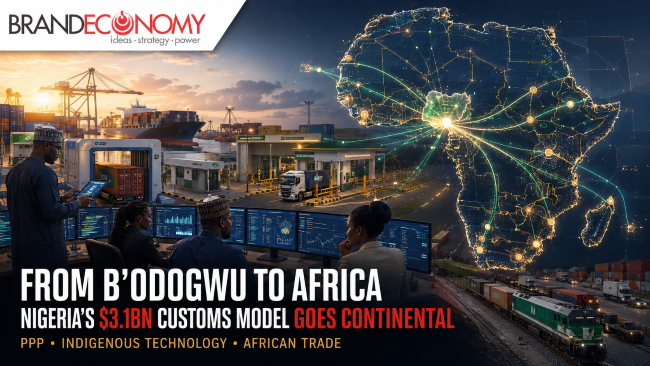 Nigeria’s ambition to become an exporter of technology, institutional expertise and infrastructure solutions has received a significant continental endorsement, with the country’s customs modernisation framework adopted as the template for a proposed $3.1 billion African Continental Free Trade Area customs project.
The Infrastructure Concession Regulatory Commission said the AfCFTA Customs Modernisation Project would draw from Nigeria’s Public-Private Partnership structure and the experience of B’Odogwu, the indigenous Unified Customs Management System being deployed by the Nigeria Customs Service.




The development was disclosed in Abuja on Tuesday through a statement by the ICRC’s Acting Head of Media and Publicity, Ifeanyi Nwoko.
According to the commission, the AfCFTA Secretariat signed the concession agreement with Bergmans Security Consultants and Supplies Limited, the parent company of Trade Modernisation Project Limited—the concessionaire implementing the Nigeria Customs Service Modernisation Project.
The agreement provides for a 20-year concession intended to deploy the modernisation framework across approximately 50 AfCFTA participating countries. If successfully implemented, the platform could support trade administration within a continental market of about 1.3 billion people.
Nigeria exports a system, not merely software
ICRC Director-General, Dr Jobson Ewalefoh, described AfCFTA’s adoption of the Nigerian model as evidence that properly designed and regulated PPPs can produce solutions capable of travelling beyond national borders.
The strategic significance extends beyond the value of the concession. Africa is effectively being invited to adopt a Nigerian-developed trade technology and the public-private delivery architecture behind it.
B’Odogwu was designed and built by Nigerian engineers and other local professionals before being deployed by the NCS as part of its digital transformation. Its elevation to a continental reference point therefore challenges the persistent assumption that sophisticated public infrastructure technology must be imported.
Ewalefoh said early doubts surrounded the capacity of the project’s private-sector proponent to deliver. The progress recorded, he argued, now demonstrates the value of backing indigenous capability when it is supported by sound regulation, institutional commitment and rigorous project structuring.
On August 7, the ICRC director-general undertook a monitoring and compliance visit to the Nigeria Customs Modernisation Project to assess B’Odogwu’s implementation. He said the project benefited from presidential backing, engagement with relevant stakeholders and a structure that placed it among Nigeria’s most consequential PPP-led digital infrastructure initiatives.
He also commended the Comptroller-General of Customs, Bashir Adewale Adeniyi, for sustaining the rollout of B’Odogwu across Customs commands and advancing the wider e-Customs agenda.
The real AfCFTA infrastructure
Tariff liberalisation alone cannot create an integrated African market. Goods must still move through ports, border posts and regulatory systems that are frequently fragmented, paper-heavy and difficult to navigate.
A shared customs architecture could improve the exchange of trade data, strengthen risk management, accelerate cargo clearance and make duty administration more predictable. It could also reduce opportunities for discretionary processes and revenue leakage.
For African manufacturers and exporters, the most important outcome would be lower trade friction. Delays at borders increase inventory costs, disrupt supply chains and make locally produced goods less competitive. Smaller businesses suffer disproportionately because they have limited capacity to absorb demurrage, unofficial charges or prolonged clearance times.
The project could consequently become important digital infrastructure for AfCFTA—provided participating countries achieve genuine interoperability rather than merely installing similar software.
That distinction matters. Customs agencies operate under different laws, tariff structures, currencies, data-protection regimes and institutional capacities. Technology can connect systems, but it cannot independently harmonise policy or resolve political resistance to sharing sensitive trade information.
Market and investor implications
The proposed rollout creates opportunities across cloud infrastructure, data centres, cybersecurity, payment systems, cargo tracking, trade finance, professional services and technical training. Logistics businesses, banks, insurers and fintech companies could benefit from cleaner data and more predictable cross-border transactions.
Investors, however, must examine the concession beyond its headline value. A 20-year, multi-country project carries execution, currency, sovereign, regulatory and cybersecurity risks. Its commercial sustainability will depend on transparent revenue arrangements, enforceable service standards and clearly allocated responsibilities among the AfCFTA Secretariat, national customs administrations and the concessionaire.
Data sovereignty will be particularly sensitive. Participating countries will require clarity on where information is hosted, who can access it, how breaches are handled and whether national authorities retain control over strategic customs data.
Independent performance benchmarks should cover system uptime, clearance time, revenue improvement, user satisfaction, dispute resolution and the cost imposed on traders. Without such measures, digitalisation could reproduce old bureaucracy on a more expensive platform.
PPPs and Nigeria’s infrastructure proposition
Ewalefoh placed the project within a wider portfolio of PPP investments regulated by the ICRC, citing the Lekki Deep Sea Port as another example of private capital supporting infrastructure delivery.
The model aligns with the Federal Government’s ambition to build a $1 trillion economy under the Renewed Hope Development Plan 2026–2030. With public finances constrained, Nigeria increasingly needs private investment to close infrastructure gaps without relying exclusively on sovereign borrowing.
Private financing is not free money: investors require returns, contracts can create contingent liabilities and weakly structured concessions can transfer excessive risk to citizens. The value of PPPs therefore depends on transparent procurement, balanced risk allocation and vigilant regulation throughout the concession lifecycle.
Ewalefoh nevertheless argued that private investment in productive infrastructure can improve public revenue and efficiency while reducing immediate borrowing pressure. He linked the AfCFTA development to his earlier call at the ECOWAS Infrastructure Forum in Abidjan, Côte d’Ivoire, for deeper regional collaboration on PPPs.
He also rejected suggestions that automation necessarily destroys jobs, noting that the Trade Modernisation Project had created opportunities for Nigerian engineers while strengthening customs revenue administration.
Brand implications
B’Odogwu now carries something larger than a technology brand. It carries Nigeria’s reputation for institutional competence.
Successful continental deployment would strengthen the country’s positioning as a source of African-built solutions and could open doors for Nigerian technology, engineering and advisory firms. Failure, prolonged outages or governance controversy would carry an equally continental reputational cost.
The brand promise must therefore rest on performance: faster clearances, simpler processes, secure data, transparent charges and improved trader experience.
BRANDECONOMY Insight
Nigeria should resist treating this agreement as a victory lap. B’Odogwu, being selected as the template is important; becoming the trusted operating backbone of African trade is the harder prize.
The project needs a public implementation scorecard for every participating country, measuring deployment, interoperability, clearance times, revenue outcomes, system reliability, cybersecurity incidents and trader costs.
It should also contain enforceable local-content provisions that train African engineers, build national technical capacity and prevent participating governments from becoming permanently dependent on a closed system.
If B’Odogwu succeeds at scale, Nigeria will have achieved something more valuable than exporting software. It will have exported intellectual property, regulatory know-how and an infrastructure model capable of helping Africa trade with itself.
That is how a national innovation becomes continental economic power.