
Nigeria’s T+1 Settlement Cycle: Capital Market Enters Faster, Leaner Global League

By shortening settlement from two business days to one, Nigeria is not merely accelerating trades; it is signalling a more serious ambition to build a capital market that is faster, safer, more liquid and more attractive to both domestic and foreign investors.
Nigeria’s capital market has taken a major step toward global competitiveness with the formal transition to a T+1 settlement cycle, a reform that will allow eligible trades to be settled one business day after execution.
The change, which became effective on June 1, shortens the settlement timeline from the previous T+2 cycle, under which securities and cash were exchanged two business days after a trade. Under the new framework, investors will gain quicker access to funds and securities, while market institutions will reduce the window of counterparty and settlement risk.




The reform was delivered through coordinated action by key market institutions, including the Securities and Exchange Commission, the Nigerian Exchange Limited, the Central Securities Clearing System Plc, and other players within the financial-market ecosystem.
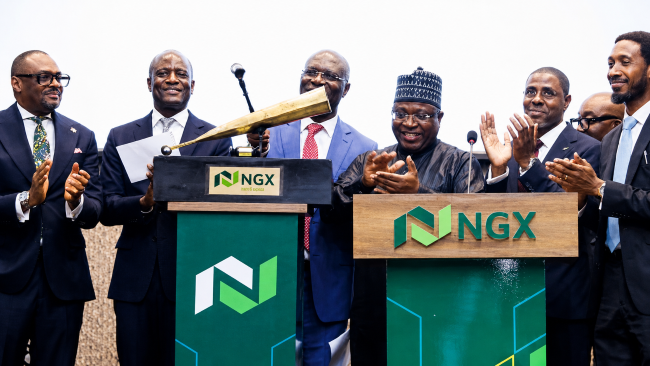
At a transition ceremony organised by CSCS in Lagos under the theme “Advancing Market Efficiency and Global Competitiveness,” the company’s Managing Director, Shehu Shantali, said the migration to T+1 would improve market efficiency, deepen investor confidence and strengthen the resilience of Nigeria’s financial system.
According to him, shorter settlement reduces counterparty risk by limiting the period between trade execution and completion. It also improves liquidity because investors can access and redeploy capital more quickly.
Institutional investors will benefit from faster settlement certainty, while retail investors will enjoy a more efficient and confidence-building market experience.
From Paper Certificates to One-Day Settlement
Shantali described the transition as the latest milestone in a long reform journey.
Before the establishment of CSCS in 1997, Nigeria’s securities market was largely manual. Investors relied on physical share certificates and could wait between three and six months for settlement confirmation.
The launch of CSCS operations in April 1997 changed that structure, reducing settlement time to T+5 and eliminating dependence on physical certificates. Further reforms moved the market to T+3 in March 2000, then to T+2 in November 2025.
The move to T+1 now places Nigeria closer to the operating standards of more advanced markets.
Shantali commended the SEC for regulatory leadership under its Director-General, Dr Emomotimi Agama, and acknowledged the contributions of other market institutions, including NASD Plc and the Lagos Commodities and Futures Exchange.
SEC: A New Era for Nigeria’s Market
Agama described the transition as a defining moment in the history of the Nigerian capital market.
He said T+1 would reduce settlement risk, improve liquidity and strengthen investor confidence. He also noted that major markets such as the United States, Canada and Mexico moved to T+1 in 2024, while India implemented phased reforms between 2022 and 2023.
According to him, markets operating T+1 now account for about 60 per cent of global market capitalisation.
“The T+1 settlement cycle is now live, and with it, a new era has begun,” Agama said.
His point is important. For global investors, market infrastructure matters. Settlement speed, clearing certainty, custody efficiency and post-trade reliability all influence allocation decisions. A market may have attractive equities, but if its settlement infrastructure is slow or uncertain, international capital will apply a risk discount.
T+1 therefore strengthens Nigeria’s investment proposition.
NGX and CSCS Call for Deeper Market Participation
The Chairman of NGX Group, Dr Umaru Kwairanga, described the reform as a step toward building a stronger, more competitive and more accessible financial system.
He said efforts would continue to deepen market participation and make investing more seamless for local and international investors.
The Chairman of CSCS, Temi Popoola, also commended stakeholders for the collaboration that made the transition possible. He said ongoing reforms would focus on strengthening trading infrastructure, data systems and operational processes to support increased market activity.
Popoola added that attention was expanding beyond equities to include private markets, fixed income and digital assets.
That expansion is significant. Nigeria’s capital market must grow beyond a narrow equities focus if it is to support long-term capital formation. Fixed income, private markets, commodities, derivatives and properly regulated digital assets will increasingly define the next phase of market depth.
Why T+1 Matters for Investors
For investors, the benefits of T+1 are practical.
Retail investors selling shares will receive proceeds faster. Institutional investors will face shorter exposure windows. Brokers and custodians will need to tighten reconciliation, funding and operational workflows. Market makers and portfolio managers will be able to recycle capital more quickly.
The reform also improves market discipline. A shorter settlement cycle leaves less room for operational laxity, failed trades and settlement delays. It forces market participants to improve technology, documentation, funding preparedness and risk controls.
For foreign investors, T+1 improves Nigeria’s comparability with global markets. It signals that the market is modernising and willing to adopt reforms that reduce friction.
Policy Implications: Market Reform as Economic Infrastructure
The transition to T+1 settlement is not merely a technical capital-market adjustment. It is part of Nigeria’s broader need to build trustworthy financial infrastructure.
A modern economy requires deep, liquid and efficient capital markets to mobilise savings, finance companies, fund infrastructure, support pension assets and attract foreign portfolio investment.
By aligning more closely with global settlement standards, Nigeria improves one layer of that infrastructure. But the reform must be supported by complementary measures: stronger investor education, improved market data, efficient dispute resolution, better issuer transparency, deeper product diversity and sustained regulatory coordination.
The SEC’s role will be critical. T+1 settlement will succeed only if market operators are consistently ready, systems remain reliable and investors experience the promised efficiency.
Brand Implications: Nigeria’s Market Sends a Seriousness Signal
Every market has a brand.
For years, Nigeria’s capital market has carried both promise and perception risk. It offers scale, strong listed companies, financial-sector depth, pension assets and growth potential. But foreign and domestic investors also watch for liquidity, policy consistency, FX repatriation risks, governance standards and operational efficiency.
T+1 helps improve the market’s brand by showing reform momentum.
It tells investors that Nigeria’s capital market institutions are capable of coordinated execution. It signals that post-trade infrastructure is becoming faster and more globally aligned. It also strengthens the credibility of the market as a platform for capital formation.
But brand credibility must be earned continuously. One reform is not enough. The market must now deliver smooth settlement in practice.
Market Consequences: Liquidity, Confidence and Competition
The immediate consequence of T+1 should be improved liquidity and faster capital recycling. Over time, the reform could support higher trading activity, stronger investor confidence and greater institutional participation.
It may also raise the competitive bar for brokers, custodians, registrars and other market operators. Firms with stronger technology and operational discipline will adapt faster. Those with weak systems may struggle.
That is not necessarily bad. Modern markets reward efficiency. If T+1 forces upgrades across the ecosystem, the entire market becomes stronger.
For listed companies, a more efficient market can improve valuation confidence. For investors, it improves convenience and reduces friction. For regulators, it strengthens market integrity. For Nigeria’s economy, it helps deepen the pool of investible capital.
BRANDECONOMY Insight
T+1 Is a Market Reform — But Also a Trust Reform
As Nigeria launches T+1 settlement, the migration to T+1 settlement is one of the most important capital-market reforms in recent years because it addresses a quiet but powerful issue: trust in market plumbing.
Investors do not only care about returns. They care about certainty. They want to know that when they buy, securities will arrive; when they sell, cash will be available; and when markets move, infrastructure will not become the weak link.
T+1 strengthens that confidence.
The reform reduces settlement risk, improves liquidity and brings Nigeria closer to global practice. It also forces market operators to upgrade systems, tighten reconciliation and behave with greater operational discipline.
But the real value of T+1 will be measured by execution. Faster settlement must not become faster confusion. Brokers, custodians, exchanges, clearing systems and regulators must ensure that investors experience the reform as reliability, not complexity.
The bigger opportunity is strategic. Nigeria needs a capital market that can finance growth, infrastructure, innovation, housing, energy, manufacturing and enterprise expansion. That requires trust, liquidity and efficiency.
T+1 is therefore not just about settling trades one day earlier. It is about making Nigeria’s capital market more investable.
For a country seeking deeper domestic capital mobilisation and stronger foreign investor confidence, that matters.