

Niger Delta Set for Industrial Transformation, Growth Ahead of May Investment Summit, Says Gogo-Ogan
A Region Signals a Strategic Reset


The Niger Delta is entering what could prove to be its most consequential economic transition in decades, with the Niger Delta Chamber of Commerce Industry Trade Mines and Agriculture outlining a deliberate shift towards industrialisation, investment mobilisation, and structured growth ahead of its flagship summit in May 2026.
At a pre-summit media engagement in Port Harcourt, the Chairman of NDCCITMA, Ambassador Idaere Gogo-Ogan, declared that the region is actively repositioning itself for a new phase of development—one anchored on execution rather than rhetoric.
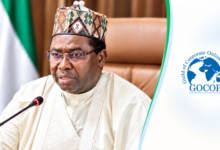


“Today, the Niger Delta stands before a defining opportunity… It is time to speak with confidence about what can be built, what can be financed, and what can be delivered,” Gogo-Ogan said.
The statement comes ahead of the Niger Delta Economic and Investment Summit (NDEI Summit), scheduled for May 19–21, 2026, which is being positioned not merely as a gathering, but as a transaction-driven economic platform.
From Dialogue to Delivery
For much of the past three decades, the Niger Delta’s development narrative has been shaped by political discourse—ranging from resource control debates to security challenges and environmental concerns. Yet, these conversations have yielded limited structural transformation.
The NDCCITMA intervention signals a clear departure from that trajectory. Gogo-Ogan says: “We must move beyond fragmentation… We must choose coordination over rivalry, implementation over rhetoric, and measurable performance over endless aspiration.”
This shift reframes the region’s development philosophy—from politically driven advocacy to economically driven execution.
The Investment Summit as an Economic Engine
Central to this repositioning is the May summit, which NDCCITMA describes as a platform for investment mobilisation, enterprise growth, and industrial expansion.
According to the official briefing materials, the summit will feature a Deal Room of between 30 and 50 pre-screened, investment-ready projects, cutting across priority sectors:
- Agriculture and agro-processing
- Manufacturing and industrial clusters
- Infrastructure and logistics
- Maritime and blue economy
- Technology and digital innovation
- Gas commercialisation
- Tourism and creative industries
As articulated by the organisers:
“This is not simply another gathering. It is a deliberate platform for investment mobilisation… where opportunities will meet capital and ideas will be translated into measurable commitments.”
The ambition is significant—targeting up to $5 billion in structured investment commitments over five years, alongside the creation of more than 500,000 direct and indirect jobs.
The Structural Challenge: Converting Potential into Projects
Despite its vast resource base, the Niger Delta continues to grapple with a fundamental economic constraint—its inability to translate opportunity into investment-grade projects.
Gogo-Ogan addressed this directly:“The major challenge is not the absence of opportunities but the weak conversion of such opportunities into bankable and financeable projects.”
This “conversion gap” has historically limited:
- Industrial depth
- Export competitiveness
- Investor confidence
It also explains why infrastructure deficits persist, despite the region’s strategic contribution to Nigeria’s economy.
Private Sector at the Centre of the New Model
A defining feature of the new development approach is the repositioning of the private sector as the primary engine of growth.
The NDCCITMA framework makes this explicit:
“Government alone cannot deliver the future we seek. The next phase of Niger Delta development must be private sector-led, government-enabled, and community-anchored.”
In practical terms, this implies:
- Government provides policy clarity, stability, and enabling infrastructure
- The private sector drives capital deployment, innovation, and execution
This alignment reflects global best practice in regional economic transformation.
Flagship Projects: Building an Industrial Base
The summit’s project pipeline is structured around tangible, execution-ready initiatives designed to deepen value chains and unlock productivity.
Key projects include:
- Niger Delta Rural–Urban Mobility Scheme to improve connectivity
- Agro Food Hub and Integrated Logistics System to strengthen processing, storage, and market access
- Cargo Flight System to enhance trade logistics
- Niger Delta Science and Technology Park to drive innovation and enterprise growth
Additional interventions span:
- Export readiness programmes
- Greenhouse agriculture
- Cold chain and fisheries infrastructure
- Industrial incubation and SME support systems
As the organisers emphasised:
“These are not abstract ideas. They are practical vehicles for jobs, productivity, trade, enterprise growth, and investor confidence.”
A Call for Regional Coordination
Beyond project pipelines, NDCCITMA is advocating for stronger collaboration across the nine Niger Delta states—Abia, Akwa Ibom, Bayelsa, Cross River, Delta, Edo, Imo, Ondo, and Rivers.
Gogo-Ogan underscored the importance of collective action:
“No single state can unlock the full promise of the Niger Delta in isolation… Together, we can create a platform of real consequence.”
This marks a shift towards regional economic integration, where shared infrastructure, harmonised policies, and coordinated investment strategies become central.
Rebuilding Confidence Through Structure
Early indicators suggest that the region may already be laying the groundwork for renewed investor confidence.
According to NDCCITMA:
- Over 4,000 SMEs have benefitted from intervention programmes
- An initial ₦5 billion financing tranche is currently supporting businesses across the region
These developments, the chamber argues, demonstrate that:
“Confidence can be rebuilt through structure, credibility, and delivery.”
A Clear Message to Investors
With its strategic location, vast resource base, and youthful population, the Niger Delta is positioning itself as a compelling investment destination.
Goo-Ogan’s message to investors is unequivocal:
“The Niger Delta is open for business, ready for partnership, and prepared to engage with discipline.”
BRANDECONOMY INSIGHT
A Shift from Resource Economy to Execution Economy
The Niger Delta is no longer defining itself by what it produces—but by what it can build, finance, and scale. Going forawrd, Industrialisation will be Deal-Driven as growth will emerge from structured investment pipelines—not policy declarations
Bankability Is the New Currency
Projects that are: De-risked, Structured and Investment-ready are sure bets to attract capital.
Private Capital Will Lead the Next Phase
Government’s role is shifting to: Enabler, not operator. Economies of scale will come to bear.
Regional Coordination Will Determine Outcomes
Fragmentation remains the biggest risk to execution
Critical Enabling Infrastructure
NDCCITMA-organised Trade fairs, Expos and investment forums will ultimately evolve into marketplaces for capital, enterprise, and deals
Strategic Outlook
If effectively executed, the NDCCITMA initiative could make the Niger Delta West Africa’s next industrial growth hub as it would:
- Unlock multi-billion-dollar investments
- Catalyse industrial clusters
- Create mass employment
- Position the Niger Delta as:
The Niger Delta has long been rich in resources. The next chapter, championed by NDCCITMA, will determine whether it can become rich in enterprise, investment, trade, and stellar economic growth.
And May 2026 may well mark the beginning of that long-overdue transition into a veritable industrial giant and pride of West Africa.