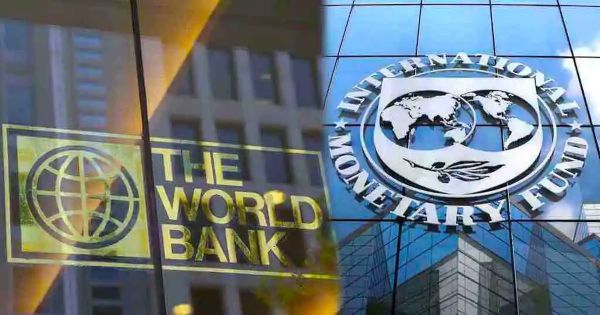
 The widening conflict in the Middle East is fast morphing from a regional security crisis into a global economic stress test. In response, three of the world’s most influential multilateral institutions—the International Monetary Fund (IMF), the World Bank Group, and the World Food Programme (WFP)—have signalled a coordinated intervention aimed at stabilising vulnerable economies and averting a deepening food crisis.
In a joint position, the institutions warned that the geopolitical shock is already rippling through global energy and commodity markets, with consequences that extend far beyond the immediate theatre of conflict. What began as a regional disruption is now feeding into a broader macroeconomic recalibration—one defined by rising costs, supply constraints, and heightened fiscal pressure.

Energy Shock, Food Crisis
At the heart of the concern is a familiar but dangerous chain reaction.
The conflict has triggered sharp increases in oil, gas, and fertiliser prices—three inputs that sit at the core of both industrial production and global food systems. As transport bottlenecks compound these pressures, the result is an upward spiral in food prices, particularly for import-dependent economies.
For many low-income countries, this is not merely an inflationary episode—it is a structural shock.
With already fragile fiscal positions and elevated debt burdens, governments face diminishing capacity to cushion their populations. Subsidies become harder to sustain, social protection systems strain under pressure, and food insecurity risks intensifying at scale.
The institutions’ warning is blunt: the heaviest burden will fall on the most vulnerable populations.
A Coordinated Multilateral Response
Against this backdrop, the IMF, World Bank, and WFP are moving to deploy a synchronised response—leveraging financing instruments, policy advisory frameworks, and emergency food support systems.
The approach is two-pronged:
- Immediate stabilisation, aimed at protecting lives and livelihoods
- Medium-term resilience, focused on rebuilding economic buffers and restoring growth momentum
While specifics remain fluid, the institutions emphasised that they would utilise “all available tools” within their mandates—suggesting a mix of concessional financing, debt support, food aid programmes, and technical assistance.
Crucially, this coordination reflects a recognition that the crisis is multidimensional: it is at once an energy shock, a food crisis, and a fiscal stress event.
Globalisation Under Pressure
Beyond the immediate response, the episode underscores a deeper vulnerability in the global economic system.
Highly interconnected supply chains—once celebrated for efficiency—are proving acutely sensitive to geopolitical disruptions. Energy dependence, fertiliser supply concentration, and logistics fragility have combined to expose systemic fault lines.
For policymakers, the implications are clear: resilience is becoming as important as efficiency.
BRANDECONOMY Insight
The emerging crisis marks a pivotal moment in the evolution of global economic governance—and a critical test for multilateral institutions.
- From Crisis Response to Systemic Reform
This is no longer just about emergency intervention. The scale of disruption suggests the need for structural adjustments in energy sourcing, agricultural systems, and trade logistics. - The Return of Food Security as Strategic Priority
Food is once again at the centre of geopolitical risk. Countries that depend heavily on imports—particularly across Africa—must accelerate investments in domestic production and supply chain resilience. - Debt and Vulnerability: The Twin Constraints
Many affected economies are entering this crisis with limited fiscal space. Without innovative financing solutions—debt restructuring, concessional lending, and blended finance—the ability to respond effectively will remain constrained. - Opportunity in Realignment
For resource-rich and strategically positioned economies, the disruption may create openings—particularly in energy exports, fertiliser production, and regional trade integration.
In effect, the Middle East crisis is not just reshaping geopolitics—it is redrawing the contours of global economic resilience.