

Afreximbank Delivers Robust Q1 2025 Earnings with $411.2m Net Interest Income

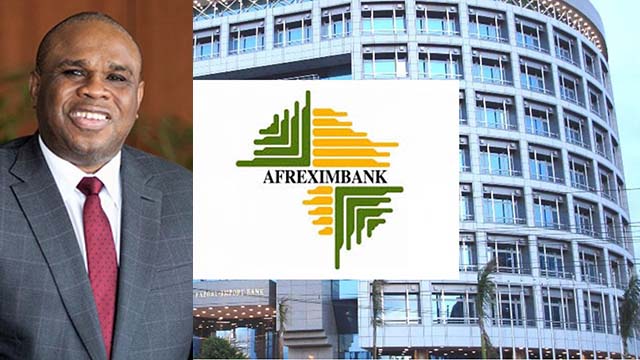
The African Export-Import Bank (Afreximbank) has posted a solid first-quarter financial performance for 2025, underscoring its growing resilience, disciplined cost management, and strategic shift toward unfunded income streams. According to the bank’s latest unaudited financials, net interest income rose to $411.2 million, representing a 4.53% year-on-year increase, even as global benchmark rates continued to soften.
This performance reaffirms Afreximbank’s rising importance as a development finance institution (DFI) not only anchoring trade and investment flows across Africa but also increasingly shaping intra-African trade dynamics through innovations like PAPSS and targeted capital programmes.




Strong Core Earnings Amid Rate Volatility
The Q1 net interest income growth was driven largely by the expansion in interest-earning assets, as Afreximbank continued to deepen its lending footprint. Importantly, this was achieved while maintaining disciplined borrowing costs, effectively cushioning the bank from the marginal decline in total interest income, a reflection of easing global rates.
At a time when global banks are struggling with interest margin compression, Afreximbank’s ability to expand its interest income base reflects sound asset-liability management and strategic lending across diversified sovereign and private-sector portfolios.
Fee and Commission Income Points to Strategic Diversification
Beyond interest income, Afreximbank made notable strides in growing non-interest revenue. Fee income from guarantees and letters of credit soared by 47% and 36% respectively—an impressive development aligned with the bank’s broader strategy to deepen off-balance sheet activities and reduce reliance on funded lending.
Though total unfunded income dipped by 7.41% to $26.9 million—largely due to lower advisory fees—the strong performance in trade guarantees confirms the bank’s increasing role in de-risking African trade, a key element in fostering intra-African commerce under the AfCFTA framework.
Profitability and Capital Strength on an Upward Trajectory
Net income surged to $215 million, marking a 21% increase from $178 million in the same period last year. This solid profitability reflects not only revenue growth but also the bank’s continued cost discipline. The cost-to-income ratio stood at an impressive 16%, significantly below the strategic ceiling of 30%, even amid inflationary pressures and rising personnel costs.
Afreximbank’s asset base remains healthy and growing, with total assets and contingent liabilities climbing 6.4% to $42.7 billion. Of this, on-balance sheet assets grew 4.85% to $37 billion, bolstered by a remarkable 58% increase in cash balances to $7.4 billion—testament to the bank’s improved liquidity position. Off-balance sheet assets rose 19% to $5.7 billion, affirming the growing importance of guarantees and letters of credit in supporting African trade.
Asset Quality and Liquidity — A Rare Twin Strength
In an environment where several African economies are grappling with FX volatility and debt sustainability challenges, Afreximbank’s loan asset quality remains a strong pillar. Net loans and advances stood at $27.8 billion, slightly lower than the FY2024 level due to early repayments by sovereign clients benefiting from improved FX inflows.
Despite these repayments, the Non-Performing Loan (NPL) ratio remained low at 2.44%, only a slight uptick from the previous 2.33%, and well below the bank’s 4% internal risk ceiling. This suggests prudent credit risk management, even in high-risk jurisdictions.
The bank also significantly improved its liquidity profile, with liquid assets now making up 20% of the total asset base, up from 13% at FY2024. This was aided by strong fund-raising initiatives and repayments during the quarter—a critical buffer amid a still-uncertain global economic environment.
Capital Buffer Remains Resilient
Shareholders’ funds rose 3.4% to $7.5 billion, driven by internally generated capital and additional equity injection under the second General Capital Increase (GCI II) programme. This strengthened capital base ensures that Afreximbank remains well-positioned to pursue its development mandate while maintaining a strong credit profile with rating agencies and global investors.
Strategic Footprint: From Industrial Parks to Cross-Border Payments
The bank’s operational highlights underscore its commitment to structural transformation across Africa. In Kenya, Afreximbank ratified multi-billion-dollar partnerships to support the Dongo Kundu Industrial Park and Naivasha SEZ II—flagship projects under Kenya’s Vision 2030 plan. These developments are central to Africa’s industrialisation drive and represent a strong vote of confidence in Afreximbank’s ability to catalyse large-scale infrastructure investment.
The rollout of the Pan-African Payments and Settlement System (PAPSS) continued to gain traction, with KCB Group (Kenya) and Bank of Kigali (Rwanda) launching cross-border transactions in local currencies. PAPSS is a game-changing initiative that could drastically reduce FX dependence and transaction costs across Africa.
Meanwhile, the bank marked a strategic milestone with its expansion into the Caribbean through the launch of the Afreximbank African Trade Centre (AATC) in Bridgetown, Barbados—a move that aligns with its Pan-African vision to link Africa with the global diaspora.
Outlook: Steady Growth Anchored in Purpose
Commenting on the performance, Afreximbank’s Senior Executive Vice President, Mr. Denys Denya, noted that the results align with expectations and reflect a “strong and resilient financial performance,” despite persistent global economic pressures. He affirmed the Group’s commitment to financing economic transformation across Africa and the Caribbean, powered by a well-capitalised balance sheet and sound liquidity.
Final Thoughts
Afreximbank’s Q1 2025 performance not only demonstrates robust financial fundamentals but also showcases a development finance institution in full stride—blending profitability with purpose. As global investors reassess risk in emerging markets, Afreximbank continues to position itself as a dependable partner for Africa’s trade, industrialisation, and integration agenda.
With a prudent balance sheet, expanding trade finance capabilities, and strategic geographic expansion, Afreximbank remains a pivotal player in Africa’s push toward economic sovereignty and regional resilience.
For deeper insights into Africa’s financial ecosystem and institutional growth stories, keep reading BRANDECONOMY—where finance meets foresight.