Local Content: Shell Awards $518m Contracts to 123 Nigerian Firms, Unveils $3bn Financing Support

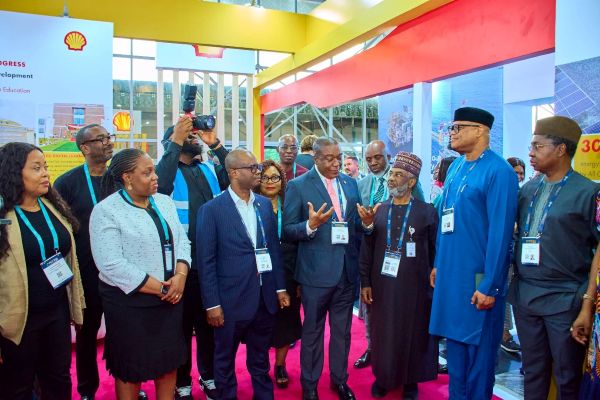 Shell Companies in Nigeria awarded contracts valued at $518 million to indigenous companies in 2025, strengthening its support for Nigerian content development and the expansion of domestic capacity across the country’s oil and gas industry.
The company’s Communications Manager, Mrs Gladys Afam-Anadu, disclosed the development in a statement issued on Tuesday.




According to Afam-Anadu, 123 Nigerian companies were engaged across Shell’s operations and value chain during the year under review, providing a range of technical, logistics, operational and specialised services.
She quoted Shell’s Vice President, Commercial, Rohan D’Souza, as saying that the contract payments demonstrated the company’s continued support for Nigerian businesses participating in its operations.
D’Souza said Shell regarded the development of indigenous contractors as more than an obligation imposed by regulation. He described it as a long-term business strategy capable of creating sustainable value for Shell, its contractors, the Nigerian economy and the wider communities connected to the energy industry.
“Nigerian companies continue to deliver technical, logistics and other specialised services across our businesses, while benefiting from Shell’s capacity-building programmes,” he said.
The $518 million contract value represents a significant injection of business activity into Nigeria’s domestic oilfield services ecosystem. Beyond the headline figure, the awards could support employment, strengthen local supply chains and enable indigenous contractors to deepen their technical and operational capabilities.
For Nigeria, where policymakers have increasingly emphasised the need to retain a larger share of oil and gas expenditure within the domestic economy, the participation of 123 indigenous companies offers a practical indication of how local content policies can translate into commercial opportunities.
The Nigerian content agenda is designed to ensure that domestic companies, professionals and service providers participate meaningfully in the exploration, production, processing and distribution of the country’s hydrocarbon resources.
Its broader economic objective is to reduce dependence on imported expertise and services, improve local value retention and develop Nigerian companies capable of competing for complex energy contracts both at home and across international markets.
Shell’s contract awards are therefore important not only for the beneficiary companies, but also for the development of a more resilient domestic energy-services industry. Indigenous contractors that successfully execute projects for major international operators can build stronger track records, improve their governance systems and become more attractive to lenders, investors and future business partners.
$3bn financing facility targets contractor funding gap
D’Souza also highlighted the recent inauguration of a $3 billion contract finance facility by the Shell Nigeria Exploration and Production Company Limited, SNEPCo.
The financing arrangement, established with nine leading Nigerian banks, is intended to help indigenous contractors obtain the funding required to execute contracts awarded by SNEPCo.
The facility will be available in both naira and United States dollars, giving eligible contractors greater flexibility in matching their financing requirements with the currency structure of their contracts and project expenses.
Access to capital remains one of the most persistent constraints confronting Nigerian oil and gas service companies. Many indigenous contractors possess the technical competence to undertake major projects but struggle to secure affordable financing for equipment acquisition, mobilisation, manpower, insurance and other working-capital requirements.
The problem becomes more severe where contracts require imported machinery or specialised components priced in foreign currency. Exchange-rate volatility, elevated borrowing costs and the limited availability of long-tenor credit can weaken contractors’ ability to deliver projects efficiently.
The $3 billion facility could therefore become an important intervention if it provides contractors with timely funding at commercially sustainable terms. It may also help to reduce project delays arising from financing gaps and improve the ability of Nigerian firms to execute larger and more technically demanding contracts.
For the participating banks, the arrangement creates an opportunity to expand their exposure to structured energy-sector financing while relying on the visibility provided by contracts awarded by an established operator.
The facility could also deepen collaboration among oil companies, commercial banks and indigenous service providers, creating a financing model that may be replicated across other segments of Nigeria’s energy industry.
Shell pays $2.016bn to Nigerian Government
D’Souza further disclosed that Shell paid approximately $2.016 billion to the Nigerian Government in 2025.
The payments covered production entitlements, royalties, taxes and statutory fees, reflecting the company’s financial contribution to public revenues and its longstanding partnership with Nigeria spanning more than six decades.
For a government seeking to improve revenue mobilisation, stabilise public finances and fund critical infrastructure, payments from major oil and gas operators remain economically significant.
However, the wider developmental value of the industry will increasingly be judged not only by the taxes and royalties it generates, but also by the depth of local participation, the number of sustainable businesses it supports and the amount of economic value retained within Nigeria.
The combination of $518 million in contracts to indigenous companies and the $3 billion contractor-financing facility points to a broader strategy of supporting local firms through both commercial opportunities and access to capital.
Market and investor implications
For Nigeria’s oil and gas services market, the contract awards could stimulate demand across engineering, marine logistics, fabrication, transportation, maintenance, environmental services, technology and project management.
Companies that successfully meet Shell’s technical, safety and compliance requirements may be better positioned to compete for additional contracts from other international oil companies, indigenous operators and emerging deepwater projects.
Investors will nevertheless be watching the quality of contract execution, payment cycles, financing conditions and the capacity of beneficiary companies to convert increased revenues into stronger balance sheets.
Contract volume alone does not guarantee sustainable corporate growth. Indigenous firms must strengthen governance, financial reporting, risk management, safety systems and succession planning if they are to evolve from contract-dependent businesses into enduring energy-services institutions.
Brand implications
For Shell, the awards strengthen its positioning as a long-term participant in Nigeria’s economic development rather than merely an extractor of natural resources.
In an operating environment where international oil companies face growing public scrutiny over community impact, environmental responsibility and domestic value creation, measurable local-content investments can support corporate reputation and stakeholder trust.
The credibility of that positioning will, however, depend on transparency, measurable outcomes and the visible growth of the Nigerian companies supported through Shell’s value chain.
BRANDECONOMY Insight
Shell’s $518 million contract awards show that Nigerian content is gradually moving from policy aspiration to measurable economic participation. The more consequential intervention, however, may be the $3 billion financing facility.
Contracts create opportunity, but affordable capital determines whether indigenous firms can mobilise, execute and scale. When contract access is combined with structured financing, capacity development and credible payment systems, local content becomes more than a compliance requirement—it becomes an industrialisation strategy.
Nigeria’s next challenge is to ensure that today’s contractors become tomorrow’s regional energy champions: companies with the technology, governance, capital and expertise to compete across Africa and the global energy market.