
Oil Without Development: Izombe’s Struggle Highlights Nigeria’s Host Community Failure

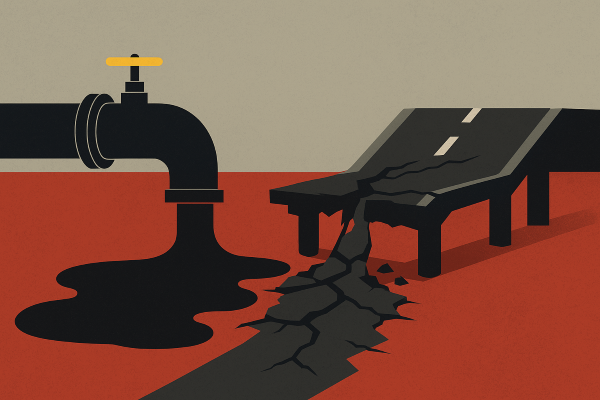
Despite decades of crude oil extraction, Izombe—one of Imo State’s earliest oil-producing communities—remains trapped in infrastructural neglect, environmental degradation, and economic exclusion. Community leaders are now demanding urgent intervention from the Federal Government, Imo State authorities, and oil operators, warning that Nigeria’s extractive model continues to leave host communities poorer than before oil was discovered.
Speaking at an end-of-year gathering of the Izombe Central Union in Abuja, community representatives described a paradox that has become all too familiar across Nigeria’s oil belt: abundant hydrocarbons above ground, but collapsing human development indicators below it.


An Oil-Bearing Community Without Oil Benefits
Izombe, located in Oguta Local Government Area, hosts oil assets that have contributed to national revenue for decades. Yet, according to community leaders, the town lacks the most basic infrastructure—motorable roads, reliable electricity, functional schools, healthcare facilities, and structured economic opportunities.
For residents, this is not merely a development gap; it is a structural injustice.
In oil economies globally, host communities typically benefit from a mix of royalties, scholarships, infrastructure projects, environmental remediation, and local employment. In Izombe’s case, leaders argue that these expectations have been systematically ignored.
Environmental Cost, Zero Compensation
Beyond infrastructure deficits, the environmental toll of oil operations has been severe. Gas flaring and associated activities have reportedly destroyed economic trees, degraded farmlands, and reduced agricultural productivity—eroding traditional livelihoods without any meaningful compensation or restoration.
From a sustainability standpoint, Izombe illustrates the dangerous gap between Nigeria’s environmental regulations and enforcement on the ground. The community bears ecological damage without commensurate remediation, reinforcing a cycle where oil wealth extracts value while leaving environmental liabilities behind.
Education, Human Capital and the Vanishing Future
Perhaps the most alarming consequence is the erosion of human capital. Leaders lament dwindling teacher numbers in public schools, declining educational outcomes, and the absence of scholarship programmes traditionally associated with oil-producing areas.
In development economics, this represents a long-term risk multiplier: when oil revenues fail to translate into education and skills, communities remain locked out of future economic participation—even as resources beneath their soil are exhausted.
Infrastructure as the Missing Link
A major flashpoint is the deteriorated Izombe–Ogbaku Road, a critical artery linking the community to Owerri. Constructed in the late 1970s, the road has been battered by decades of heavy oil-truck traffic without rehabilitation.
For businesses, investors, and even public service delivery, infrastructure decay increases transaction costs, discourages private investment, and deepens regional inequality. Izombe’s case underscores how extractive logistics often destroy local infrastructure without replacement.
Governance, Unity and the Politics of Neglect
Community leaders also cautioned against divisive leadership and politicisation of development, calling instead for reconciliatory governance focused on unity, transparency, and long-term planning.
This is a critical insight: development failure in oil communities is rarely just about money. It is also about governance quality, stakeholder inclusion, and whether political leadership sees host communities as partners—or merely extraction zones.
BRANDECONOMY Insight: Why Izombe Matters Beyond Imo
Izombe’s struggle is not isolated. It reflects a national failure to convert resource wealth into shared prosperity. As Nigeria pushes energy reforms, climate commitments, and local content policies, unresolved host-community grievances pose economic, security, and reputational risks.
Unchecked neglect fuels distrust, heightens conflict potential, and weakens Nigeria’s social licence to operate in extractive industries—especially at a time when global investors are scrutinising environmental, social, and governance (ESG) standards more closely than ever.
For Nigeria’s oil economy to remain viable—commercially and morally—communities like Izombe must move from the margins to the centre of development planning.
The Bottom Line
Oil without development is not just a moral failure; it is bad economics. Until host communities see tangible benefits—roads, schools, environmental restoration, jobs, and human capital investment—Nigeria’s resource model will continue to generate revenue without resilience.
Izombe’s appeal is, ultimately, a call for resource justice.