FG Secures $396m in Fresh Global Funding for IDPs and Sokoto Health Infrastructure

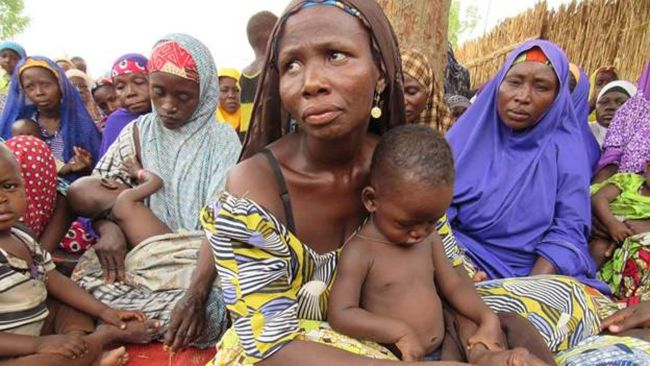
Nigeria’s Federal Executive Council (FEC) has approved $396 million in new international credit facilities to strengthen support for internally displaced persons (IDPs) and upgrade healthcare infrastructure in Sokoto State — a significant step in the Tinubu administration’s quest for inclusive recovery and sustainable development.
Announcing the approvals, Minister of Finance and Coordinating Minister for the Economy, Wale Edun, revealed that the funding includes a $300 million World Bank credit for IDPs and host communities across Northern Nigeria, and a combined $96 million facility from the African Development Bank (AfDB) and Islamic Development Bank (IsDB) for the Sokoto Health Infrastructure Project.


The Sokoto State Government, he said, will also provide counterpart funding for the initiative, ensuring local ownership and implementation synergy.
“These approvals mark a coordinated approach to rebuilding livelihoods in conflict-affected regions and improving access to quality healthcare,” Edun stated after the FEC meeting presided over by President Bola Tinubu at the State House, Abuja.
Rebuilding Lives and Strengthening Communities
The World Bank’s $300 million facility is expected to drive resilience among internally displaced persons and host communities, particularly in Borno, Yobe, Adamawa, Katsina, Zamfara, and Sokoto States — regions worst hit by insecurity and mass displacement.
The programme aligns with Nigeria’s National Development Plan (NDP 2021–2025), which prioritises human capital restoration, social cohesion, and post-crisis recovery as pillars of economic revival.
The Sokoto Health Infrastructure Project, jointly supported by the AfDB and IsDB, aims to modernise hospitals, equip primary healthcare centres, and expand access to quality medical care in rural areas.
The initiative will also support healthcare workforce development, telemedicine deployment, and maternal-child health programmes — critical components of Nigeria’s universal health coverage target.
Macroeconomic Stability and Investor Confidence
Minister Edun, in his briefing, underscored that the funding approvals reflect international confidence in Nigeria’s macroeconomic reforms and fiscal management framework under President Tinubu’s administration.
He noted that key economic indicators are pointing upward:
- GDP growth has accelerated to 4.2% in Q2 2025,
- Inflation has moderated to 18%,
- Foreign reserves are rising, and
- The exchange rate has stabilised after months of volatility.
“Reforms are yielding results. Market efficiency has improved, affordability is returning, and Nigerians are spending less of their income on essentials like food, health, and transport,” Edun said.
According to him, households that once spent 90% of income on necessities now spend around 50%, suggesting gradual improvement in real income and purchasing power.
Restoring Nigeria’s Global Financial Credibility
Edun also described Nigeria’s removal from the Financial Action Task Force (FATF) grey list as a “landmark achievement,” marking the country’s reinstatement into the global financial mainstream.
“We are now fully compliant with anti-money laundering and counter-terrorism financing protocols. This lowers transaction costs, enhances investor confidence, and makes Nigeria more competitive globally,” he noted.
The minister highlighted the success of Nigeria’s $2 billion Eurobond issuance, which attracted an unprecedented $13 billion in investor bids, as further proof of global faith in the country’s reform direction.
Driving Inclusive Growth Through Digital Identity and Data Systems
Edun revealed that the National Identity Management Commission (NIMC) has now issued over 125 million National Identification Numbers (NINs), strengthening Nigeria’s digital infrastructure for social protection and economic inclusion.
“With 125 million verified identities, the government can directly reach vulnerable citizens through targeted cash transfers, social interventions, and small business credit schemes,” he said.
The expansion of the digital ID ecosystem forms part of the administration’s push toward data-driven governance, improving service delivery and curbing corruption in social programmes.
Economic Diplomacy and the New Investment Wave
Beyond domestic reforms, Edun said Nigeria’s proactive economic diplomacy strategy is drawing renewed foreign interest in aviation, energy, manufacturing, and infrastructure sectors.
From European institutional investors to Middle Eastern sovereign funds, Nigeria is regaining attention as a top-tier African investment destination.
“Nigeria is increasingly seen as stable, investible, and reform-minded,” Edun remarked. “The world is taking notice.”
The finance chief reaffirmed the government’s commitment to sustainable and inclusive economic growth, ensuring that development financing translates into tangible benefits for citizens.
BRANDECONOMY ANALYSIS: Development Financing Meets Reform Momentum
The twin approvals of the World Bank IDP credit and AfDB/IsDB health infrastructure loan underscore a broader recalibration of Nigeria’s fiscal diplomacy — from borrowing for consumption to borrowing for social transformation, especially for vulnerable IDPs.
1. Social Investment with Economic Multipliers
Unlike past general budget support loans, these facilities are targeted, designed to yield measurable human and economic returns: improved productivity, health outcomes, and labour mobility.
2. Fiscal Reform Credibility
The overwhelming investor response to the Eurobond issuance and renewed access to concessional funding reaffirm global belief in Nigeria’s reform credibility — a critical signal to rating agencies and capital markets.
3. Inclusive Growth Pathway
By combining macroeconomic discipline with social sector investment, Nigeria is edging closer to a “reform-with-compassion” model — balancing fiscal prudence with human development priorities.
Conclusion: A Turning Point for Economic and Human Recovery
With $396 million in new funding and stronger economic fundamentals, Nigeria’s fiscal and development trajectory is entering a phase of measured optimism.
If effectively implemented, these programmes could mark a defining moment in rebuilding trust between government, citizens, and global partners.
The challenge, however, lies in execution — ensuring that funds reach communities, hospitals, and livelihoods without the leakages that have historically undermined Nigeria’s development financing.
As global institutions continue to re-engage, Nigeria’s message to the world is clear: the era of reform rhetoric is over; the era of results has begun.