

Nigeria’s Bold Port Reform: Federal Government Races to Cut Cargo Clearance Time to 7 Days
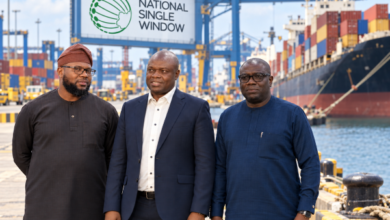
Nigeria is embarking on one of its most ambitious trade and logistics reforms yet—aimed at transforming its seaports into some of the most efficient in Africa by 2026. The Federal Government has announced accelerated plans to implement the National Single Window (NSW) system, a digital platform designed to streamline cargo clearance, eliminate bottlenecks, and strengthen inter-agency coordination at ports.
Vice President Kashim Shettima, who chairs the Ports and Customs Efficiency Committee, revealed the new target during the committee’s second meeting at the Presidential Villa, Abuja. He described the initiative as a “game changer” that will enhance transparency, boost trade competitiveness, and unlock the full potential of Nigeria’s maritime economy.

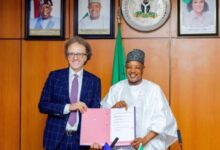

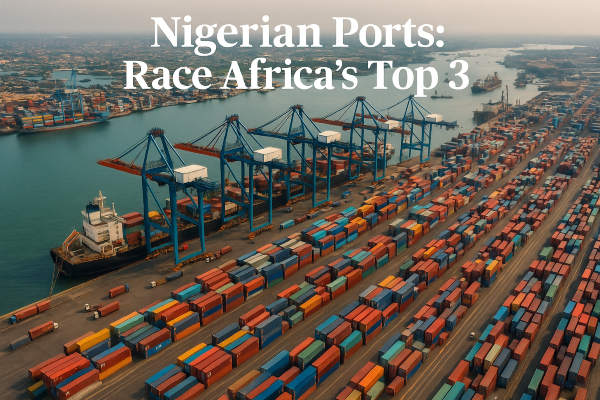
“By the end of 2026, we aim to reduce average cargo clearance time to under seven days and position our ports among Africa’s top three trade gateways,” Shettima said.
From 21 Days to 7: The Race to Boost Port Efficiency
Currently, cargo dwell time in Nigeria averages between 18 and 21 days—a stark contrast to 5–7 days in Ghana and just 4 days in Benin Republic. This delay, Shettima lamented, costs Nigeria billions in lost investment and inflates consumer prices by an estimated 30% more than regional competitors.
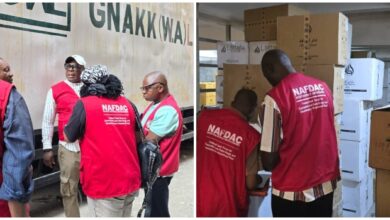
The National Single Window project, set for launch in early 2026, will integrate port operations across the Nigerian Ports Authority (NPA), Nigeria Customs Service (NCS), NAFDAC, Standards Organisation of Nigeria (SON), and other regulatory bodies—bringing all documentation and approvals into one unified digital ecosystem.
“The inefficiencies at our ports are symptoms of a deeper economic ailment that weakens our export competitiveness,” Shettima noted. “The Executive Order on Joint Physical Inspection, now before President Tinubu, will mark a new era of predictability, transparency, and speed.”
Ending the Era of Silo Operations
A major obstacle to port efficiency, Shettima said, has been inter-agency rivalry and duplication of functions. He directed all port agencies to adopt a unified operational roadmap and abandon siloed approaches.
“We are only as efficient as our collaboration allows,” he stressed. “No reform succeeds without ownership. Every agency—Customs, NPA, NAFDAC, SON, Immigration, NDLEA, Quarantine, and others—must operate as links in one integrated chain.”
The Vice President’s directive underscores the administration’s determination to foster inter-agency synergy as a foundation for trade facilitation and investor confidence.
PEBEC’s Push: Aligning Port Efficiency with Ease of Doing Business
Zahrah Audu, Director-General of the Presidential Enabling Business Environment Council (PEBEC), said inefficient port operations have long undermined Nigeria’s Ease of Doing Business ranking.
She emphasized that the Ports and Customs Efficiency Committee represents more than inter-agency coordination—it symbolizes a shared national commitment to make Nigeria’s ports globally competitive.
“The cost of inefficiency is massive. Every delay at the port is a tax on businesses, on consumers, and on Nigeria’s competitiveness,” Audu said.
NPA’s Strategy: Collaboration, Technology, and Infrastructure
Dr. Abubakar Dantsoho, Managing Director of the Nigerian Ports Authority (NPA), reiterated that true efficiency depends on collaboration and digital transformation. He noted that the joint Customs and Ports Efficiency Committee has already recorded measurable improvements through joint inspections, real-time documentation, and stakeholder coordination.
Dantsoho identified key focus areas for the reform drive:
- Adoption of cutting-edge technology to automate port processes.
- Investment in modern infrastructure and cargo handling equipment.
- Human capacity development for regulatory and operational personnel.
- Removal of bottlenecks that deter importers and exporters.
“With collaboration and technology, we can make Nigeria’s ports globally competitive again,” he said.
BRANDECONOMY Insight: Nigeria’s Port Revolution as a Trade Catalyst
The Federal Government’s plan to digitize and decongest Nigerian ports represents more than a logistics upgrade—it’s a strategic economic imperative. Efficient ports are central to Nigeria’s non-oil export agenda, the African Continental Free Trade Area (AfCFTA) participation, and the country’s aspiration to become a West African shipping and logistics hub.
With cargo dwell times currently 475% above the global benchmark, the success of the National Single Window could slash transaction costs, enhance supply-chain visibility, and attract billions in foreign direct investment into the maritime sector.
If executed with discipline, Nigeria could move from laggard to logistics leader, transforming Apapa, Tin Can, Onne, and Lekki into smart ports that drive regional trade and industrial competitiveness.