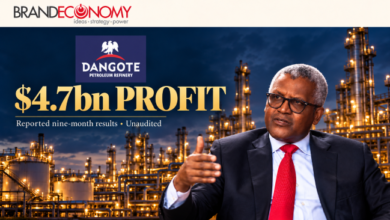


 The planned listing of Dangote Refinery and Petrochemicals is being framed not merely as a Nigerian capital-market event, but as a continental investment proposition that could deepen African exchange collaboration, widen investor participation and redefine how large-scale African infrastructure is financed.
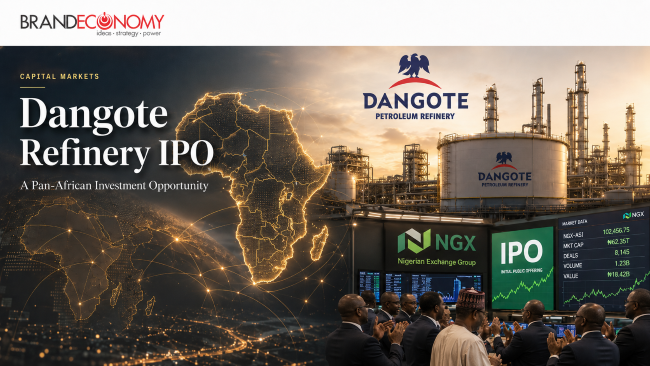 The planned listing of Dangote Refinery and Petrochemicals is being framed not merely as a Nigerian capital-market event, but as a continental investment proposition that could deepen
The Nigerian Exchange Group is positioning the anticipated Initial Public Offering of Dangote Refinery and Petrochemicals as a major pan-African investment opportunity, with potential to attract investors from across the continent and strengthen regional capital-market integration.
Chairman of NGX Group, Dr Umaru Kwairanga, disclosed this at the London Africa Summit, where business leaders, market operators and investors discussed strategies for strengthening investment ties between Africa and global financial centres.



According to Kwairanga, NGX has already engaged stock exchanges across Africa as part of efforts to broaden participation in the planned offer and frame the refinery’s listing as a continental transaction rather than a purely domestic Nigerian opportunity.
“We want to consider the Dangote Refinery offer as an African offer and not a Nigerian offer,” he said.
To support that positioning, NGX invited stock exchanges from across the continent to Lagos and took their representatives to visit the refinery. Participants from countries including Kenya, Ghana and South Africa were said to have assessed the facility’s operations and investment potential.
For Kwairanga, the logic is simple: investors no longer invest in slogans. They demand evidence, prospects and credible projections.
“Investors are not looking for stories. Investors are looking for evidence, prospects and projections, and that is what we are bringing from Africa,” he said.
Why Dangote Refinery’s IPO Matters Beyond Nigeria
Dangote Refinery is not an ordinary corporate asset. It is one of Africa’s most consequential industrial projects, with implications for energy security, refined-product supply, foreign exchange, petrochemicals, manufacturing, trade and regional fuel flows.
An IPO of that scale would therefore be more than a liquidity event for shareholders. It could become a capital-market test case for whether Africa can finance, own and trade exposure to its largest industrial platforms through African exchanges.
If structured properly, the offering could allow a wider pool of African institutional and retail investors to participate in one of the continent’s most strategic energy assets. Pension funds, asset managers, sovereign wealth vehicles, insurance companies, family offices and high-net-worth investors would all be expected to watch the transaction closely.
The pan-African framing is particularly important because the refinery’s business model is not limited to Nigeria. Its output has regional and global relevance. As African economies seek more reliable sources of refined petroleum products, the refinery could become a key supplier in the continent’s downstream energy chain.
That makes the investment story continental.
Capital Markets and the New African Industrial Question
Kwairanga’s comments also speak to a larger development challenge: Africa has major infrastructure and industrial ambitions, but its capital markets remain fragmented.
Many African exchanges are still small, illiquid and dominated by a limited number of stocks. Cross-border investment is often constrained by regulation, currency risks, settlement systems, low awareness and weak integration.
A Dangote Refinery IPO framed as an African offer could help advance a different model — one in which major African assets attract multi-market participation and deepen investor connectivity across the continent.
This is where the transaction could become structurally important. It may encourage African exchanges to collaborate more actively on listings, distribution, investor education, market access and post-trade systems.
For Africa, the long-term goal should be clear: build capital markets capable of financing African scale.
NGX’s Technology Push and Market Reform Agenda
Kwairanga said NGX had invested heavily in technology and market infrastructure to support capital raising and improve market operations.
He noted that more than ₦4 trillion raised through recent bank recapitalisation exercises was facilitated by the exchange’s technology platforms. He also highlighted recent reforms, including Nigeria’s migration to a T+1 settlement cycle and extended trading hours, as part of efforts to align the market with global standards.
These reforms matter because global investors assess more than company fundamentals. They also assess market infrastructure. Settlement speed, technology reliability, liquidity, transparency, regulation and ease of access all influence whether capital flows.
By improving its market infrastructure, NGX is trying to position Nigeria as a stronger gateway for African capital formation.
Kwairanga also said NGX had undertaken international roadshows across the United States, Brazil, China and the United Kingdom to showcase investment opportunities and strengthen confidence in Nigeria’s market.
London, Lagos and the Global Capital Bridge
Kwairanga described the relationship between Nigerian and London capital markets as long-standing and important to attracting global capital.
He said Africa brings opportunities, growth and scale, while London contributes global capital, international experience and investment depth.
That formulation is important. African markets do not lack growth narratives. What they often lack is sufficient depth of long-term capital, international credibility, liquidity and properly structured instruments that global investors can trust.
London remains one of the world’s most important financial centres. For Nigerian and African issuers, engagement with London-based investors can deepen access to global funds, especially for large infrastructure, energy, banking and industrial transactions.
But the real opportunity is not dependence on London. It is partnership. African exchanges must use global relationships to strengthen local markets, not bypass them.
A pan-African Dangote Refinery offer would therefore need to balance international capital access with deeper African ownership and participation.
Investor Relevance: Evidence, Scale and Execution
For investors, Dangote Refinery offers a rare combination of scale, strategic relevance and industrial ambition. But the investment case will depend on transparent financials, governance quality, dividend outlook, debt structure, crude-supply arrangements, refining margins, product pricing, export capacity, environmental compliance and regulatory risk.
The refinery’s importance does not eliminate the need for hard analysis. Investors will want clarity on revenue drivers, cost structure, feedstock supply, foreign-exchange exposure, debt service obligations, market access and future expansion plans.
They will also assess how the company manages competition concerns, domestic supply obligations, government relations and export opportunities.
In other words, the IPO must be sold not as national pride, but as an investable asset with clear numbers, credible governance and strong growth prospects.
Policy Implications: Africa Needs Cross-Border Investment Architecture
The move to position the IPO as an African offer raises important policy questions.
Can African regulators make cross-border participation easier? Can exchanges coordinate investor access more efficiently? Can settlement and custody systems support wider continental participation? Can pension funds across Africa allocate more capital to major African industrial assets? Can foreign-exchange and repatriation concerns be managed better?
These questions go beyond Dangote Refinery.
If Africa wants to mobilise its own capital for development, it must make it easier for African savings to invest in African opportunities. That requires regulatory cooperation, market harmonisation, investor protection, transparent disclosures and stronger capital-market infrastructure.
The Dangote Refinery IPO could become a practical test of that ambition.
Brand Implications: Dangote as Africa’s Industrial Symbol
For the Dangote brand, a pan-African IPO would reinforce its evolution from Nigerian conglomerate to continental industrial symbol.
The refinery already carries enormous reputational weight. It is seen by many as proof that African private capital can build infrastructure at world scale, despite difficult operating conditions.
Opening ownership participation to African investors could strengthen the brand’s continental legitimacy. It would allow the refinery to be perceived not only as a Nigerian asset, but as an African industrial platform serving African energy security.
For NGX, the transaction could also strengthen its brand as a serious capital-raising venue for major African assets. Successfully supporting a listing of this scale would boost its reputation among issuers, investors and peer exchanges.
Market Consequences
A successful Dangote Refinery IPO could reshape Nigeria’s capital market in several ways.
It could deepen market capitalisation, attract new investors, improve liquidity and draw international attention to Nigerian equities. It could also create a benchmark for future listings of large infrastructure, energy, telecoms and industrial companies.
For African markets, it could encourage more cross-border collaboration. For domestic investors, it could provide access to a strategic energy asset. For institutional investors, it could create a new long-term portfolio anchor.
However, the market consequences will depend heavily on valuation. If the offer is priced realistically, governance is strong and disclosures are robust, investor appetite could be substantial. If pricing is too aggressive or information gaps remain, the transaction may face caution despite the refinery’s prominence.
BRANDECONOMY Insight
Dangote Refinery IPO Could Become Africa’s Capital-Market Moment
The planned Dangote Refinery IPO is potentially one of the most important capital-market events in Africa’s recent history.
Its significance lies not only in the size of the refinery, but in what the transaction could represent: African capital participating in African industrial scale.
For too long, major African projects have depended heavily on foreign debt, offshore financing or concentrated private ownership. A well-structured IPO could widen ownership, deepen local and regional markets, and prove that African exchanges can support serious industrial capital formation.
NGX is right to frame the offer as pan-African. Dangote Refinery’s relevance extends beyond Nigeria. It affects regional fuel supply, petrochemicals, energy security, industrialisation and trade.
But ambition must be matched by discipline. Investors will require transparency, credible governance, realistic valuation, clear dividend policy, strong disclosures and a convincing growth story. The offer must be built on evidence, not emotion.
If executed well, this could become a landmark transaction for NGX, Dangote Group and African capital markets. It could show that Africa does not only produce commodities and consume imported products. It can also build, list, own and trade world-scale industrial assets.
That is the deeper opportunity.