
STEM: Government Comprehensive Secondary School, Borikiri Emerge 2026 NLNG Science Contest Champion

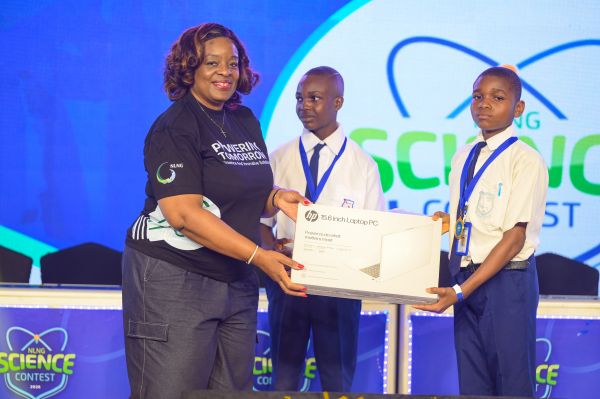
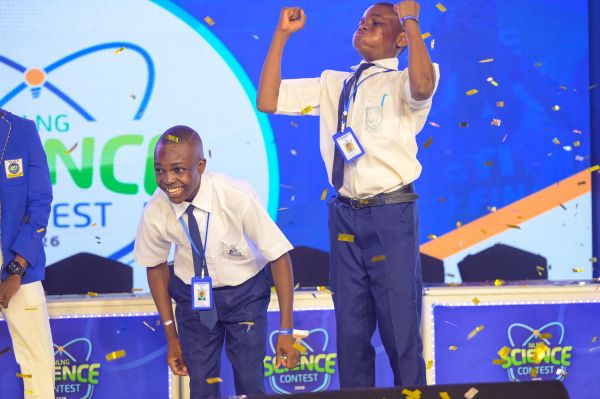
Government Comprehensive Secondary School, Borikiri, emerged champion of the 2026 NLNG Science Contest, but the bigger story is the rise of a structured platform turning classroom science into practical innovation, future talent and human-capital investment.
Government Comprehensive Secondary School, Borikiri, has emerged winner of the 2026 NLNG Science Contest, capping a rigorous statewide competition that brought together some of the brightest secondary-school students in Rivers State.
The grand finale, held in Port Harcourt, marked the climax of a multi-stage contest themed “Powering Tomorrow: Science and Innovative Solutions.” The competition tested students’ understanding of core science subjects, their problem-solving ability and their capacity to translate classroom knowledge into practical ideas.

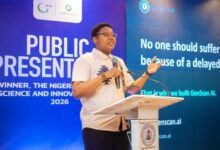

After several rounds of intense academic challenge, Government Comprehensive Secondary School, Borikiri, outperformed other finalists to claim the top prize. The school distinguished itself through accuracy, composure and a strong grasp of scientific concepts.
The 2026 edition featured three major components: the Championship, the Science Project Exhibition and the Grand Finale. The structure reflects a clear evolution of the programme from a conventional quiz format into a broader innovation contest built around knowledge, application and creativity.
In the Science Project Exhibition category, Government Girls Secondary School, Orominieke, took first position. Oginigba Comprehensive Secondary School, Oginigba, placed second, while Government Girls Secondary School, Finima-Bonny, came third.
The contest began with 140 secondary schools from across Rivers State, with seven schools qualifying for the final stage. In the project exhibition category, 11 out of 42 schools advanced to the final round.
 From Science Quiz to Innovation Platform
 From Science Quiz to Innovation Platform
First introduced in 2008 and relaunched in 2020 after a six-year pause for process improvement, the NLNG Science Contest has grown into one of the notable STEM-development platforms in Rivers State.
The latest edition marks an important shift. What began as a science quiz has now been redesigned as a science contest that places stronger emphasis on foundational knowledge, innovation-led projects and real-world problem solving.
Speaking at the finale, Dr Sophia Horsfall, General Manager, External Relations and Sustainable Development at Nigeria LNG Limited, described the competition as a deliberate investment in young people and in Nigeria’s next generation of scientists, engineers, technologists and innovators.
She said the platform now provides a framework for innovation-led projects to thrive, while reinforcing NLNG’s commitment to inspiring a sustainable future through science.
“The NLNG Science Contest provides the framework required for innovation-led projects to thrive, as NLNG continues to inspire a sustainable future through the power of science,” she said.
Horsfall explained that the contest had been redesigned to strengthen students’ foundation in Mathematics, ICT, Physics, Chemistry and Biology, while encouraging critical thinking beyond textbook learning.
“Our goal is to go beyond the textbook, sparking the critical thinking and innovation that our world so urgently needs,” she said.
Young Minds, Real Solutions
In her opening remarks, Horsfall said the quality of projects displayed by students was striking, noting that some of the innovations looked like products from a technology incubator or research laboratory.
She recalled her own experience as a student in Rivers State, where science was often studied mainly as facts to be memorised for examinations, with limited structure for practical innovation.
That experience, she said, explains why the contest is personally meaningful to her. The platform now gives students the opportunity to apply scientific knowledge to real-life problems, not merely prepare for tests.
“When I look at you today, I do not just see contestants competing for the prize; I see my younger self, but this time being given a platform,” she told the students.
Her message reflects the deeper purpose of the contest: to shift students from passive learning to active invention.
In a country seeking economic diversification, technology capacity and industrial competitiveness, this matters. Nigeria’s future will not be built only by policy documents and investment announcements. It will also be shaped by whether young people can think scientifically, build confidently and solve problems early.
Rivers Government Links STEM to Competitiveness
The Rivers State Commissioner for Education, Hon. Dr Peters Nwagor, said education remains the foundation upon which scientific innovation thrives.
He noted that education equips young people with critical thinking, creativity, problem-solving ability and the confidence to transform ideas into practical solutions.
According to him, the Rivers State Government recognises the strategic importance of science education in building a prosperous and competitive society.
“The Rivers State Government, under the leadership of His Excellency, Sir Siminalayi Fubara, remains committed to strengthening the education sector through improved infrastructure, capacity building for teachers, curriculum enhancement, and the promotion of Science, Technology, Engineering and Mathematics education,” he said.
Addressing the students, Nwagor said their participation in the contest already marked them out as future scientists, innovators, engineers, researchers and leaders, whether or not they won the top prize.
That message is important. Competitions like this should not be seen only as prize events. They are talent-identification platforms. They reveal where brilliance exists, which schools need support, which teachers are producing results and which students may be ready for mentorship, scholarships or innovation incubation.
Why STEM Competitions Matter for Human Capital
The NLNG Science Contest speaks directly to Nigeria’s human-capital challenge.
The country has a youthful population, but demographic advantage becomes economic value only when young people are educated, skilled and connected to productive opportunity. STEM education is central to that transformation.
Science, technology, engineering and mathematics are not just academic subjects. They are the language of energy, healthcare, agriculture, climate resilience, digital technology, manufacturing, construction, logistics and industrial productivity.
For a state such as Rivers, with deep links to energy, maritime activity, manufacturing, logistics and environmental management, STEM education is not optional. It is economic infrastructure.
The contest therefore contributes to a broader development agenda: building a pipeline of young people who can support Nigeria’s future energy transition, climate adaptation, engineering services, technology ecosystem and industrial base.
Brand Implications: NLNG as a Human-Capital Investor
For NLNG, the contest strengthens its brand positioning beyond gas production and export earnings.
It presents the company as a long-term investor in education, sustainability and host-community human capital. That is important in an industry where social licence, community trust and development credibility matter deeply.
In the energy sector, corporate responsibility is no longer measured only by donations or episodic interventions. It is increasingly judged by the quality, durability and relevance of impact.
By investing in STEM education, NLNG is linking its brand to the future skills Nigeria needs: science, innovation, technology, engineering, environmental thinking and applied problem solving.
This is a stronger brand narrative than corporate generosity. It is strategic social investment.
Policy Implications: Scale the Model, Deepen the Pipeline
The success of the contest points to policy lessons for Rivers State and Nigeria.
First, STEM must be taught as application, not memorisation. Students should be encouraged to build, test, demonstrate and solve.
Second, science competitions should be linked to mentorship, laboratories, scholarships and innovation hubs. Winning a contest should not be the end of the journey; it should be the beginning of a development pathway.
Third, teacher capacity remains critical. A strong STEM ecosystem requires trained teachers, functional laboratories, digital tools and updated curricula.
Fourth, public-private partnerships can accelerate quality education. The collaboration between NLNG, the Rivers State Ministry of Education, the Science Teachers Association of Nigeria and Dragnet Solutions shows how institutional coordination can strengthen outcomes.
Finally, female participation must remain central. Horsfall’s emphasis that innovation has no gender is timely. Nigeria cannot build a competitive science economy while leaving girls behind.
Investor Relevance: Education Is a Long-Term Productivity Asset
For investors, education quality is not a soft issue. It affects future productivity, workforce readiness, innovation capacity and regional competitiveness.
Companies considering long-term investments in energy, manufacturing, logistics, technology, healthcare or infrastructure look at the quality of human capital available in a location.
A state that builds strong STEM pipelines becomes more attractive over time. It can supply technicians, engineers, analysts, researchers, operators, ICT specialists and entrepreneurs.
This is where initiatives like the NLNG Science Contest become economically relevant. They help create the talent base that future industries will require.
BRANDECONOMY Insight
The Future of Nigeria’s Industrial Economy Is Sitting in Today’s Science Classrooms
The victory of Government Comprehensive Secondary School, Borikiri, at the 2026 NLNG Science Contest is worth celebrating. But the larger story is what the contest represents.
Nigeria cannot industrialise without science. It cannot compete globally without technology. It cannot solve its energy, climate, food, health and infrastructure challenges without young people who can think critically and build solutions.
That is why the transformation of the NLNG Science Quiz into a broader Science Contest is significant. It moves the conversation from remembering facts to applying knowledge. It tells students that science is not only something to pass in examinations; it is something to use in solving real problems.
The Science Project Exhibition is especially important because innovation begins when students are allowed to experiment, fail, improve and present their ideas. That is how confidence is built. That is how future engineers, researchers and entrepreneurs are discovered.
For Rivers State, the opportunity is clear. This contest should become part of a wider STEM-development pipeline linking schools to laboratories, scholarships, mentors, universities, innovation hubs and industry partners.
For NLNG, the NLNG Science Contest 2026 programme strengthens its role as a development partner investing in people, not just infrastructure.
The deeper lesson is simple: resource-rich societies become truly wealthy only when they invest in human capital. Gas can generate revenue, but people create the future.