
NBC Scraps Annual Digital TV Fee as FreeTV Decoders Drop Below ₦20,000

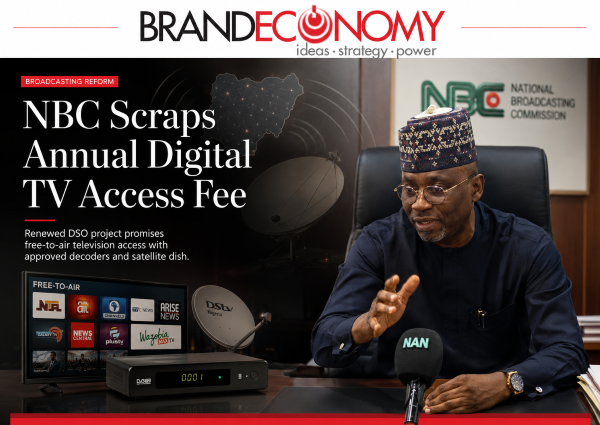 The National Broadcasting Commission has announced that Nigerians will no longer be required to pay an annual Digital Access Fee under the renewed Digital Switch Over project, removing one of the recurring costs previously associated with access to free-to-air digital television.
The Director-General of the NBC, Mr Charles Ebuebu, disclosed this in an interview with the News Agency of Nigeria in Abuja.




Ebuebu said television viewers would only need to purchase an approved decoder and satellite dish, expected to cost less than ₦20,000, to gain permanent access to available free-to-air television channels without paying monthly subscriptions or annual access charges.
Under the previous arrangement, users paid an annual Digital Access Fee of about ₦1,500, which was described as an administrative charge. The renewed system, according to the NBC, has eliminated that payment.
“The new system removes that annual fee. It provides free access to free-to-air television channels without any payment,” Ebuebu said.
He explained that premium channels would be introduced at a later stage for viewers who choose to pay for additional programming. Nigerian content carried on the basic free-to-air platform would, however, remain available without subscription charges.
“Unlike Pay TV, this platform does not require monthly subscriptions for its basic service,” the NBC director-general said.
The policy represents a significant consumer-facing element of Nigeria’s long-running transition from analogue to digital television broadcasting. By eliminating the yearly access charge, the commission is seeking to make digital television more affordable, accessible and attractive to households across the country.
Approved decoders to cost below ₦20,000
Ebuebu said approved FreeTV decoders would cost less than ₦20,000, adding that the NBC would soon announce authorised sales outlets, official prices and locations where consumers could purchase genuine decoder boxes and accessories.
He advised Nigerians to wait for official information from the commission before making purchases, warning that unauthorised sellers were attempting to exploit growing public interest in the renewed Digital Switch Over programme.
According to him, some retailers had begun advertising different categories of decoders at varying prices, even though they had not been approved by the commission.
The NBC boss dismissed claims that consumers needed to choose among several classes of officially recognised decoders, stressing that vendors making such representations were not authorised by the regulator.
He reiterated that viewers would require a free-to-air decoder and a satellite dish, rather than the antenna system associated with the earlier television distribution model, to receive the DSO signal.
Once the equipment is properly installed, viewers should be able to access all available free-to-air channels carried on the platform across Nigeria without paying subscription fees.
The NBC’s planned publication of approved dealers and standard prices will be important in protecting consumers from counterfeit devices, inflated charges and misleading sales claims. It could also help the regulator establish greater confidence in the renewed rollout after years of delays and uncertainty around Nigeria’s digital broadcasting transition.
A new distribution opportunity for broadcasters
Beyond reducing costs for viewers, the renewed DSO programme could significantly change the economics of television distribution in Nigeria.
Ebuebu said the project was designed not only to improve the quality and accessibility of television broadcasting but also to stimulate wider economic activity through employment creation, investment and new opportunities for businesses supporting the broadcasting ecosystem.
Content producers and television stations are expected to benefit from the broader national reach of the platform.
Under the traditional broadcasting structure, many stations were limited by regional transmission infrastructure and could only reach viewers within particular states or geographical zones. The renewed digital platform is intended to make participating channels available to audiences across the country.
This expanded reach could be particularly valuable to state broadcasters, independent television stations, faith-based channels, educational broadcasters and specialised content providers that have historically struggled to achieve nationwide distribution.
For content owners, national access creates the possibility of building larger audiences around news, drama, entertainment, documentaries, children’s programming, sports, education and local-language productions.
However, increased distribution will also intensify competition. Broadcasters will no longer compete only with stations operating in their immediate markets. They will compete with a much broader range of channels for viewers’ time, attention and advertising revenue.
The winners are likely to be broadcasters that combine strong content, reliable scheduling, recognisable brands and a clear understanding of audience preferences.
Audience measurement could reshape advertising
Ebuebu also highlighted the planned introduction of audience measurement technology, which he said would provide scientific and reliable data on television viewership.
The absence of sufficiently trusted and widely accepted audience data has remained one of the major weaknesses of Nigeria’s television advertising market. Advertisers and media agencies frequently have to make investment decisions based on limited, fragmented or inconsistent information about programme performance and audience reach.
A credible measurement system could enable advertisers to identify which channels, programmes and time belts deliver the strongest results for different consumer segments.
It could also allow broadcasters to demonstrate the actual size, location and composition of their audiences rather than relying largely on assumed reach or coverage claims.
For brands, improved measurement could support more disciplined media planning, reduce waste and strengthen the link between television exposure and marketing outcomes.
Advertisers may become more willing to increase television spending where audience delivery can be independently demonstrated. Broadcasters with attractive and measurable audiences could, in turn, command stronger advertising rates and develop more sophisticated commercial packages.
Reliable data could also support performance-based sponsorships, targeted regional campaigns and more transparent negotiations between broadcasters, advertisers and media-buying agencies.
Market and investor implications
The removal of the annual fee could encourage faster household adoption by reducing the long-term cost of owning and using a digital decoder.
Demand is likely to emerge across decoder production and distribution, satellite-dish installation, equipment maintenance, signal distribution, content aggregation and customer support.
Local electronics companies, accredited distributors, installers and technology service providers could benefit if the rollout is implemented transparently and at scale.
The platform could also create new investment opportunities in television production, advertising technology, audience analytics, content licensing and premium-channel services.
For investors, the central question will be whether the DSO can achieve mass adoption while maintaining a commercially sustainable ecosystem for signal distributors, broadcasters and content creators.
Free access may expand the audience, but broadcasters will still need viable revenue models. Advertising, sponsorship, content partnerships, premium services and public-interest funding will therefore remain central to the long-term health of the platform.
Brand implications
For the NBC and the Federal Government, the removal of the annual Digital Access Fee strengthens the consumer proposition around digital migration.
“Buy once and watch free-to-air television without recurring charges” is a clearer and more compelling message than a system that requires viewers to make annual administrative payments.
However, the credibility of the DSO brand will depend on execution. Consumers will expect approved equipment to be readily available, affordable and easy to install. They will also expect stable signals, quality programming and responsive customer support.
For broadcasters, nationwide availability alone will not build audience loyalty. Channels will need to invest in content quality, brand identity and programming consistency to stand out in a more crowded digital environment.
BRANDECONOMY Insight
The decision to scrap the annual Digital Access Fee removes a psychological and financial barrier that could have slowed consumer adoption of Nigeria’s digital television platform.
The real prize, however, is much larger than the elimination of a ₦1,500 yearly charge.
A properly executed Digital Switch Over can expand access to information, strengthen Nigerian creative industries, improve advertising accountability and create a national distribution infrastructure for local content.
The introduction of credible audience measurement may ultimately prove as important as the decoder rollout itself. When advertisers can see who is watching, where they are watching and what programmes command attention, television becomes easier to value, buy and monetise.
Nigeria’s renewed DSO will therefore be judged not merely by the number of decoder boxes sold, but by whether it creates a vibrant, measurable and commercially sustainable broadcasting economy.