
Market Fires Expose Nigeria’s Fragile Business Safety Net – LCCI Sounds Alarm

Why Lagos Must Rethink Fire Risk, Insurance and Business Continuity in Its Commercial Hubs
Nigeria’s markets are engines of commerce, employment and informal capital formation. Yet, recurring infernos across Lagos’ trading districts are exposing a dangerous contradiction: a trillion-naira commercial ecosystem operating on weak safety foundations and near-zero risk protection.
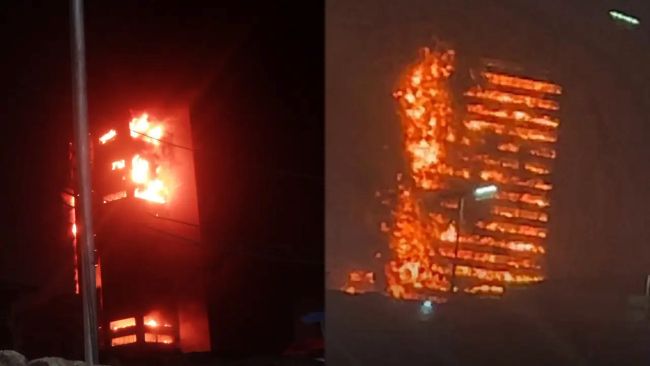
The latest blaze at Great Nigeria Insurance House on Martins Street, Lagos Island, is not merely another urban fire incident. It is a systemic warning — one that underscores the urgent need to rethink market safety design, insurance penetration and business continuity planning across Nigeria’s commercial corridors.




Reacting to the incident, the Lagos Chamber of Commerce and Industry (LCCI) outlined a far-reaching safety and risk-management framework aimed at protecting Small and Medium Enterprises (SMEs) and sustaining Lagos’ economic pulse.
When Markets Burn, the Economy Bleeds
Market-based enterprises form the backbone of Lagos’ commercial ecosystem — from wholesale trading and logistics to retail distribution and informal manufacturing. When fire strikes, the damage extends far beyond burnt structures.
According to LCCI Director-General Dr. Chinyere Almona, market fires trigger a cascade of economic disruption:
- Loss of inventory and working capital
- Prolonged business downtime
- Collapse of supply chains
- Erosion of investor and customer confidence
- Permanent exit of SMEs from the market
In a city that prides itself as West Africa’s commercial nerve centre, every major market fire weakens Lagos’ competitiveness.
The Insurance Gap: Nigeria’s Silent Business Killer
Perhaps the most alarming revelation is Nigeria’s abysmally low insurance penetration among SMEs — estimated at below 5%.
This means:
- Most traders have no financial safety net
- Recovery depends on personal savings, loans or charity
- Many businesses never reopen after a major fire
From an insurance and risk-management perspective, this creates a cycle of economic fragility, where one disaster wipes out years of enterprise building.
“Without insurance buffers, market fires translate directly into long-term economic loss,” LCCI noted.
For a country seeking inclusive growth, this is a structural failure that must be urgently corrected.
Infrastructure Deficits Fuel Fire Disasters
Beyond insurance gaps, LCCI identified critical physical and regulatory weaknesses that allow fires to spread uncontrollably in markets:
- Absence of functional fire hydrants
- Unreliable water supply
- Lack of on-site firefighting equipment
- Overcrowded layouts and illegal extensions
- Narrow access routes that delay emergency response
Emergency responders, including Lagos State Emergency Management Agency, are often forced to rely on external water sources — losing precious minutes while flames rage.
From a safety-engineering standpoint, markets are operating as high-risk zones without basic fire-resilience architecture.
From Firefighting to Fire Prevention: A Strategic Shift
LCCI insists Nigeria must abandon its reactive approach to market fires and adopt structured, preventive risk governance, including:
1. Embedded Fire Safety Systems
- Smoke detectors and alarms
- Fire extinguishers and sprinkler systems
- Clearly marked and enforced emergency exits
2. Electrical Risk Control
- Mandatory electrical audits
- Elimination of illegal wiring and overloaded circuits
- Routine safety inspections
Electrical faults remain one of the leading causes of market fires.
Human Capital: Training Traders as First Responders
Infrastructure alone is not enough. LCCI stresses continuous fire safety education for traders, covering:
- Basic firefighting techniques
- Emergency evacuation protocols
- Early detection and reporting
Markets that combine technology, infrastructure and trained human response consistently record lower losses during fire incidents globally.
Governance & Coordination: The Missing Link
A major weakness in Nigeria’s market safety ecosystem is fragmented responsibility.
LCCI proposes the creation of permanent joint safety committees involving:
- Market associations
- Fire services
- Emergency agencies
- Local government authorities
These bodies would:
- Conduct routine risk assessments
- Run joint emergency simulations
- Maintain updated market layout and trader databases
- Deploy digital alert and early-warning systems
From a governance lens, risk coordination is as important as risk equipment.
Markets Are Economic Infrastructure — Treat Them as Such
LCCI’s message is clear: market safety is not optional — it is economic infrastructure.
Protecting SMEs through:
- Safer market design
- Insurance inclusion
- Coordinated emergency governance
…is essential to preserving Lagos’ status as Nigeria’s foremost commercial hub and ensuring long-term, inclusive growth.
Until safety, insurance and continuity planning are treated as core economic policy tools, Nigeria’s markets will remain dangerously exposed — and every fire will continue to burn deeper into the nation’s economic future.