

The Organised Private Sector of Nigeria (OPSN) has urged the Federal Government and labour to factor in the well-being of more than 200 million Nigerians and avert the strike planned for October.
It says the two should work together in the interest of the nation’s economy which could be jeopardised by the strike.



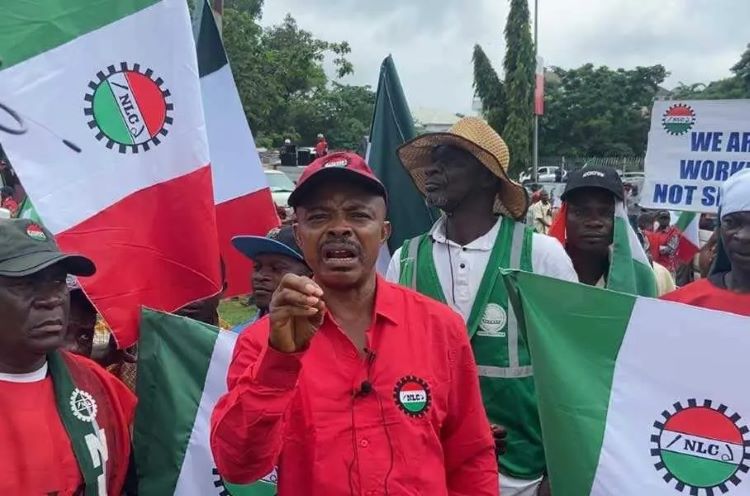
The NLC and the Trade Union Congress (TUC) declared on Tuesday that they would call workers out on strike from Oct. 3.
The declaration followed the expiration of a 21-day ultimatum earlier given to government to provide palliatives to ameliorate the effects of fuel subsidy removal on Nigerians.
Mr Segun Ajayi-Kadir, Director-General, Manufacturers Association of Nigeria (MAN) reacted to Labour’s declaration on behalf of the OPSN.
He reiterated OPSN’s earlier admonition to avert the looming disruption of socioeconomic activities and noted that current economic indicators in the country do not support a strike.
“The view of the OPSN is that of deep concern; if not that of anxiety.
“We have keenly watched the back and forth consultations between the government on the one hand and Labour on the other.
“It is evident that the series of consultations have not yielded positive results and the latter has resolved, in one way or the other, to go ahead with the strike.
“We are worried that adequate consideration is not given to the dire situation of the economy and the devastating and disruptive impact that a nationwide strike will have on the country at this time.
“Government and labour need to understand that our economy is being de-marketed and the livelihood of the average Nigerian is being diminished by these incessant bickering.
“One is beginning to wonder if the wellbeing of more than 200 million Nigerians is being factored into their negotiations,’’ Ajayi-Kadir said.
The MAN director-general urged government to reengage labour and find an amicable ground to avert the imminent disruption to business activities that would attend the protest and nationwide strike.
He appealed that adequate consideration be given to the grim state of the economy and the possible unintended consequences of social unrest that might result from the strike.
He also advised manufacturers to be circumspect in their business operations as the association continued to intervene in last minute attempts to avert the strike.
“Adequate measures should be taken to protect companies’ assets and contingency plans should be made to keep businesses afloat.
“Government should demonstrate good faith in keeping to its promises during the negotiations with labour and abstain from making promises they cannot or do not intend to keep.
“On the other hand, labour should do a realistic assessment of its demands within the context of prevailing economic realities and possibilities.
“It should go the extra mile to indicate how its demands could be met.
“We look forward to a time that labour will extend the scope of its demands to include recommendations on how government could meet its demands.
“Its recommendations should come with implementation strategies and realistic timelines,’’ Ajayi-Kadir said.
OPSN is the umbrella body of MAN and the Nigerian Association of Chambers of Commerce, Industries, Mines and Agriculture and the Nigeria Employers Consultative Association.
Other members are the Nigerian Association of Small and Medium Enterprises and the Nigerian Association of Small Scale Industrialists.