
Lagos Waste Crisis: Gbadegesin’s Sack Puts Sanwo-Olu’s Sanitation Reset on Trial

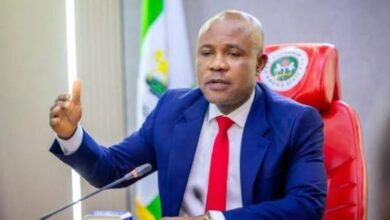
 Reports that Lagos State Governor Babajide Sanwo-Olu has asked the Managing Director and Chief Executive Officer of the Lagos Waste Management Authority (LAWMA), Dr Muyiwa Gbadegesin, to resign have transformed the city’s worsening refuse problem into a direct test of executive accountability.
Gbadegesin’s reported exit follows mounting public anger over uncollected waste on major roads, residential streets, markets and drainage channels. It would represent the first high-profile personnel consequence of the sanitation emergency declared by Sanwo-Olu in September—if formally confirmed.



As of publication, however, neither the Lagos State Government nor LAWMA had issued an official statement confirming Gbadegesin’s resignation, its effective date or the appointment of an acting chief executive. Reports of the development have relied principally on unnamed officials familiar with the governor’s decision.
That distinction matters. In a crisis involving public health, environmental safety and institutional credibility, the government must communicate a leadership transition with the same urgency it expects from the agency responsible for clearing the city.
From refuse emergency to leadership crisis
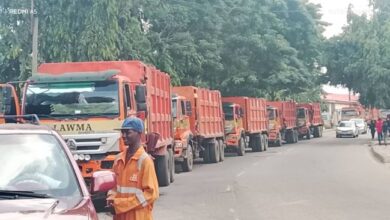
Indications of a possible change at LAWMA intensified during an emergency clean-up in Oshodi, where the authority deployed 25 trucks and sanitation personnel to remove accumulated refuse.
The intervention covered Bolade and other affected parts of Oshodi, including Folorunsho Street and Oluwole, off Oshodi Road. Senior management personnel coordinated the operation without Gbadegesin’s visible participation.
LAWMA officials attributed the Oshodi buildup to rapid population growth, inadequate waste containers, increased refuse generation and a tariff structure that no longer covers the operating costs of many Private Sector Participation operators.
In parts of Oshodi, residents reportedly pay about ₦750 per room for waste collection. Operators argue that the rate has become commercially unsustainable as diesel, vehicle maintenance, spare parts, labour and disposal costs have risen.
This is the deeper difficulty confronting Lagos: emergency truck deployments may remove visible refuse, but they cannot by themselves repair a collection economy in which households resist higher charges, operators struggle with costs, dumpsites become congested and government enforcement is uneven.
Sanwo-Olu’s ultimatum
The reported leadership action followed Sanwo-Olu’s September inspection of the Olusosun dumpsite in Ojota, where he declared what he described as a limited state of emergency on waste management.
Accompanied by Deputy Governor Obafemi Hamzat and other officials, the governor acknowledged that refuse collection had slowed across Lagos. He blamed part of the disruption on underperforming PSP operators, operational problems at dumpsites and the failure of LAWMA’s structure to put sufficient personnel in the field.
Sanwo-Olu announced plans to increase Olusosun’s daily receiving capacity from approximately 220–250 trucks to between 350 and 450 by expanding its tipping points. Solous III and other disposal locations were also to receive operational upgrades.
The administration additionally announced 160 new compactor trucks and two planned transfer-loading stations at Olusosun and Solous III, each designed to handle about 2,400 metric tonnes of waste. These facilities are expected to reduce the time collection trucks spend travelling to or waiting at disposal sites.
But the persistence of refuse after the emergency declaration appears to have tested the governor’s patience. Reports suggest he became dissatisfied with the pace at which his directives were translated into cleaner roads and neighbourhoods.
Gbadegesin, meanwhile, was still issuing operational updates shortly before reports of his exit emerged. In one update, he cited progress in Mile 2, Doyin-Orile, Ijesha Road, Itire-Ikate, Bucknor-Ijegun and Obalende, while acknowledging that field reports remained outstanding for Apapa, Abesan Estate, the Idimu–Ejigbo Road and Isheri–Igando corridor.
The contrast between official operational updates and the refuse residents continued to encounter illustrates a credibility gap that cannot be closed by statistics alone.
A system bigger than one managing director
Removing an agency head may demonstrate political accountability, but Lagos must avoid presenting a personnel change as a complete solution to a structural emergency.
LAWMA estimates that the state generates between 13,000 and 16,000 tonnes of waste every day. Moving that volume reliably requires an integrated chain of household storage, scheduled collection, commercially viable operators, functioning trucks, accessible transfer stations, efficient dumpsites, environmental enforcement and recyclable-material recovery.
A failure at any point can disrupt the entire system.
Some households do not have enough bins for the number of residents occupying their buildings. Some PSP operators lack sufficient trucks or face long journeys to disposal sites. Access roads deteriorate during heavy rainfall, while fires and congestion periodically reduce dumpsite capacity. Illegal dumping then shifts waste from private premises to road medians, canals and drainage channels.
The result is more than visual disorder. Blocked drains increase flood exposure. Decomposing refuse attracts disease vectors and contaminates neighbourhoods. Smoke from indiscriminate burning worsens air quality, while plastics washed into waterways deepen the city’s marine-pollution burden.
These are economic costs, even when they do not appear as a line item in the state budget.
Market and investor implications
Lagos cannot credibly market itself as Africa’s model megacity while refuse repeatedly accumulates along commercial corridors.
Poor sanitation raises costs for restaurants, markets, hotels, transport operators, property owners and consumer-facing businesses. It weakens neighbourhood appeal, depresses real-estate value and creates reputational risks for brands operating around visible waste blackspots.
For investors, the crisis also reveals a potentially significant environmental-services market. Opportunities exist in fleet financing, waste sorting, material-recovery facilities, recycling, composting, landfill engineering, methane capture, route-optimisation software and digital billing.
However, private capital will require more than policy declarations. Investors need bankable contracts, credible waste-volume data, predictable tariffs, transparent procurement, payment security and clarity over the respective responsibilities of LAWMA, local councils and PSP operators.
The proposed statewide tariff review will therefore be politically sensitive. Waste collection cannot remain effective if operators are chronically underpaid, but higher charges imposed without measurable service standards would deepen public distrust.
Any revised tariff should be connected to enforceable collection schedules, electronic payment records, service-level guarantees and an accessible complaints process. Vulnerable households may require targeted support rather than a system-wide price freeze that leaves operators unable to perform.
Brand implications: Lagos has a promise to keep
For years, Lagos has promoted itself as Nigeria’s commercial capital, an investment gateway and an ambitious global city. Waste accumulation contradicts that proposition at street level.
A city brand is not built only through advertising campaigns, landmark bridges or investment conferences. It is experienced through clean neighbourhoods, functioning drains, reliable public services and the confidence that institutions will respond before a problem becomes an emergency.
LAWMA’s brand challenge is particularly acute. Residents judge the agency by whether refuse disappears on schedule—not by the number of reform committees, trucks announced or stakeholder meetings held.
Leadership turnover can signal accountability, but repeated changes at the top also raise questions about institutional continuity. Gbadegesin returned to the agency’s leadership in 2023 after Ibrahim Adejuwon Odumboni’s departure. Another transition, if confirmed, should therefore be accompanied by a transparent operational reset rather than another cycle of expectations followed by emergency evacuations.
BRANDECONOMY Insight
The real story is not whether one official has lost his job. It is whether Lagos will finally build a waste-management system that does not depend on gubernatorial inspections, emergency declarations and convoys of trucks deployed after refuse has already overwhelmed communities.
If Gbadegesin’s departure is confirmed, the government should immediately disclose the grounds for the decision, name the interim leadership and publish measurable targets for the sanitation emergency.
A public performance dashboard should show waste collected, fleet availability, missed collection routes, truck turnaround times, dumpsite capacity, operator compliance, complaint resolution and the recurrence rate at cleared blackspots.
The state should also commission a credible operational review covering LAWMA, PSP operators, transfer infrastructure, dumpsites and the financing model. Without this, a leadership change risks becoming scapegoating rather than reform.
Sanwo-Olu’s sanitation reset will ultimately be judged not by who leaves LAWMA, but by whether Lagosians stop waking up to yesterday’s refuse.