
BRAND REPORTBUSINESS

Cross River’s $1.075bn 16 Projects Investment Promise

Sixteen Projects—or Sixteen Tests of Execution?

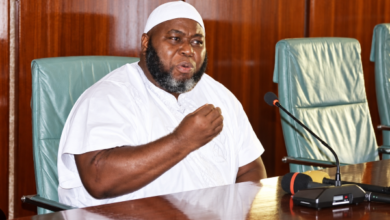
Cross River’s $1.075bn 16 Projects Investment PromiseGovernor Bassey Otu has assembled one of Nigeria’s boldest subnational investment portfolios—spanning food, power, transport, manufacturing, healthcare, waste and tourism. But the real measure of the “People First” industrialisation agenda will not be the value announced. It will be the number of projects that reach financial close, construction, operation and sustainable cash flow.

Cross River State has placed an unusually large wager on a simple proposition: private capital can do what strained public finances alone cannot—convert the state’s natural endowments, dormant assets and strategic location into productive enterprise.

The wager is valued at more than ₦70 billion and $1.075 billion. It covers 16 public-private partnership projects approved by the State Executive Council across agriculture, renewable energy, transport, manufacturing, healthcare, environmental services, tourism and the blue economy.

On paper, it is one of the most ambitious subnational investment packages Nigeria has seen in recent years. A 100-megawatt solar programme is proposed for Calabar, Ikom and Ogoja. Rice and oil-palm ventures are intended to deepen agricultural value chains. A fishing port and fisheries development scheme seek to turn coastline into commerce. Electric-vehicle manufacturing, statewide compressed-natural-gas infrastructure and lithium-battery assembly promise a foothold in the mobility transition. Creek Town is marked for an industrial park. The Adiabo gas-fired power plant is slated for rehabilitation. Diagnostic centres and municipal waste facilities add essential services. A ₦60 billion concession is intended to restore Obudu Cattle Ranch, Utanga Safari Lodge and Bebi Airstrip.

It is a compelling portfolio because it attempts to join economic sectors that governments too often treat as separate islands. Power can feed industry. Industry can process agricultural output. Transport can connect farms, factories and tourists. Waste can become an urban service and potentially an energy input. Diagnostics can improve human productivity. Tourism can create demand for aviation, food, culture, hospitality and local enterprise.

Governor Bassey Otu is therefore right about the direction of travel. Cross River needs a production economy, not an economy sustained mainly by public salaries, federal transfers, festive consumption and the export of raw potential.

But a portfolio is not yet a pipeline. Approval is not procurement. A signed memorandum is not bankable financing. A concession is not rehabilitation. Construction is not operation. And a dollar value attached to a communiqué is not foreign direct investment until capital has been committed, conditions precedent have been satisfied and funds begin to move.

Cross River’s $1.075 billion promise is best understood not as one achievement, but as 16 tests of execution.

The First Test: What Exactly Has Been Approved?

The government’s announcement says 16 projects were ratified. Its public list contains 14 grouped initiatives. The arithmetic appears to reach 16 when Obudu Cattle Ranch, Utanga Safari Lodge and Bebi Airstrip are counted as three distinct assets rather than one tourism package.

That is a small presentation issue with a larger lesson: investors price precision.

The public announcement identifies private partners for only four areas: Kereksuk Limited for rice, Valuefronteira Limited for oil palm, Tee Pama Limited for solar, and Living Curation Real Estate Limited for the Obudu tourism assets. It does not publicly allocate the $1.075 billion among the projects. Except for the ₦60 billion tourism investment, it does not state individual project costs, equity commitments, debt requirements, concession periods, public contributions, implementation dates or expected commercial returns.

The State Executive Council also authorised the Ministry of Justice to prepare, negotiate and conclude project, joint-venture, concession and ancillary agreements. That wording is consequential. It indicates that Executive Council approval has established political authority to proceed, while at least some legal instruments were still to be completed.

One important exception is the Obudu package. Cross River had already signed a 25-year concession with Living Curation Real Estate Limited for the rehabilitation and development of Obudu Cattle Ranch Resort, Utanga Safari Lodge and Bebi Airstrip, after which the assets are expected to revert to the state. This makes the tourism transaction more advanced than projects that have only been identified or ratified.

Even here, however, the public case remains incomplete. The concession duration and headline investment are known; the public still needs the investment schedule, performance milestones, revenue-sharing formula, demand projections, termination provisions, environmental obligations, host-community commitments and proof of financing capacity.

Transparency is not hostility to investment. It is part of bankability.

The Sixteen-Project Execution Ledger

The most useful public conversation is no longer whether the projects sound impressive. It is what each one must prove.

Project or asset Strategic logic Critical bankability question Publicly visible position
Kereksuk rice value chain in Calabar, Odukpani and Ogoja Food security, processing and rural jobs How much land is secured, what is the irrigation plan and who guarantees paddy offtake? Partner and locations named; financial and delivery structure not disclosed
Valuefronteira oil-palm project in Yala Import substitution, agro-processing and exports Is land free of disputes, and does the model protect communities and forests? Partner and location named; scale and financing not disclosed
100MW solar programme across Calabar, Ikom and Ogoja Distributed power for homes and industry Who buys the electricity, at what tariff, under which regulatory licence and grid arrangement? Capacity, locations and partner named; offtake and financing not disclosed
Calabar fishing port and fisheries development Blue-economy value chain and cold-chain exports Is this a commercial landing, processing and logistics system—not merely a quay? Project named; counterparty, cost and timetable not disclosed
Odukpani dairy, livestock and trawler fishing project Protein supply, agriculture and jobs How are three distinct businesses structured, supplied and regulated? Project named; commercial architecture not disclosed
Electric-vehicle manufacturing Green mobility and industrial capability Is the plant assembling imported kits or building a local supplier ecosystem with credible demand? Project named; investor, capacity and market plan not disclosed
Statewide CNG infrastructure Lower-cost transport fuel and energy transition Where will gas come from, who funds stations and what vehicle fleet creates demand? Project named; network design and counterparty not disclosed
State Transport Company PPP Better mobility and asset productivity Does the operator carry fleet and demand risk, or will government guarantee revenue? PPP named; operator, concession and service standards not disclosed
Creek Town Industrial Park Manufacturing cluster and logistics Are power, roads, water, title, anchor tenants and environmental approvals secured? Location and concept named; anchor investors not disclosed
Healthcare diagnostic centres Local access, reduced medical travel and service revenue Will payments come from users, insurance or availability payments, and how is affordability protected? Project category named; number, locations and operator not disclosed
Municipal waste-management facilities Cleaner cities, recycling and public health Who pays the operator, how is waste collected and are tariffs enforceable? Project category named; contract areas and revenue model not disclosed
Obudu Cattle Ranch Resort Tourism revival and hospitality jobs Can the concessionaire fund rehabilitation and sustain year-round demand? 25-year concession and part of ₦60bn package announced
Utanga Safari Lodge Eco-tourism and conservation How will conservation, access, hospitality and community participation be integrated? Included in signed tourism concession; detailed milestones undisclosed
Bebi Airstrip Access to Obudu tourism circuit Who restores, certifies and operates it—and what traffic makes it viable? Included in signed tourism concession; aviation plan undisclosed
Adiabo gas-fired power plant Firm power for industry and grid support Are gas supply, rehabilitation cost, licence, offtaker and legacy liabilities resolved? Rehabilitation announced; counterparty and commercial terms not disclosed
Lithium-battery assembly plant Energy storage, EV supply and technical jobs What cells and components will be local, what demand is contracted and how will batteries be recycled? Project named; investor, capacity and supply chain not disclosed


This ledger does not establish that the projects are defective. It establishes that the information required to judge their maturity has not yet been placed sufficiently in the public domain.

That difference matters. A responsible investment publication must avoid two equal errors: dismissing credible projects because every detail is not yet public, and treating government approval as proof that every commercial hurdle has been cleared.

A Stronger Strategy Than the Usual Shopping List

The portfolio’s greatest merit is its underlying industrial logic.

Cross River possesses fertile land, a long coastline, tourism heritage, gas and renewable-energy potential, access to Cameroon and the wider Central African market, and a recognised identity that many Nigerian states would spend heavily to create. The state does not suffer from an absence of assets. It suffers from the incomplete commercialisation and poor maintenance of assets.

The rice and oil-palm projects address two large domestic markets in which Nigeria still loses foreign exchange and consumer welfare to supply deficits. Kereksuk brings recognisable agribusiness experience: its established model has involved long-term land access, community participation and large-scale rice cultivation elsewhere in Nigeria. Cross River, however, must ensure that its venture does not stop at acreage. Seed, irrigation, mechanisation, storage, milling, logistics, finance and guaranteed markets must form one value chain.

Oil palm is an even more natural proposition. Cross River already hosts significant plantation and processing activity and has the climate, skills and sector memory to compete. The risk is that headline hectares become a substitute for responsible land development. Sustainable palm investment requires clear title, smallholder integration, community consent, forest protection, mill capacity and routes to market.

The energy projects could become the package’s central nervous system. Yet the 100MW solar proposal should not be treated as one ceremonial number spread across three cities. Each site needs load studies, land, grid or embedded-generation architecture, licensing, bankable tariffs, credible offtakers and payment security. Solar panels are now comparatively easy to procure. Reliable revenue is the scarce infrastructure.

The Adiabo plant can provide firmer power, but gas-fired projects fail when fuel supply, payment assurance and maintenance are afterthoughts. If Cross River wants Creek Town Industrial Park to attract manufacturers, it should structure solar, gas and storage as an integrated industrial-power proposition rather than three unrelated announcements.

The same ecosystem logic should govern mobility. CNG stations without converted vehicles are stranded assets. Electric-vehicle assembly without charging, financing and fleet demand becomes a showroom. Battery assembly without contracted buyers and recycling obligations becomes an import-dependent screwdriver operation. The State Transport Company could anchor demand by procuring or leasing CNG and electric buses under performance-based arrangements. That would turn four projects—CNG, EVs, batteries and public transport—into one investable mobility platform.

Obudu: The Flagship—and the Memory Test

Nothing in the package carries more symbolic weight than Obudu.

The resort once represented the finest expression of the Cross River brand: elevated, distinctive, nature-rich and proudly Nigerian. Its decline became equally symbolic—a reminder that governments often find it easier to commission assets than to maintain, market and operate them.

The 25-year concession is therefore more than a tourism transaction. It is a brand-rehabilitation exercise for the state itself.

Combining the ranch, Utanga Lodge and Bebi Airstrip is strategically intelligent because destination tourism depends on an ecosystem. A beautiful property that is difficult to reach will struggle. An airstrip without a destination will fail. A lodge without conservation discipline will exhaust the resource on which it depends.

But construction cannot be the principal tourism strategy. Obudu needs an experienced operator, air connectivity, road access, security, maintenance, digital distribution, international and domestic marketing, event programming, hospitality training and competitive pricing. It must attract guests beyond Christmas and political retreats. Scientific eco-tourism and conservation can differentiate the destination, but only if biodiversity protections are contractual obligations rather than promotional language.

The previous Obudu concession was terminated by the state in 2025 over alleged contractual breaches. That history makes clear milestones indispensable. The new agreement should specify minimum capital expenditure, phased opening dates, service standards, maintenance reserves, employment commitments, default triggers and remedies. The concessionaire’s financial and technical capacity should be demonstrable, not presumed.

Obudu can rebuild belief in Cross River. Another stalled rehabilitation would do the opposite.

The Fiscal Opportunity—and the Contingent-Liability Trap

Cross River’s attraction to PPPs is rational. Even an ambitious state budget cannot comfortably finance every power plant, industrial park, transport fleet, tourism asset and processing facility from public revenue.

The state enters this investment cycle with encouraging fiscal signals. Its internally generated revenue has risen in recent years, its debt reduction helped improve its comparative fiscal standing, and independent assessments have placed it among Nigeria’s stronger-performing states. Fitch’s July 2026 review retained a stable outlook and noted a robust operating balance supported by federal transfers and tax revenue.

Yet the 2026 budget proposal also illustrates the limits of public capacity. It projected about ₦50.26 billion in independent revenue and roughly ₦376.68 billion from the federation account, while providing about ₦53.24 billion for debt service. The state’s production agenda is therefore also a revenue-diversification agenda: it needs investments that broaden taxable economic activity and reduce long-run dependence on Abuja.

PPPs can help—but only when risk is transferred in substance rather than vocabulary.

A poorly designed partnership can hide public debt outside the conventional debt stock. Minimum-revenue guarantees, exchange-rate protection, take-or-pay commitments, land compensation, tax waivers, termination payments and availability charges can become future obligations for taxpayers. If the private investor receives guaranteed returns while government absorbs demand, currency, political and construction risk, the arrangement is private in name and public in liability.

Every project should therefore publish its fiscal-support structure. The state should disclose land contributions, viability-gap funding, guarantees, tax concessions and any commitment to purchase output. Contingent liabilities should be valued, capped, budgeted and reported annually.

The governing rule should be straightforward: allocate each risk to the party best able to control it.

Construction and operating risk ordinarily belong with the private partner. Government should manage law, approvals and policy stability. Demand risk may be shared depending on the service, but it should not be casually transferred to residents through opaque guarantees. Foreign-exchange risk must be stress-tested, especially where revenue will be earned in naira while equipment or debt is dollar-denominated.

From Mega-Package to Investable Clusters

The administration should resist the political temptation to launch all 16 projects as though they are equally ready. They are not.

Cross River would gain more credibility by classifying the portfolio into three transparent categories:

1. Transactions ready for financial close

These should already have completed feasibility work, competitive procurement or a defensible exception, land verification, environmental and social studies, draft or signed agreements, a financing plan and measurable conditions precedent. The Obudu tourism package may be closest to this category, although financing evidence and delivery milestones still require publication.

2. Projects requiring full preparation

Solar, gas power, the fishing port, industrial park, CNG infrastructure, waste facilities and diagnostic centres require rigorous demand, technical, legal, environmental and financial studies. They should not be hurried into weak contracts merely to preserve announcement momentum.

3. Strategic concepts needing market validation

EV manufacturing and battery assembly could be valuable, but they require particularly strong proof of demand, technology partnership, supply-chain economics and scale. The state should be willing to merge, resize, sequence or pause them if independent analysis shows that a different model would create more value.

This approach is not a retreat from ambition. It is how ambition becomes financeable.

The state should also consolidate related projects into four investment platforms:

  •         Food and Blue Economy Platform: rice, palm, dairy, livestock, fisheries and the fishing port;
  •         Clean Energy and Mobility Platform: solar, gas, CNG, EVs, batteries and public transport;
  •         Industrial and Urban Services Platform: Creek Town Industrial Park, diagnostics and waste management; and
  •         Tourism Access Platform: Obudu Ranch, Utanga Lodge and Bebi Airstrip.

Clustering can reduce duplicated studies, align infrastructure, attract specialist financiers and give investors a clearer picture of demand.

The Cross River PPP Delivery Standard

The government has directed contracting ministries and agencies to form Project Monitoring Committees through the Bureau of Public-Private Partnerships, with quarterly reports to the State PPP Council. That is a useful internal mechanism. It should now become a public performance system.

BRANDECONOMY proposes a ten-point delivery standard:

  1.       Publish a verified project register. Name all 16 projects, sponsors, contracting authorities, locations, values, procurement routes and current stages.
  2.       Separate commitment from aspiration. Report equity committed, debt arranged and capital actually disbursed—not merely estimated project value.
  3.       Disclose project-preparation evidence. Summarise feasibility studies, value-for-money assessments, demand forecasts and environmental and social impact work.
  4.       Prove land readiness. Publish title status, acreage, compensation obligations and community agreements before announcing construction dates.
  5.       Expose the public contribution. Identify every guarantee, waiver, subsidy, land grant, availability payment and revenue commitment.
  6.       Set dated milestones. Financial close, site handover, construction start, commissioning and commercial-operation dates should be visible.
  7.       Use independent technical verification. Completion percentages should be certified, not narrated by political appointees or contractors.
  8.       Build host communities into the economics. Local employment, supplier participation, grievance channels and benefit-sharing must be contractual.
  9.       Create continuity beyond 2027. Agreements should be professionally archived, legally defensible and protected from arbitrary political reversal.
  10.   Maintain a public PPP dashboard. Each project should be labelled: concept, feasibility, procurement, preferred bidder, contract signed, financial close, construction, operational or distressed.

One dashboard would do more for investor confidence than a dozen investment summits.

Market and Investor Implications

If even half of this portfolio becomes operational, the effect could extend well beyond Cross River.

Agribusinesses would gain new production and processing capacity. Banks could finance warehouses, equipment, fleets and working capital. Insurers would find opportunities across construction, agriculture, aviation, power, marine, liability and business interruption. Technology firms could provide metering, payments, fleet management, logistics and project monitoring. Local contractors and professional-service firms would benefit from credible supply chains.

For development-finance institutions, the package contains projects aligned with food security, climate transition, health access, sustainable cities and employment. But DFIs will demand safeguards, procurement integrity, measurable development impact and credible sponsors. They finance prepared projects, not political adjectives.

Diaspora investors may be particularly receptive to tourism, agro-processing and real-estate-linked opportunities, but the state should avoid selling nostalgia as due diligence. Diaspora capital deserves the same governance, disclosure and exit clarity as institutional money.

For neighbouring Akwa Ibom, Benue, Ebonyi and Abia—and for Cameroon—the portfolio could create trade and logistics linkages. Cross River should design regional markets into its feasibility studies from the beginning. A 100MW energy programme, fishing port or industrial park cannot be optimised using state boundaries as its commercial horizon.

Brand Implications: Cross River Must Replace Spectacle With Proof

Cross River has one of Nigeria’s strongest place brands. Calabar, Carnival, Obudu, hospitality, greenery and culture already occupy valuable mental territory. The state’s problem is not awareness; it is the gap between remembered promise and present product.

The new investment package can reposition Cross River from a seasonal tourism brand to a year-round production and investment brand. But that transition cannot be achieved by headline size alone.

Investors remember unfinished megaprojects. Residents remember assets that deteriorated after commissioning. Each new promise is therefore judged against the state’s institutional memory—including Tinapa, the superhighway ambition, the long-awaited deep seaport and the decline of Obudu.

The Otu administration’s most powerful brand strategy would be radical evidence: publish the contracts’ essential terms, show the money, photograph verified progress, name obstacles early and celebrate commissioning rather than approval.

Credibility compounds in the same way capital does. The first completed project makes the second easier to finance. The first unexplained failure makes every remaining promise more expensive.

BRANDECONOMY Insight

Cross River’s $1.075 billion portfolio is neither a miracle nor a mirage. It is an opportunity under examination.

The administration deserves credit for recognising that the state cannot budget its way into industrialisation. Its sector choices are mostly sound, its PPP approach is fiscally sensible in principle, and its decision to establish monitoring committees and quarterly reporting shows awareness that governance must follow announcement.

But the quality of a PPP is not determined by how much private capital is mentioned. It is determined by whether the project delivers a public service or productive asset at better value, with risks allocated honestly and liabilities disclosed fully.

Cross River should therefore make execution its new political theatre.

Let residents see a project register instead of another catalogue. Let investors see data rooms instead of slogans. Let banks see offtake agreements. Let communities see benefit-sharing obligations. Let taxpayers see guarantees. Let every quarterly report answer five questions: Is the contract signed? Is the land ready? Is the financing closed? Is construction on schedule? Is the asset producing?

Sixteen announcements will not transform Cross River. Sixteen operating businesses might.

And if the state must choose, eight completed, cash-generating assets will build more prosperity—and a far stronger investment brand—than 16 projects permanently described as “historic.”

Back to top button