Abia, Investors Advance $145m Solar Manufacturing Plant in Isiala Ngwa

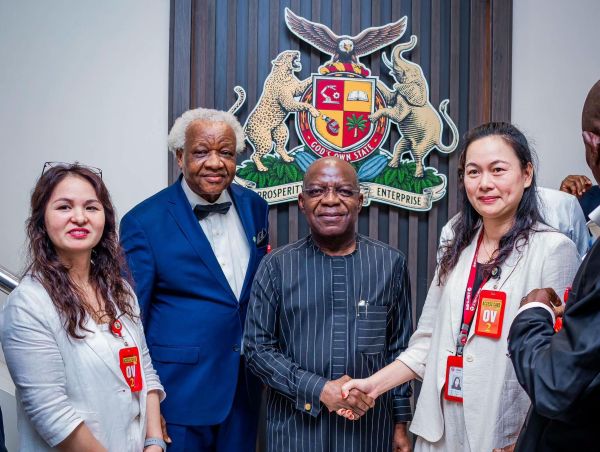 The Abia State Government and a consortium of Nigerian and Chinese investors are advancing plans to establish a $145 million solar manufacturing plant in Umueleghele, Isiala Ngwa South Local Government Area, under a public-private partnership arrangement.
The proposed facility, involving the state government, MD Nwakamma Nigeria Limited and Chinese technical partners, has reached the final investment decision stage, according to officials connected with the project.




Abia State Governor, Dr Alex Otti, welcomed the progress when he received the investment delegation, led by Dr Oko Jaja, at his office in Nvosi, Isiala Ngwa South, on Thursday.
Otti described the proposed investment as an important vote of confidence in Abia’s improving business environment and a potential milestone in the state’s industrial development agenda.
The governor said his administration remained committed to providing an enabling environment in which legitimate businesses could invest, expand and operate profitably.
“I am glad that you have reached the final investment decision, where you are investing up to $145 million,” Otti said.
“This is what we stand for—creating an enabling environment for businesses to grow and for people to invest.”
State provides land, pledges investment protection
Otti said the state government had taken the necessary steps to make land available for the project and was prepared to address additional requirements that could support its successful implementation.
He urged the investors to continue engaging with the government as the project moved towards construction.
According to the governor, the importance of the plant extends beyond the size of the capital commitment. He said the proposed investment could create jobs, expand economic output and generate wider prosperity for residents.
“We do not take investors lightly. We try to protect them and make life easy for them,” Otti said.
The governor’s assurance reflects the growing competition among Nigerian states to attract private capital into infrastructure, manufacturing and energy projects.
For investors, access to land, predictable regulation, security and efficient government approvals often determines whether announced projects proceed to construction or remain at the proposal stage.
Funding expected in September
Jaja said the delegation visited the governor to provide an update on progress towards establishing the solar manufacturing plant.
He disclosed that the consortium, working with its Chinese partners, planned to commit approximately $145 million to the project.
According to him, the first tranche of financing is expected to be released by September 2026, moving the project into its next phase.
Jaja commended the Otti administration for improving infrastructure, supporting ease-of-doing-business reforms and demonstrating a commitment to investor protection.
He said these efforts had strengthened the consortium’s confidence in locating the facility in Abia.
The expected release of initial funding will be a critical milestone. Large industrial projects frequently face delays between public announcement, financing commitments and physical execution. The start of construction will therefore provide the clearest evidence that the investment has moved from intention to implementation.
Factory to produce solar panels and accessories
The Chief Executive Officer of MD Nwakamma Nigeria Limited, Mr Dennis Madu Nwakamma, said the proposed factory would manufacture solar panels and related renewable-energy accessories.
He explained that the visit by the Chinese technical partners to the proposed site formed part of the preliminary technical assessment required before construction.
Nwakamma said work on the factory was expected to begin by the end of September.
Beyond manufacturing, the project is designed to provide employment and technical-training opportunities for young people in Abia.
He said the company had already started training youths in solar installation and related technologies, adding that selected workers would be sent to China for advanced instruction in solar manufacturing when operations commence.
The skills-development component could prove as important as the factory itself. Nigeria’s clean-energy market is expanding, but much of the technology deployed across the country is imported.
A successful manufacturing operation in Abia could support the gradual transfer of technical knowledge, reduce dependence on imported finished products and strengthen domestic participation in the renewable-energy value chain.
Industrial opportunity for Abia
The proposed plant could position Abia as an emerging centre for renewable-energy manufacturing in Nigeria.
The state already has a strong entrepreneurial and manufacturing culture, particularly around Aba, where small and medium-sized businesses operate across footwear, garments, fabrication and consumer goods.
A large solar manufacturing facility could deepen that industrial identity while creating opportunities for local suppliers in metal fabrication, packaging, logistics, maintenance, construction and professional services.
The plant may also support Nigeria’s broader energy transition by increasing the availability of locally manufactured solar equipment for homes, businesses, farms and public institutions.
However, the factory’s competitiveness will depend on reliable power, efficient logistics, quality control, access to finance and the capacity to compete with imported equipment on price and performance.
Market and investor implications
Nigeria’s unreliable electricity supply continues to drive demand for alternative energy systems.
Households and businesses increasingly rely on solar panels, batteries and inverters to reduce dependence on petrol and diesel generators. This creates a large domestic market for local manufacturers.
For investors, the Abia project offers exposure to a sector with strong underlying demand and considerable room for growth.
Yet manufacturing renewable-energy equipment in Nigeria carries significant risks, including exchange-rate volatility, high financing costs, imported input dependence and infrastructure constraints.
The public-private partnership must therefore establish clear responsibilities, commercial safeguards and performance benchmarks for all parties.
Brand implications
For the Otti administration, the Abia solar manufacturing plant project supports its positioning of Abia as an investor-friendly and production-driven state.
The administration’s brand promise will be strengthened if the factory moves swiftly from financing to construction, employment and production.
For MD Nwakamma Nigeria Limited and its partners, the project offers an opportunity to build credibility around local manufacturing and skills transfer.
But expectations will be high. The companies must demonstrate product quality, environmental responsibility, transparent recruitment and genuine local participation.
BRANDECONOMY Insight
The proposed $145 million Abia solar manufacturing plant represents more than an energy investment. It is a test of whether Nigerian states can convert investor interest into functioning industries.
Abia has provided land and pledged support. The investors have reached a final investment decision and expect initial funding in September. The next measures of progress will be construction, equipment installation, workforce development and commercial production.
If executed successfully, the project could create jobs, strengthen technical capabilities and position Abia within Nigeria’s fast-growing clean-energy economy.
The greater opportunity is to ensure that solar adoption does not merely expand Nigeria’s import bill. It should also build factories, develop skills and create domestic value.