
Zenith Bank Disowns Fraudulent Investment Videos Linked to Jim Ovia

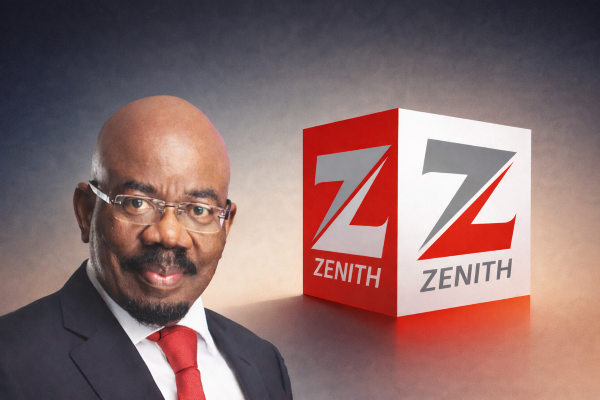
Zenith Bank Plc has warned the public to ignore viral online videos falsely linking its Group Chairman, Dr. Jim Ovia, to an investment platform operating under the name Wealth Bridge.
In a statement issued via its official X (formerly Twitter) handle, the bank clarified that neither Dr. Ovia nor Zenith Bank has endorsed or approved the scheme. The fraudulent videos reportedly claim that the Central Bank of Nigeria (CBN) sanctioned the project and promise weekly returns of up to ₦2 million on a ₦380,000 investment.




Zenith Bank described the videos and associated promotional materials as entirely fake and unrelated to the bank or any of its affiliated entities or Jim Ovia.
According to the bank, the content—circulating via a Facebook handle identified as “Greece Island”—redirects viewers to a fabricated webpage resembling a reputable news platform, complete with a registration portal designed to lure unsuspecting investors.
“The claim is entirely false and has no connection whatsoever to the Group Chairman, the Bank or any of its affiliate companies,” the statement emphasised.
The bank advised members of the public to disregard communications linked to “Greece Island,” “Wealth Bridge,” “AfriQuantumX,” “Stock Market Analyst 1,” or any similar entities circulating the deceptive content.
Zenith Bank stressed that anyone engaging with these platforms based on the fraudulent materials does so at their own risk.
The development underscores growing concerns around digital impersonation schemes targeting high-profile corporate leaders and financial institutions in Nigeria’s evolving online ecosystem.
Fraudulent Financial Schemes in Nigeria: A Contemporary Overview
While the recent Wealth Bridge video scam misusing the name of Dr. Jim Ovia and Zenith Bank reflects a specific case of impersonation and deceptive promise of unrealistic returns, it is part of a broader pattern of financial schemes that have proliferated in Nigeria over the past few years. These schemes span digital investment platforms, fake forex and crypto opportunities, Ponzi-like structures, and impersonation of respected business figures and institutions.
1. Ponzi and High-Yield Investment Scams
Nigeria has repeatedly grappled with Ponzi-style financial schemes that promise implausibly high returns over short periods. These schemes often:
- Use charismatic promoters or social media influencers
- Sell “guaranteed” double-digit weekly or monthly returns
- Structure entry and withdrawal mechanisms that resemble pyramid structures
The pattern typically follows:
- Early participants receive limited returns (paid with new investor funds)
- Trust expands via testimonials and social sharing
- The scheme collapses when inflows dry up
- Losses are widespread and often unrecoverable
These scams exploit financial illiteracy, psychological triggers (fear of missing out), and weak investor protection frameworks.
2. Crypto and Forex Fraud Platforms
Over the past decade, Nigeria has seen a surge in platforms that claim to offer:
- Automated crypto trading with guaranteed profit percentages
- Foreign exchange arbitrage schemes promising fixed returns
- “Secret” AI trading bots or algorithms
Many of these platforms copy international branding, create lookalike websites, or embed professional-sounding whitepapers. In reality, most are unregistered, unregulated, and designed to extract entry fees without delivering legitimate services.
3. Impersonation and Deepfake Endorsements
The Wealth Bridge scam falls into a growing pattern of impersonation fraud, where:
- Criminals misuse the names and likenesses of prominent business leaders (e.g., CEOs, founders of major banks)
- Regulators, CBN approvals, or institutional badges are falsely claimed
- Fake news websites and cloned social media handles are used to fabricate legitimacy
Recent examples include fake investment endorsements attributed to well-known tech entrepreneurs, regulatory endorsement claims falsely tied to the Security and Exchange Commission, and fraudulent CEO announcements on cloned LinkedIn feeds.
4. Fake Savings and Cooperative Investment Schemes
On a smaller scale but with deep local impact, a proliferation of unlicensed savings cooperatives and group investment schemes have emerged in peri-urban and informal economic zones. These often:
- Offer pooled investment returns
- Promise fixed monthly dividends
- Lack transparent legal structures
When these schemes fail, social networks fracture and community trust erodes.
5. Job and Loan Guarantee Scams
Another recurring fraud vector combines employment and finance:
- Fake recruitment adverts promising jobs contingent on upfront payments
- “Loan processing fees” required before disbursement
- Use of official-sounding titles, stamps, and institutional signage
These schemes prey on unemployment pressures and credit scarcity.
Underlying Drivers of the Fraud Surge
Several systemic factors have created fertile ground for these fraudulent schemes:
- Digital Platform Accessibility: Social media and messaging apps enable rapid and low-cost dissemination of deceptive content.
- Financial Literacy Gaps: Many Nigerians lack familiarity with investment fundamentals and risk assessment.
- Regulatory Fragmentation: Enforcement capacity across fintech, banking, and online platforms is stretched.
- Trust in Authority Figures: Scammers exploit the credibility of respected business leaders and institutions.
- Economic Pressures: High unemployment and income insecurity increase the appeal of “quick-return” propositions.
These factors create a landscape where deception can spread before detection and intervention occur.
BRANDECONOMY Insight
Nigeria’s recent wave of investment and fraud schemes is not merely a series of isolated bad actors; it reflects a systemic vulnerability in the interface between emerging digital finance and traditional investment governance.
Three strategic lessons emerge:
1. Trust Architecture Matters More Than Ever
In economies with expanding digital participation but uneven financial literacy, trust architectures — the systems that embed credibility in financial exchanges — are critical. Financial regulators, banks, and credible institutions must proactively signal legitimacy and expose fraud swiftly. A reactive posture cedes the narrative to fraudsters.
2. Financial Literacy Is Economic Infrastructure
Warnings and advisories help, but they are not infrastructure. Financial education — rooted in realistic risk-reward frameworks, red-flag awareness, and digital transaction literacy — should be treated as economic infrastructure, akin to power grids and transport corridors.
3. Fraud Risk Is a Structural Economic Risk
When financial fraud permeates public consciousness, the consequence is not only individual wealth loss; it erodes institutional trust, increases risk premiums, reduces real investment, and discourages SME participation in formal financial ecosystems. Restoring confidence requires visible enforcement, transparent regulatory action, and tangible recovery pathways.
Nigeria’s long-term economic resilience depends on ensuring financial opportunity is not overshadowed by financial exploitation.