 By Ayoola Ajanaku
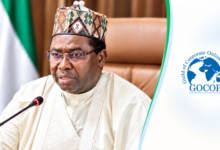
In the often layered and delicate world of Northern Nigeria’s socio-political engagement, the Arewa Consultative Forum (ACF) has long stood as a unifying platform laden with an elite council of voices tasked with articulating the interests, anxieties, and aspirations of the region. Beneath its calm exterior, a storm has been brewing. What began as murmurs of procedural disagreement has now erupted into open confrontation between the Chairman, BOT, Alhaji Bashir Dalhatu (Walin Dutse) and members of the Executive Committee (EXCO), exposing deep fractures within one of the North’s most influential bodies.


At the heart of the crisis lies a fundamental question: who truly holds the reins of authority within the ACF? Its constitution has been put to the test at this rate. Like many legacy organizations such as Afenifere, Ohaneze Ndigbo amongst others, the ACF is governed by a constitution designed to balance leadership authority with collective oversight.
The BOT Chairman and Chairman respectively are traditionally seen as the moral and strategic head, are expected to guide the Forum’s direction while embodying its public voice. The EXCO, on the other hand, serves as the engine room tasked with policy formulation, operational decisions, and ensuring that the organization’s actions reflect a consensus. However, recent events suggest that this balance has tilted precariously.
Sources within the Forum indicate that disagreements began over what some EXCO members describe as “unilateral actions” by the BOT Chairman, hinged on decisions allegedly taken without adequate consultation or approval. These actions, reportedly ranging from public statements to strategic engagements, have sparked accusations of constitutional overreach.
For the BOT Chairman’s camp, however, the narrative is different. Allies argue that the office demands a degree of decisiveness, particularly in moments requiring swift response to national developments. In their view, the Chairman is merely exercising the leadership latitude necessary to keep the Forum relevant in a fast-moving political environment.
Furthermore, from closed doors to public spat, as the latest development has witnessed the attention of the Arewa Consultative Forum (ACF) to an announcement of a change in the leadership of the organisation. It stated in categorical terms that it is totally false and the purported action from which the announcement derived is unconstitutional.
Consequently, Mr. Mike Mamman Mike Osuman, LLM, SAN, FCIArb, OFR, Chairman of the ACF, has authorised that this disclaimer be issued to disabuse the minds of members of the ACF, the press, and the public in general but especially the teeming masses of Arewa who have been suffering untold existential socioeconomic hardships.
The rebuttal seeks to clear the air on the scheme-of-affairs of the monolithic Northern bloc that speaks with one voice. What makes the current situation particularly concerning is not just the disagreement itself, but how it has unfolded.
Internal disputes are not uncommon in organizations of ACF’s stature. What is unusual and potentially damaging is the degree to which this conflict has spilled into public domain.
Sharp exchanges, often described as “brickbats,” have reportedly been traded between senior figures. Statements and counter-statements, whether officially sanctioned or leaked, have painted a picture of an organization struggling to maintain internal cohesion.
Observers note that once disagreements reach this level of visibility, they take on a life of their own. The focus shifts from the substance of the dispute to the spectacle of division, eroding public confidence in the institution’s ability to speak with one voice.
The politics beneath the surface has been exposed with narratives flying in national dailies and mass media. To understand the full weight of the crisis, one must look beyond procedural arguments to the broader political context. The ACF is not just a cultural or advisory body; it is a significant player in Nigeria’s political ecosystem, often serving as a barometer of Northern sentiment.
As such, internal disputes within the Forum are rarely insulated from external political dynamics.
Some analysts suggest that the current tensions may reflect deeper ideological divides within the Northern elite. Questions about the region’s political direction, its relationship with the federal government, and strategies for addressing pressing challenges ranging from security to economic development may be feeding into the leadership tussle.
There is also the possibility of generational friction. As newer voices seek greater influence within the Forum, established leaders may find their authority increasingly questioned. In such a climate, even minor procedural disagreements can become proxies for larger struggles over relevance and control.
Institutional integrity is at stake, as
the implications of the ongoing crisis extend far beyond the immediate actors involved. For decades, the ACF has positioned itself as a stabilizing force via a platform capable of aggregating diverse Northern perspectives into coherent policy positions – That role is now under threat.
An organization divided against itself risks losing its moral authority. When leaders appear more focused on internal battles than on addressing the concerns of their constituents, their credibility inevitably suffers. This, in turn, weakens the Forum’s ability to influence national discourse or advocate effectively for the region.
Moreover, prolonged infighting could lead to factionalization. If camps harden and compromise becomes elusive, the ACF may find itself split into competing blocs – each claiming legitimacy, but neither commanding broad-based support.
The way forward to resolve the latest crisis will require more than rhetorical appeals to unity. At its core, the dispute is about structure, process, and trust.
Firstly, there is an urgent need for constitutional clarity. Ambiguities that allow for competing interpretations of authority must be addressed, either through formal amendments or authoritative interpretations agreed upon by all stakeholders.
Secondly, internal communication channels must be strengthened. The fact that disagreements have spilled into the public domain suggests a breakdown in internal dispute-resolution mechanisms. Rebuilding these channels will be essential to preventing future crises.
Thirdly, both the BOT Chairman and EXCO members will need to demonstrate a willingness to compromise. Leadership, in this context, is not about asserting dominance but about fostering consensus. This may require difficult concessions on all sides.
In addition, there is a broader need for introspection within the Forum. The current crisis offers an opportunity to reassess not just governance structures, but also the organization’s relevance in a rapidly changing socio-political landscape. By addressing underlying tensions, the ACF could emerge stronger and more resilient.
Such moments of crises often serve as defining tests for institutions. For the Arewa Consultative Forum, this is one such moment. The path it chooses whether toward reconciliation or further division will have lasting implications, not just for the organization itself, but for the broader Northern region it seeks to represent.
In a nutshell, the stakes are clear. Beyond the personalities and procedural disputes lies a larger question about leadership, unity, and purpose. Can the ACF navigate its internal storm and reclaim its role as a cohesive voice of the North? Or will the current tensions mark the beginning of a gradual decline in its influence?
For now, the storm continues to brew, and all eyes remain on how the Forum’s leaders will steer their embattled ship through turbulent waters.
Ayoola Ajanaku is a Communications & Advocacy Specialist based in Lagos, Nigeria