

Afenifere at a Defining Crossroads: Olaitan Oladipupo and the Burden of Preserving Pa Fasoranti’s Golden Legacy

By Ayoola Ajanaku
As the pan-Yoruba socio-cultural organisation announces the consolidation of its leadership under Kabiyesi Olaitan Oladipupo, the imperative of unity, principled leadership and the enduring quest for a restructured Nigeria takes centre stage.




Every enduring institution eventually arrives at a defining moment when the weight of its history must be reconciled with the demands of the future. For Afenifere, the foremost pan-Yoruba socio-cultural organisation, that moment is increasingly framed by the need to consolidate its leadership, overcome internal divisions and preserve the ideological heritage upon which its reputation was built.
The organisation’s announcement on October 20, 2026, of the consolidation of its collective leadership under Kabiyesi Olaitan Oladipupo represents an important statement of intent. It seeks to establish a common leadership direction while paying homage to the golden legacy of Pa Reuben Fasoranti, whose place in the Afenifere tradition is inseparable from the history of Yoruba political thought, democratic advocacy and the struggle for a more equitable Nigerian federation.
Yet, beyond the significance of a leadership announcement lies a larger question: can Afenifere transform the symbolism of unity into a durable platform for political cohesion, ideological renewal and the defence of Yoruba interests within Nigeria’s complex national framework?
The answer will depend not merely on who occupies the leadership position, but on the principles, restraint and collective responsibility that guide the organisation in the years ahead.
Pa Fasoranti and the weight of an enduring legacy – To understand the significance of this transition, it is necessary to appreciate the historical tradition that Afenifere represents.
From the ideological foundations associated with Chief Obafemi Awolowo to the successive contributions of Chief Adekunle Ajasin and Senator Abraham Adesanya, the organisation has been associated with a distinctive political philosophy built around progressive governance, social justice, federalism and the advancement of the Yoruba people.
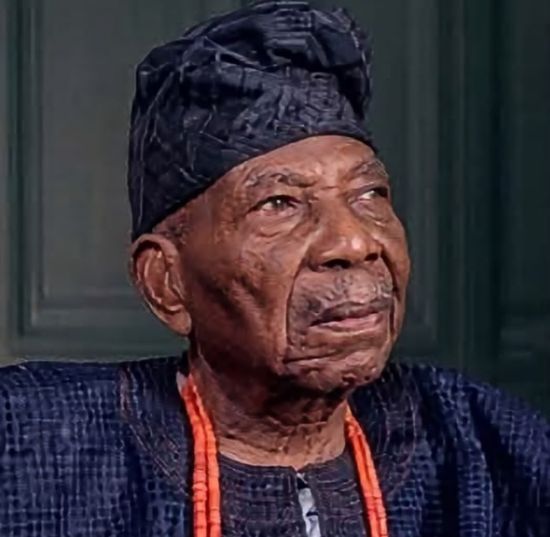
Pa Reuben Fasoranti occupies an important place in this tradition. His years of involvement in Afenifere’s affairs have come to symbolise a commitment to ideological continuity, principled public engagement and the preservation of a political inheritance that extends beyond individual personalities.
His significance is therefore not simply a function of longevity. It rests on the expectation that leadership should be exercised as a responsibility to the people rather than as an instrument of personal or sectional advantage.
Through periods of political uncertainty and disagreement, Afenifere’s historic ideals have remained relevant to debates about the structure of the Nigerian state, the distribution of political power, regional development and the protection of democratic institutions.
The legacy associated with Pa Reuben Fasoranti must consequently be understood as both an inheritance and an obligation. To celebrate it meaningfully requires more than ceremonial tributes. It demands the continued defence of the principles that have sustained Afenifere’s place in the Yoruba political imagination.
That is the standard against which any leadership transition must ultimately be assessed.
Olaitan Oladipupo and the imperative of consolidation – The emergence of Kabiyesi Olaitan Oladipupo as the focal point of Afenifere’s consolidated leadership places him at the intersection of historical expectations and contemporary challenges.
According to the organisation’s announcement, Oladipupo’s leadership is intended to advance the core interests of Afenifere while promoting the broader unity of Nigeria.
This is a delicate undertaking, particularly in a political environment where ethnic identity, partisan loyalties and competing interpretations of national interest can complicate collective action.
For a pan-Yoruba organisation, unity cannot simply mean the absence of public disagreement. It must involve a shared understanding of the community’s priorities, a credible process for managing differences and a commitment to resolving disputes without sacrificing institutional integrity.
Oladipupo’s immediate challenge, therefore, is to demonstrate that consolidation can become a practical instrument of institutional renewal.
That requires sustained engagement with the organisation’s different tendencies, meaningful dialogue across generational boundaries and a willingness to place collective objectives above personal rivalries.
It also requires clarity about the distinction between Afenifere’s socio-cultural mandate and the competing ambitions of political actors who may seek to influence its direction.
The organisation’s announcement presents Oladipupo as a leader capable of balancing Yoruba advocacy with national cohesion. The enduring test of that proposition will be his ability to translate the stated objective into measurable institutional progress.
Leadership, after all, acquires legitimacy not through declarations alone, but through consistency, fairness and the confidence it inspires among those it represents.
Beyond Factions: The Search for Pan-Yoruba Unity
Perhaps the most consequential element of Afenifere’s announcement is its appeal to Yoruba sons and daughters to close ranks, reject bitterness and place the collective interest above division.
The call is significant because socio-cultural organisations derive much of their influence from the breadth of the constituencies they can credibly represent. Where factions become entrenched, the ability to articulate common interests and influence national conversations can be weakened.
For the Yoruba nation, whose political history includes a rich tradition of ideological debate, civic participation and intellectual engagement, unity should not be confused with enforced unanimity.
A credible platform for unity must accommodate legitimate differences while establishing common ground on fundamental questions: security, economic opportunity, equitable representation, cultural preservation, democratic accountability and the future of Nigeria’s federal arrangement.
The expression of a collective Yoruba interest becomes more persuasive when it emerges from consultation rather than coercion, and when its advocates demonstrate that the principles they demand of the wider Nigerian state are reflected in their own internal conduct.
Afenifere’s appeal must therefore extend beyond political declarations. It should inspire a renewed commitment to institutional dialogue, constructive engagement with younger generations and the development of practical proposals capable of improving the lives of ordinary people.
The ultimate measure of unity is not the frequency with which leaders invoke it, but the extent to which it enables a community to address shared challenges with greater purpose and effectiveness.
A Royal Mandate Above Partisan Interests
A particularly important dimension of the announcement is its emphasis on the restraint and statesmanship expected of Kabiyesi Oladipupo in discharging the leadership responsibility.
The organisation expressly frames the position as a trust rather than a conventional political office. This distinction carries considerable weight, especially given the potential tensions between traditional authority, socio-cultural representation and partisan politics.
A traditional leader operating within such a framework must be conscious that the authority of the institution depends partly on its capacity to command respect across political divides.
Royal stature can provide a platform for reconciliation, but its effectiveness may diminish if it becomes indistinguishable from the ambitions of a particular political faction.
Oladipupo’s responsibility, as articulated by Afenifere, is therefore to exercise judgement, maintain institutional independence and ensure that transient political calculations do not displace the organisation’s enduring objectives.
Such restraint should not be mistaken for passivity. Rather, it calls for the kind of statesmanship that allows a leader to speak firmly on matters of collective concern without becoming captive to partisan pressures.
It also places a premium on transparency, consultation and the protection of the organisation’s institutional character.
If successfully implemented, this approach could help strengthen confidence in Afenifere as a platform for principled advocacy rather than a vehicle for political expediency.
The Larger Question: A Just and Restructured Nigeria
Ultimately, the consolidation of Afenifere’s leadership must be judged against the organisation’s longstanding commitment to true federalism, equitable governance and a Nigerian state in which the constituent peoples and regions can pursue development within a fair constitutional framework.
For Afenifere, the question of restructuring is not merely an abstract constitutional debate. It intersects with issues of security, resource allocation, fiscal responsibility, regional autonomy and the capacity of different parts of the country to respond to their specific development needs.
A united organisation could contribute meaningfully to these conversations by advancing coherent policy positions, building constructive alliances and engaging national institutions through sustained democratic advocacy.
It must, however, demonstrate that its vision of equity is compatible with the rights and aspirations of other Nigerians. The pursuit of Yoruba interests and the promotion of national cohesion need not be contradictory objectives. Properly conceived, each can reinforce the other within a genuinely federal and democratic arrangement.
This is where the legacy of Pa Reuben Fasoranti becomes especially relevant. The most meaningful tribute to a tradition of principled leadership is the willingness to preserve its central ideals while adapting its methods to contemporary realities.
Afenifere’s future influence will depend on whether it can make that transition successfully.
Afenifere’s announcement of consolidated leadership under Kabiyesi Olaitan Oladipupo opens a new chapter in an organisation whose historical significance reaches far beyond its internal structures.
It offers an opportunity to honour Pa Reuben Fasoranti’s legacy, rebuild confidence across competing tendencies and renew the organisation’s commitment to the political and socio-cultural aspirations of the Yoruba people.
This opportunity also comes with a burden – Unity must be demonstrated, not merely proclaimed. Leadership must be earned through service, not sustained by titles alone. The defence of collective interests must remain anchored in justice, institutional integrity and respect for democratic principles.
If Oladipupo can bring these qualities to bear, the consolidation may become more than an administrative or symbolic transition. It could provide a foundation for a more cohesive Afenifere, better equipped to articulate Yoruba aspirations and contribute constructively to Nigeria’s national development.
In the final analysis, the golden legacy of Pa Reuben Fasoranti will endure most powerfully not in tributes to the past, but in the quality of leadership, the strength of institutions and the tangible progress achieved by the generations that follow.
For Afenifere, the task ahead is clear: preserve the ideals, bridge the divisions and ensure that history becomes a platform for renewal rather than a burden of nostalgia.
Ayoola Ajanaku is a Communications and Advocacy Specialist based in Lagos, Nigeria…