
₦239bn in Limbo: SEC Moves to Reconnect Nigerian Families With Lost Dividends

 Nigeria has spent years modernising how investors buy, sell and settle securities. Yet one of the capital market’s most stubborn problems begins where technology frequently ends: what happens to investments when the investor dies?
With the country’s pool of unclaimed dividends estimated at about ₦239 billion, the Securities and Exchange Commission is intensifying efforts to reconnect investors and beneficiaries with assets that legally belong to them but remain stranded by outdated records, inheritance complexities, poor awareness and procedural bottlenecks.
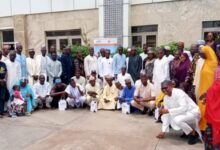



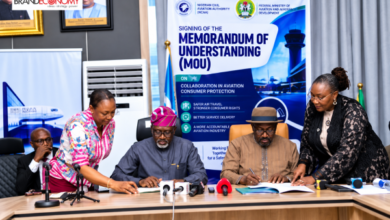
SEC Director-General, Dr Emomotimi Agama, brought the human dimension of the problem into sharp focus at the Probate and Unclaimed Monies Awareness and Investor Clinic in Abuja on Thursday.
His message was simple: unclaimed dividends and dormant investments are not abstract entries on corporate balance sheets. They represent wealth belonging to real people and families.
For many households, Agama noted, the death of someone who owned shares or other investments can mark the beginning of a difficult journey involving death certificates, registrars, probate, letters of administration and other documentation unfamiliar to beneficiaries.
What should be an orderly transfer of wealth can consequently deteriorate into years of uncertainty—or outright abandonment.
A ₦239bn problem with human faces
Babangida Yahaya, Head Depositor at the Central Securities Clearing System, put the estimated value of the unclaimed dividend pool at about ₦239 billion, with inherited but unclaimed investments among the contributors.
The figure represents more than a regulatory headache.
At household level, inaccessible investment wealth can mean money unavailable for education, healthcare, housing, business formation or reinvestment. At market level, persistent difficulty recovering legitimate investment proceeds weakens the proposition that equities are reliable vehicles for long-term wealth creation.
And at national level, it exposes a gap in Nigeria’s financial inclusion architecture: acquiring an investment has become progressively easier, but transmitting that investment efficiently across generations can remain unnecessarily difficult.
The irony is striking.
Nigeria’s capital market moved eligible equities transactions to a T+1 settlement cycle in June 2026—meaning trades can now settle one business day after execution. Yet when an investor dies, beneficiaries unfamiliar with probate and registrar requirements can face a significantly more complicated process before assuming control of inherited securities.
A truly modern capital market must modernise both transactions and succession.
SEC takes investor protection beyond the shareholder
That is the significance of the Abuja clinic.
Agama said the Commission’s responsibility to protect investors does not terminate when a shareholder dies. It extends to legitimate beneficiaries seeking access to inherited assets.
The programme is part of a nationwide SEC campaign organised with Meristem Registrars and Probate Services Limited to improve financial literacy, investor protection and confidence.
Acting Chief Executive Officer of Meristem Registrars and Probate Services, Ms Nkechinyelu Okoye, said the clinic was designed to give investors, executors, administrators and beneficiaries practical understanding of estate administration and investment transmission.
Participants also receive access to specialists capable of addressing individual circumstances.
Okoye identified lack of information as an important reason probate appears intimidating. Beneficiaries need to understand both the documentation required and the appropriate legal pathway—whether a Grant of Probate in applicable testate estates or Letters of Administration where relevant.
For SEC’s Head of Monitoring and Enforcement, Mr Makyur Tarfa, the message was even more direct: beneficiaries have money waiting and should complete the necessary processes to recover it.
Technology solved only part of the problem
Nigeria has already moved substantially away from the era of physical dividend warrants.
The e-Dividend Mandate Management System enables investors to have dividends paid electronically into nominated bank accounts, while its self-service architecture allows shareholders to initiate mandates without physically visiting a bank or registrar.
That addresses an important source of future unclaimed dividends.
But technology cannot automatically solve deceased estates, inconsistent names, forgotten investments, incomplete KYC records or families who simply do not know that a deceased relative owned shares.
The next stage therefore requires something bigger than another portal: a national investment-succession infrastructure.
Registrars, brokers, CSCS, listed companies, banks and regulators need interoperable processes that make legitimate transmission faster without weakening safeguards against identity fraud or fraudulent inheritance claims.
Market implications
A ₦239 billion unclaimed-dividend pool is a reputational warning for the capital market.
Retail investors will embrace long-term equities more confidently when they believe ownership rights can survive them and pass efficiently to their families.
Reducing unclaimed dividends could therefore contribute to deeper retail participation, encourage multigenerational investing and strengthen public confidence in equities as wealth-preservation instruments.
The broader regulatory framework increasingly recognises the principle that qualifying aged unclaimed dividends should be held in trust for legitimate owners rather than casually treated as windfalls divorced from beneficiaries.
The real challenge is translating that principle into recovery that ordinary Nigerians can navigate.
Brand implications
For listed companies, every unclaimed dividend represents an unfinished shareholder relationship.
Investor relations should therefore extend beyond annual reports and earnings calls. Companies and registrars should develop easy-to-understand succession guides, dedicated beneficiary desks, proactive investor-record updates and clearly published service timelines.
Within applicable privacy rules, better digital reminders and investor-data reconciliation can reduce the probability that today’s dividend becomes tomorrow’s dormant asset.
A brand that declares billions in dividends but leaves shareholders struggling to access them has completed only half the shareholder-value equation.
Investor relevance
The SEC campaign also carries a personal lesson for every investor: wealth that cannot be identified by one’s beneficiaries can effectively become invisible wealth.
Maintaining updated registrar, brokerage and bank information; completing e-Dividend mandates; keeping an accessible inventory of investments; and making appropriate estate-planning arrangements can substantially improve the prospects of orderly transmission.
Investment planning should not end with deciding what to buy. It should include deciding how ownership survives the investor.
BRANDECONOMY Insight
Nigeria’s ₦239 billion unclaimed-dividend problem should stop being viewed principally as a “missing investor” problem.
It is fundamentally a market-design problem.
The most sophisticated capital market is not simply one where a shareholder can buy a stock on a smartphone and settle the trade the next day. It is one where ownership can move securely and efficiently from one generation to another.
SEC’s investor clinics are an important intervention. But Nigeria should ultimately aim for something more ambitious: a seamless, secure, digitally assisted investment-succession system connecting investors, registrars, CSCS, courts and verified beneficiaries.
The ultimate measure of financial inclusion is not merely how many Nigerians acquire assets.
It is whether those assets can become lasting family wealth.
₦239 billion waiting to be claimed is not a success story about accumulated money.
It is a challenge to make Nigeria’s capital market work—from the first investment to the final inheritance.