SEC Unveils Market Blueprint to Power Nigeria’s Trillion-Dollar Economy


Nigeria’s capital market has entered a pivotal moment — one that could shape its transition into a $1 trillion economy and redefine the investment landscape for a generation. At the heart of this transformation is a renewed and recalibrated Capital Market Master Plan, unveiled by the Securities and Exchange Commission (SEC) under the leadership of Director-General Dr. Emomotimi Agama.
Unlike previous cycles of reforms, this master plan is not merely a technical update. It is a strategic repositioning of the capital market as a central engine of national development — from infrastructure financing and digital innovation to commodities, sustainability, and inclusive wealth creation.

A Living Master Plan Aligned With Nigeria’s Development Ambition
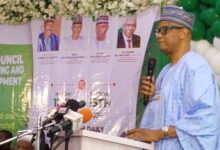
Speaking at the Capital Market Committee meeting in Lagos, Dr. Agama emphasized that the new plan — covering 2026 to 2030 (and extendable to 2035) — has been deliberately synchronised with Nigeria’s National Development Plan.
This alignment marks a shift in regulatory philosophy:
- No more fragmented reform cycles
- No parallel roadmaps detached from economic reality
- A dynamic plan that evolves with market conditions
Agama described it as a “living document” designed to adapt, grow, and respond to Nigeria’s complex economic needs:
“The goal is to position the capital market as a central driver of national development. National progress becomes difficult when policymakers fail to involve the market. Without us, they are lost.”
This is a profound acknowledgment of the capital market’s strategic role in financing infrastructure, powering enterprise growth, and attracting long-term investments across every sector.
A Blueprint Built on Collaboration, Practicality & National Service
To ensure grounded execution, SEC is deploying a multi-layered implementation structure:
1. External Steering Committee
Provides leadership, strategic guidance, accountability, and conflict resolution.
2. Working Groups on Key Market Pillars:
- Commodities
- Digital Economy
- Market Liquidity
- Listings Expansion
- Sustainability
Agama encouraged even those not formally selected to volunteer, framing participation as national service.
3. Support From Development Institutions
The plan is being strengthened through advisory specialists from:
- FSD Africa
- Nigerian Capital Development Fund
Stakeholders will also undergo sensitisation programmes to ensure the plan reflects practical, realistic, and Nigeria-specific economic conditions.
Infrastructure, Interventions & Daily Execution: The Agama Doctrine
Agama’s remarks underscored a philosophy rarely articulated so directly by Nigerian regulators:
- Capital markets cannot thrive without functional infrastructure.
- Daily interventions matter more than sweeping pronouncements.
- Ports, roads, rail, healthcare, and education systems all influence investor confidence and cost of capital.
This holistic approach aligns with the practices of advanced financial markets, where capital development is inseparable from national development.
2026: The Year of Recapitalisation — A Structural Reset for the Market
In one of the most consequential announcements of the year, the SEC confirmed that full recapitalisation of all capital market intermediaries will begin in 2026.
This is the industry’s version of the transformational banking recapitalisation of 2004 — and the insurance sector reforms that followed.
Why Recapitalisation Is Necessary
- Stronger institutions inspire investor confidence.
- The market must be robust enough to attract global capital.
- Larger balance sheets support innovation and technology adoption.
- Nigeria needs a market architecture capable of funding a $1 trillion economy.
Agama described recapitalisation as a strategic necessity, not a punitive measure:
“A stronger capital market is essential to supporting economic growth and long-term investment flows.”
What Investors & Operators Should Expect
On January 16, 2026, SEC will publish:
- New minimum capital requirements
- Updated regulatory frameworks
- Transition timelines
- Compliance pathways
This reform will catalyse consolidation, mergers, acquisitions, and new structures — reshaping the landscape from brokers and fund managers to issuing houses and custodians.
A Market Positioned for Global Competitiveness
With recapitalisation on the horizon and a forward-looking master plan in motion, Nigeria’s capital market is being prepared to:
- Compete globally
- Mobilise long-term domestic capital
- Attract international funds
- Deepen liquidity and listings
- Support infrastructure and industrial expansion
The endgame is unmistakable:
Build a market that fuels Nigeria’s economic transformation and positions the nation as Africa’s premier investment hub.
BRANDECONOMY Insight
Nigeria’s economic future will not be determined by government expenditure alone — but by capital market sophistication, investor confidence, and regulatory courage.
What SEC has unveiled is both a blueprint and a challenge:
- To policymakers: integrate market mechanisms into national planning.
- To operators: scale up, innovate, and become globally competitive.
- To investors: prepare for a market that is deeper, stronger, and more transparent.
Recapitalisation is not just a regulatory event. It is the beginning of a new financial era — one that could transform Nigeria’s investment profile for decades.
SEC is positioning the market not just as a component of national development, but as its engine.
BRANDECONOMY will continue to analyse how this transformation unfolds and what it means for investors, operators, and the wider economy.