

Renaissance, Indorama Seal 16-Year Gas Deal to Boost Fertiliser Production and Food Security

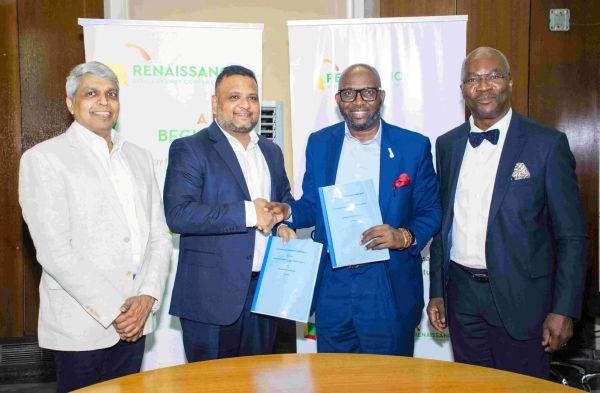
A 16-year gas supply agreement between Renaissance Africa Energy Company Limited and Indorama Fertiliser is more than an energy transaction. It strengthens the link between Nigeria’s gas reserves, fertiliser production, agricultural productivity and the wider food-security agenda.
Renaissance Africa Energy Company Limited and Indorama Fertiliser have signed a 16-year natural gas supply agreement aimed at boosting fertiliser production, supporting agriculture and strengthening Nigeria’s food-security value chain.




The Managing Director of Renaissance, Mr Tony Attah, disclosed this in a statement on Monday in Port Harcourt, Rivers State.
According to Attah, the natural gas will be supplied from Renaissance’s Assa North-Ohaji South Gas Processing Plant to Indorama Fertiliser, a subsidiary of Indorama Eleme Petrochemicals Limited, based in Rivers State.
Under the agreement, Renaissance will supply up to 60 million standard cubic feet of natural gas daily to Indorama on a firm basis for 16 years.
Gas Meets Food
Attah described the agreement as a major milestone in Nigeria’s push for domestic gas utilisation, industrial growth and agricultural development.
“This agreement reflects our commitment to unlocking the value of Nigeria’s abundant gas resources through partnerships that create real and lasting impact,” he said.
He added that supplying gas to a major fertiliser producer supports a value chain that is critical to food security, agricultural productivity and wider economic development.
That is the core significance of the deal.
Natural gas is not only a fuel. In fertiliser production, it is a strategic feedstock. Without reliable gas, fertiliser plants face production uncertainty, cost pressure and supply disruptions. With stable gas supply, fertiliser manufacturers can plan better, produce more consistently and respond more effectively to domestic and regional demand.
Indorama’s Supply Security
Attah said the deal would provide Indorama with a secure and reliable source of natural gas to sustain uninterrupted production.
For a large fertiliser producer, supply security is essential. Fertiliser plants are capital-intensive and require predictable feedstock to operate efficiently. Any gas-supply disruption can affect output, pricing, delivery schedules and the ability of farmers to access inputs on time.
The Managing Director of Indorama Fertiliser Company, Mr Manish Mundra, described the agreement as an important milestone for Nigeria.
According to him, reliable access to natural gas is fundamental to fertiliser production, while the long-term arrangement provides a strong foundation for sustainable operations and future growth.
He said the deal would support Indorama’s ambition to contribute to Nigeria’s agricultural transformation agenda.
The Food-Security Link
Nigeria’s food-security challenge is not caused by one factor. It is driven by insecurity in farming communities, high transport costs, weak storage, climate stress, limited mechanisation, expensive credit, post-harvest losses and inadequate access to quality farm inputs.
Fertiliser remains one of the most important inputs in that chain.
When fertiliser is available, affordable and properly used, farmers can improve yields. When it is scarce or expensive, productivity suffers. That affects food prices, household welfare and agro-industrial output.
Recent research on global food systems highlights the tight connection between natural gas, mineral fertilisers and crop supply, noting that disruptions in upstream gas and fertiliser chains can spread into wider food-supply vulnerabilities.
That makes the Renaissance-Indorama agreement strategically relevant. It connects an upstream energy resource to downstream agricultural productivity.
Decade of Gas
The News Agency of Nigeria reports that the agreement aligns with the Federal Government’s Decade of Gas initiative.
That alignment matters because Nigeria’s development challenge is no longer simply to export crude oil or leave gas underutilised. It is to convert gas into power, fertiliser, petrochemicals, industrial feedstock, cooking fuel and manufacturing competitiveness.
Nigeria’s gas-sector policy has increasingly focused on domestic utilisation and industrialisation. Reuters reported that the National Gas Master Plan launched in 2026 targets higher gas output and large investments across the gas value chain, with government seeking to turn gas into a primary driver of economic growth.
The Renaissance-Indorama deal fits into that wider policy direction: gas as an engine of industry, not merely an export commodity.
Market Implications
The agreement could have important market implications for Nigeria’s fertiliser and agribusiness sectors.
First, it strengthens feedstock certainty for Indorama. Stable gas supply can support more predictable fertiliser production and delivery planning.
Second, it supports domestic agricultural input supply. If production is sustained, farmers and distributors may benefit from better availability, especially during planting seasons.
Third, it deepens gas-based industrialisation in Rivers State and the wider Niger Delta industrial corridor.
Fourth, it can enhance Nigeria’s regional fertiliser trade, especially if Indorama meets both domestic and export demand.
Fifth, it strengthens the investment case for gas processing, pipeline infrastructure and gas-to-industry partnerships.
For the food economy, the deal is a reminder that fertiliser supply does not begin at the farm gate. It begins in energy infrastructure.
Brand Implications
For Renaissance, the agreement reinforces its positioning as an energy company focused on domestic value creation. Supplying gas to a strategic fertiliser producer gives the company a development-facing brand story: gas for industry, agriculture and food security.
For Indorama, the deal strengthens its reputation as a serious industrial player in Nigeria’s agro-input value chain. Reliable gas supply supports operational credibility and long-term planning.
For the Federal Government, the transaction strengthens the policy narrative around gas-led industrialisation.
But the brand promise must be matched by delivery. The real impact will be judged by sustained supply, uninterrupted production, wider fertiliser availability and measurable benefits to farmers.
Investor Relevance
Investors should watch the gas-fertiliser-agriculture corridor closely.
Opportunities are emerging around gas processing, fertiliser production, pipeline logistics, agro-distribution, storage, blended fertiliser, mechanised farming, warehousing, regional export trade and industrial clusters.
A long-term gas supply deal reduces uncertainty for industrial users and can help unlock capital in adjacent sectors.
For investors in agriculture, the message is clear: input security is central to food-sector returns. A farming economy cannot scale if fertiliser supply remains unstable or too expensive.
For energy investors, the deal shows how Nigeria’s gas reserves can be monetised through domestic industrial demand rather than only export routes.
What Must Follow
The agreement is important, but it should not stand alone.
To convert the deal into broader food-security gains, Nigeria must strengthen fertiliser distribution, support farmer access, improve rural roads, reduce insecurity in farming areas, expand extension services and ensure that inputs reach genuine producers rather than speculative middlemen.
Gas supply is the foundation. Farm productivity is the outcome.
The bridge between both is policy execution.
BRANDECONOMY Insight
The Renaissance-Indorama gas supply agreement is a practical example of what Nigeria’s gas economy should become.
Not gas for speeches. Gas for factories. Gas for fertiliser. Gas for farmers. Gas for jobs. Gas for food security.
The deal shows how energy policy, industrial strategy and agricultural productivity can meet in one value chain.
Nigeria’s challenge has never been lack of resources. It has been the weak conversion of resources into broad economic value.
If this agreement delivers reliable gas, sustained fertiliser production and better input availability, it will strengthen one of the most important links in Nigeria’s food-security chain.
The lesson is simple: to grow more food, Nigeria must also power the industries that feed the farm.