

In a rare and decisive alignment, the Northern Governors Forum (NGF) has placed the urgency of investing in the first 2,000 days of life at the centre of its new development and security strategy—marking a significant shift in how the region approaches peacebuilding, poverty reduction, and long-term economic resilience.
The “first 2,000 days”—from conception to age five—is globally recognised as the most critical window of human development. During this period, the foundations for a child’s brain development, physical growth, learning ability, emotional stability and future productivity are formed.




For a region grappling with decades of insecurity, poverty, out-of-school children, malnutrition, forced displacement, and fragile state capacity, the NGF’s refocus on early childhood is not just a social investment—it is a strategic national security imperative.
A Two-Day Emergency Meeting That Could Redefine the North’s Future
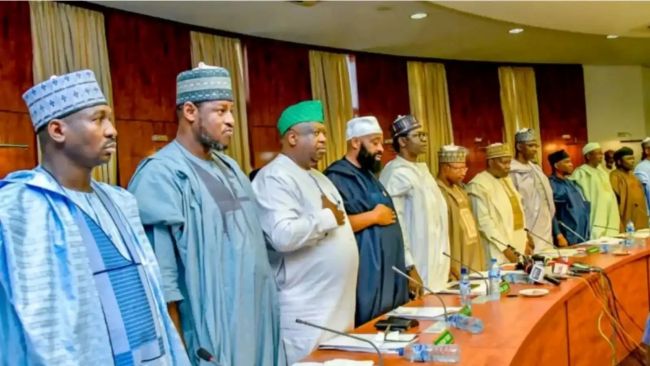
At an emergency meeting in Kaduna, held Monday and Tuesday, Northern Governors hosted senior officials of the World Bank, including:
- Dr Ritgak Tilley-Gyado, Team Lead for Stunting and Early Years
- Dr Mathew Verghis, World Bank Country Director for Nigeria
The agenda was clear:
Align evidence, policy pathways and delivery models for a region-wide Early Years programme capable of shifting long-term outcomes.
This meeting signals a new level of political will—one driven not by short-term political gains but by hard data, demographic realities and security pressures.
World Bank’s Warning: “Early Years Are an Economic and Security Strategy”
Dr Tilley-Gyado presented stark evidence on:
- Chronic stunting rates
- Early learning deficits
- Poor maternal nutrition
- Weak family systems
- Low stimulation and cognitive development
- High child vulnerability in conflict-impacted areas
She emphasised that the early years agenda is not merely a social programme—it is fundamentally a people strategy, an economic strategy, and a stability strategy, especially for regions under demographic pressure and security strain.
In her words, building strong early childhood foundations is a pathway to:
- reducing long-term insecurity,
- expanding economic productivity,
- strengthening social cohesion, and
- breaking the region’s multi-generational poverty cycles.
Why States Hold the Key: “Delivery Happens at the Subnational Level”
Dr Mathew Verghis stressed that states—not the federal government—hold the largest share of responsibility for delivering early childhood interventions at scale.
He noted that successful implementation requires multisectoral convergence across:
- health and nutrition
- early learning and education
- WASH
- women’s empowerment
- agricultural resilience
- food systems
- social protection
This aligns with the National Economic Council’s Human Capital Development (HCD) framework, which positions Early Years investment as a core national priority.
Governors Respond: A Rare Consensus on Human Capital Security
Several Northern Governors made strong, introspective and forward-looking contributions:
Gov. Umar Namadi (Jigawa)
Linked early childhood outcomes to poverty traps, praising the World Bank’s results-based financing for encouraging accountability.
Gov. Umaru Bago (Niger)
Emphasised micronutrient fortification, underscoring the potential of locally produced fortified foods.
Gov. Caleb Mutfwang (Plateau)
Acknowledged the complexity of multisectoral delivery, affirming commitment to evidence-driven implementation.
Gov. Dauda Lawal (Zamfara)
Noted that while challenges are historic, the North now has “a real opportunity to turn the tide.”
Gov. Inuwa Yahaya (Gombe)
Reiterated the value of strong partnerships with the World Bank in improving human capital outcomes.
Collectively, the governors articulated a clear consensus:
“Investing in the first 2,000 days is the single most important investment for peace, productivity, and a stronger northern economy.”
They stressed the urgency of preventing “another lost generation” and committed to shaping an Early Years agenda rooted in local realities, frontline capacity, and evidence-based policy execution.
BRANDECONOMY Analysis:
Early Childhood as a Peacebuilding Tool**
For the North, this shift is deeply strategic:
1. Early Years Investment is a Security Intervention
Regions with high stunting, low literacy and weak early development often experience:
- higher radicalisation risk
- long-term unemployment
- weakened social cohesion
- low civic participation
- persistent insecurity
The governors’ new agenda recognises that human capital security is national security.
2. Demography Is Destiny
Northern Nigeria holds the country’s highest fertility rates.
A failure to invest early turns demographic advantage into demographic risk.
3. The Economy Cannot Grow Faster Than Its People’s Capacity
Early cognitive and physical deficits limit future productivity and GDP contribution.
4. The North Is Facing a Rare Window of Political Alignment
With governors unified and global institutions engaged, the region can unlock transformative reforms.
BRANDECONOMY Verdict
The Northern Governors’ commitment to the “first 2,000 days” marks one of the most consequential policy shifts in decades.
It reflects a sophisticated understanding that:
- development,
- security,
- economic growth, and
- social stability
all begin in early childhood.
If implemented with fidelity, funding, and political continuity, this agenda could help reshape the trajectory of Northern Nigeria—and by extension, the future of the entire nation.