Why Nigeria’s State Refineries Keep Failing: The Hard Reset NNPC Is Now Forcing – Ojulari
The timing of this reset is critical

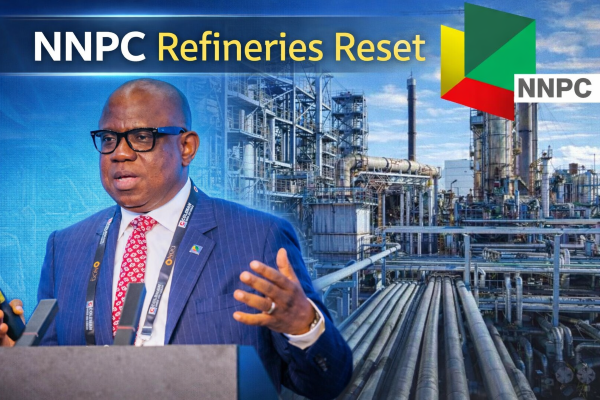 Nigeria has finally said the quiet part out loud. After decades of sunk costs, repeated turnarounds, and political insistence on “keeping the lights on,” the Nigerian National Petroleum Company Limited (NNPC Ltd) has conceded that continuing to operate government-owned refineries in their current form was destroying value rather than creating it.
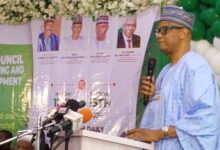
That admission—made publicly by Bayo Ojulari, Group Chief Executive Officer of NNPC Ltd—marks a decisive shift from symbolism to commercial realism. It reframes Nigeria’s refinery problem not as a funding deficit, but as a structural failure of operating economics and governance.


Why This Matters Now
Nigeria is Africa’s largest crude producer, yet for most of its modern history it has imported the bulk of its refined petroleum products. Billions of dollars have been poured into revamping state refineries, but utilisation has remained stubbornly low, losses persistent, and output often economically inferior to the crude processed.
The timing of this reset is critical. With the Dangote Refinery now operational, Nigeria has, for the first time in decades, breathing room to reassess state assets without triggering immediate supply shocks. That space has enabled NNPC to pause, review, and confront uncomfortable truths.
Context: How the Refinery Model Broke
Nigeria’s refinery strategy was built on a flawed hierarchy of priorities. Successive interventions focused on financing and engineering, procurement and construction (EPC)—securing funds, awarding contracts, and refurbishing assets—while treating long-term operations as an afterthought.
Refineries, however, are not projects; they are 50-year operating businesses. Financiers and EPC contractors are paid and exit. What remains is the hard work of running complex plants efficiently, continuously, and competitively—work that requires elite operational capability, incentives, and culture.
As Ojulari explained at the Nigeria International Energy Summit (NIES), that third pillar—world-class operations—was systematically neglected.
Core Analysis: Where Value Was Lost
1. Operations Without Operators
NNPC’s internal review showed utilisation hovering between 50 and 55 per cent, even as operating and contractor costs rose. In some cases, refined products were worth less than the crude fed into the system—a textbook example of negative value addition.
2. Incentives Designed for Extraction, Not Performance
Ojulari’s blunt assessment that “the system was designed for everyone to take from it” points to misaligned incentives across maintenance, contracting, and oversight. Without accountability tied to profitability, losses became structural.
3. Political Pressure Over Commercial Logic
Successive administrations faced intense pressure to keep refineries running—regardless of economics. That pressure delayed hard decisions and masked losses until they became fiscally indefensible.
4. Sunk Costs Clouded Judgment
Billions already spent created a psychological and political bias toward continuation. The decision to halt operations reflects a critical principle of capital discipline: past costs are irrelevant to future viability.
The Strategic Pivot: From Contractors to Operators
Accoding to Oulari, NNPC’s response is not cosmetic. The company is abandoning the contractor-led model in favour of experienced global refinery operators with proven track records. This is a fundamental shift from project execution to operational excellence.
Equally significant is openness to equity partnerships. NNPC is prepared to sell as much equity as required to secure sustainability—while retaining national interest. Investor interest is active, including from major international petrochemical players, with negotiations centred on governance and ownership structure rather than cosmetic management contracts.
The objective is explicit: refineries that finance themselves, operate profitably, and behave like real businesses.
Dangote’s Role: Strategic Relief, Not Replacement
Ojulari’s acknowledgement of the Dangote Refinery is more than courtesy. Its commissioning has altered Nigeria’s energy calculus—reducing immediate dependence on state assets and allowing reform without crisis.
NNPC’s minority shareholding in Dangote further aligns interests. The private refinery does not negate the need for public assets, but it demonstrates what is possible when capital, engineering, and operations are aligned under commercial discipline.
Implications for Business, Markets, and Policy
For investors: The reset improves bankability. Honest diagnosis and openness to operatorship and equity reduce uncertainty and signal seriousness.
For policymakers: State assets cannot be run as political artefacts. Commercial logic must be insulated from electoral cycles—across energy, power, transport, and beyond.
For consumers: Supply stability is strengthened in the short term by Dangote, buying time for reform without shortages.
For Nigeria’s energy strategy: Domestic refining remains essential—but only under global operating standards, aligned incentives, and credible governance.
Forward Outlook: Three Scenarios
- Operator-Led Turnaround: Global operators with equity stakes restore efficiency and profitability—the optimal outcome.
- Partial Monetisation: NNPC retains minority stakes while operators control performance—pragmatic and likely.
- Political Relapse: Pressure to resume operations without reform returns—risk remains if discipline weakens.
Execution discipline—governance frameworks, operator incentives, and performance transparency—will determine which path prevails.
BRANDECONOMY INSIGHT
Nigeria’s refinery failure was never primarily about money; it was about operating truth. Capital without capability destroys value. Ojulari’s candour marks a rare institutional moment where denial gives way to commercial realism.
With Dangote providing strategic cover, Nigeria has a once-in-a-generation opportunity to reset its refining architecture. The lesson extends beyond energy: state-owned assets only work when politics exits and performance enters.
Whether this becomes a durable turnaround or another missed window will depend on how fiercely commercial logic is protected once political attention returns.