

Nigeria’s push toward full-scale industrialisation is gaining renewed urgency as the Federal Government declares reliable energy supply the defining factor that will determine whether the country can break its cycle of raw material exports and build globally competitive value chains.
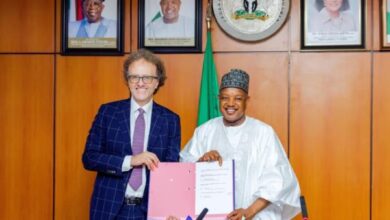
This position was articulated by the Minister of State for Industry, Senator John Enoh, at the Industrial Revolution Work-Group Premier Ministerial Roundtable on Energy, Security and Industrial Infrastructure in Abuja—an engagement designed to align policymakers and industry leaders on how to dismantle the structural obstacles stalling Nigeria’s productivity.




Industrialisation: An Economic Imperative, Not a Policy Option
Enoh underscored that Nigeria’s industrial future will depend not on incentives or new policies alone, but on consistent, affordable, dependable energy delivered directly to the nation’s production clusters.
He noted that the Roundtable stemmed from months of deliberations within the Industrial Revolution Workgroup, where two core constraints repeatedly surfaced:
- Energy insecurity, and
- Weak industrial infrastructure.
Until these two challenges are solved, he noted, Nigeria will continue operating as a primary commodity exporter rather than a manufacturing-driven economy capable of value addition, job creation, and export diversification.
“Industrialisation is Nigeria’s strategic pathway to sovereignty, competitiveness, and long-term prosperity,” Enoh said.
Energy First: Powering Nigeria’s Industrial Clusters
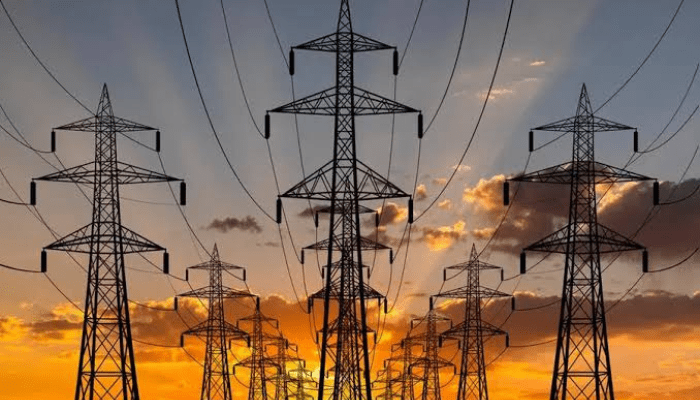
A central outcome of the session is the decision to address energy supply from cluster to cluster, not as a monolithic national problem. While the national grid remains important, Enoh stressed that blended power solutions—gas, solar, embedded generation, and industrial-scale mini-grids—must complement grid supply, especially where instability persists.
Key action points include:
- Mapping priority industrial clusters for immediate energy intervention
- Developing rapid deployment pathways for power solutions
- Eliminating right-of-way bottlenecks delaying transmission projects
- Institutionalising stronger collaboration between the Ministry of Power and industry associations
- Creating a framework to operationalise reliable power delivery within months, not years
The minister emphasised that energy must be treated as economic infrastructure, not merely a utility.
Power Ministry: Reforms Already Strengthening Grid Stability
Minister of Power Adebayo Adelabu disclosed that ongoing reforms—in legislation, regulatory frameworks, and infrastructure—have already improved grid performance, stabilised generation levels, and expanded consumption capacity.
Adelabu said government is now focused on:
- Strengthening transmission and distribution assets
- Driving private-sector investment into industrial power
- Reducing nationwide grid disturbances
- Supporting affordable electricity supply to manufacturers
He described energy as the backbone of any productive economy and reiterated that Nigeria’s industrial resurgence will only materialise on the foundation of stable power.
Manufacturers: Independent Power Solutions Are Now Essential
President of the Manufacturers Association of Nigeria (MAN), Francis Meshioye, affirmed that the roundtable tackled the core constraints that have limited Nigeria’s industrial competitiveness for decades.
Key solutions under consideration include:
- Independent Power Projects (IPPs) for industrial clusters
- Dual international grid connections where feasible
- Cost-benefit-driven power models for each industrial zone
Meshioye expressed optimism that the next few months will produce practical, cluster-specific Reliable Energy solutions that directly reduce manufacturers’ cost of energy—one of the highest in Africa.
BRANDECONOMY INSIGHT:
Nigeria’s Industrial Takeoff Will Be Decided in the Power Room*
The Federal Government’s renewed focus on cluster-based energy delivery is the most realistic industrialisation strategy Nigeria has pursued in decades. The global trend—from Vietnam to Bangladesh to Mexico—shows that productivity takes off when governments ensure reliable power where industries are concentrated, not everywhere at once.
If Nigeria successfully executes this approach, three national outcomes will follow:
- A shift from raw material exports to value-added manufacturing
- A surge in industrial jobs and SME-led supply chains
- A stronger naira supported by manufacturing exports rather than oil receipts
Reliable Energy reliability is no longer a technical issue—it is the cornerstone of Nigeria’s industrial transformation and economic sovereignty.