
NCC Takes Phone-Number Fraud Fight Beyond Telecoms with TIRMS Expansion Plan

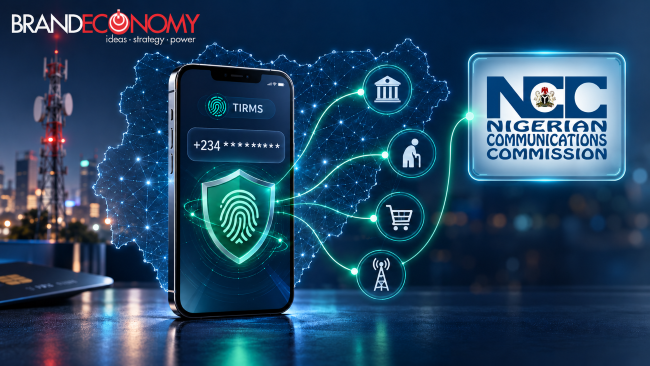 Nigeria’s telecommunications regulator is moving to extend phone-number verification with its TIRMS expansion initiative across banking, pensions, e-commerce and other digitally enabled sectors, reflecting the growing reality that a mobile number is no longer merely a communications tool. It has become a gateway to money, identity and essential services.
The Executive Vice Chairman of the Nigerian Communications Commission, Dr Aminu Maida, disclosed the plan at the 95th Telecom Consumer Parliament held in Lagos on Tuesday.




At the centre of the initiative is the Telecommunications Identity Risk Management System, or TIRMS. The platform is designed to help authorised organisations determine whether a number has been recycled, recently swapped, barred, blacklisted or associated with suspicious activity before it is accepted for a sensitive transaction.
The NCC is working with the Central Bank of Nigeria to extend the system beyond telecommunications into sectors that increasingly rely on phone numbers for customer identification, account recovery, transaction alerts and authentication.
The proposed expansion represents an important shift in Nigeria’s digital-security architecture. However, it remains an implementation programme rather than evidence that every bank, pension administrator, insurer or online merchant is already connected to TIRMS.
When a Phone Number Becomes an Identity Asset
Nigeria’s rapid adoption of mobile banking has turned the telephone number into a functional component of the financial system.
It is linked to bank accounts, mobile wallets, pension records, e-commerce profiles, social-media accounts and one-time passwords. In many cases, it is also used to recover passwords or approve changes to sensitive customer information.
The vulnerability emerges when an inactive number is withdrawn by a network operator and allocated to a new subscriber. If banks, fintech companies and digital platforms have not updated their records, alerts or authentication messages intended for the previous owner may reach the new user.
A criminally initiated SIM swap presents an even more direct risk. It can allow an attacker to intercept verification messages and attempt to take control of accounts associated with the compromised line.
TIRMS is intended to provide institutions with an additional risk signal before completing sensitive activities. A bank, for example, could detect that the number attached to an account had recently been swapped or reassigned and require further verification before approving a password reset or large transfer.
This should not mean that every recycled number is treated as fraudulent. Numbers are routinely reassigned for legitimate reasons. The value of the system will depend on whether it can distinguish ordinary number changes from genuinely suspicious events without unfairly locking customers out of their accounts.
The Cross-Sector Opportunity—and Risk
Maida said the initiative would help organisations recognise recycled numbers and those flagged for fraud, reducing the risk of unauthorised access to customers’ accounts and services.
For banks and fintech businesses, the commercial attraction is clear. Stronger number-status intelligence could reduce account takeovers, fraudulent transfers, investigation costs and compensation claims. Pension administrators, insurers and e-commerce platforms could similarly improve their customer-verification processes.
The expansion could also deepen confidence in Nigeria’s digital economy. Consumers are more likely to adopt online services when they believe their identities, money and transaction histories are adequately protected.
Yet cross-sector verification introduces its own governance questions.
Institutions will need clear rules covering who can access the platform, the purposes for which checks may be conducted, how risk flags are generated, how long information is retained and how consumers can challenge incorrect classifications.
TIRMS should operate as a security layer rather than a black-box identity score. Without transparent safeguards, a platform intended to reduce fraud could generate false positives, discriminatory account restrictions or new privacy concerns.
The credibility of the initiative will therefore depend on strong access controls, data minimisation, comprehensive audit trails, rapid correction mechanisms and compliance with Nigeria’s data-protection framework.
NCC Reports 6,500 Network Interventions
Beyond digital identity, Maida said the NCC had recorded more than 6,500 network interventions in 2026, including equipment upgrades and capacity expansion.
The regulator expects telecommunications companies to convert these investments into more dependable calls and internet services. It is also monitoring network performance and requiring operators to address identified weaknesses.
The intervention figure is substantial, but its consumer value will depend on measurable outcomes. Subscribers will want to know whether the upgrades have reduced dropped calls, improved data speeds, expanded rural coverage and shortened outage periods.
Without operator-level, geographic and performance breakdowns, the number of interventions remains an activity indicator rather than conclusive evidence of improved service.
Maida also urged communities to protect telecommunications infrastructure and report vandalism or suspected theft. A single damaged fibre route or stolen equipment can interrupt banking, emergency communication, business operations and public services across several locations.
Compensation Reaches 75 Million Subscribers
The NCC chief said 75 million subscribers had received airtime compensation for poor service during 2026 under the commission’s Consumer Compensation Framework.
He acknowledged, however, that airtime credits could not restore a missed business opportunity or replace an important conversation disrupted by network failure.
That distinction is critical. Compensation provides redress, but it does not substitute for service reliability. An economy built around mobile payments, remote work and digital commerce cannot sustainably price repeated network failure as an inconvenience to be settled with airtime.
Maida also reported that nearly three million subscribers had received refunds for failed airtime and data purchases under a framework developed with the CBN, telecommunications operators and financial-service providers.
The framework seeks to trace failed transactions and prevent consumers from being passed repeatedly between their banks and mobile operators when attempting to recover money.
The next test is transparency. Consumers need published service standards covering refund timelines, complaint volumes, unresolved cases and the performance of individual providers.
Clearer Data Usage and Simpler Tariffs
The NCC’s forthcoming usage-notification guideline is expected to provide subscribers with clearer information about daily data consumption, remaining balances and usage breakdowns.
Tariff-simplification measures are also intended to make bundle prices, allowances and validity periods easier to understand.
These reforms go to the heart of telecom brand trust. Consumers do not judge operators only by advertising, sponsorships or celebrity endorsements. They judge them by whether data balances are understandable, failed transactions are refunded promptly and complaints are resolved without exhausting escalation processes.
Maida advised subscribers to verify mobile devices before purchase through the NCC’s Device Checker and to avoid counterfeit or non-compliant products. He also encouraged consumers to contact their service providers first, obtain complaint reference numbers and escalate unresolved matters to the commission through the toll-free 622 channel.
Earlier, the Executive Commissioner for Stakeholder Management, Ms Rimini Makama, said the Consumer Parliament should produce practical commitments on reliable connectivity, transparent billing and timely complaint resolution.
She recalled that the 94th Parliament had raised concerns about network quality, unexplained billing, failed transactions and delays in resolving complaints, adding that the commission would examine the actions taken since that engagement.
Market, Brand and Investor Implications
For financial institutions, TIRMS could reduce fraud losses and strengthen digital onboarding, but integration will require investment in software, compliance, cybersecurity and customer-support processes.
Telecommunications companies face a broader responsibility. They will increasingly be judged not simply as connectivity providers but as custodians of identity infrastructure.
For investors, improved digital-identity controls could lower operational risk across banking, fintech, insurance and online commerce. Poorly governed implementation, however, could generate privacy disputes, customer lockouts and reputational damage.
The decisive issue is therefore not whether Nigeria needs stronger phone-number verification. It does. The question is whether the system will be interoperable, privacy-conscious, independently auditable and sufficiently responsive when legitimate consumers are incorrectly flagged.
BRANDECONOMY Insight
TIRMS recognises a fundamental change in Nigeria’s digital economy: the telephone number has become an identity asset with financial consequences.
That makes number recycling, SIM swapping and inaccurate subscriber records more than technical telecom problems. They are systemic risks capable of undermining confidence in banking, pensions, insurance and digital commerce.
But the NCC should resist measuring success primarily by the number of institutions connected or verification requests processed. The proper benchmarks are reductions in account takeovers, faster resolution of identity disputes, fewer failed transactions and demonstrably lower consumer losses.
TIRMS can strengthen digital trust only if it protects people without creating an opaque surveillance or exclusion mechanism. Nigeria needs a security system that knows when a telephone number has changed—but also understands that a risk flag is a reason to verify, not a licence to presume guilt.