

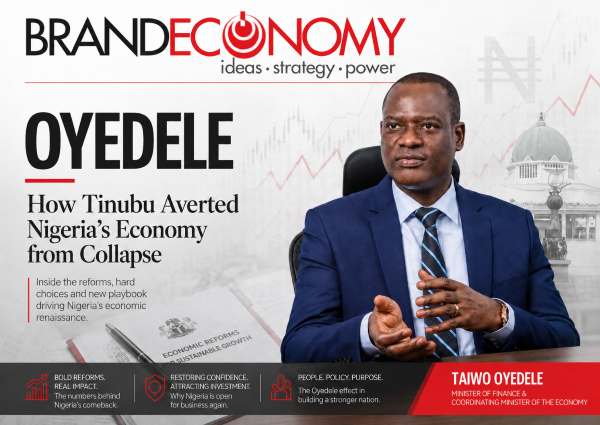
 Finance Minister says the subsidy-era fiscal model was unsustainable; the next test is whether stability can translate into jobs, productivity, stronger incomes and credible social protection. This made Economic Reforms inevitable.
Nigeria’s economic reform conversation is entering a more demanding phase.


The first phase was about stopping a slide. The next is about proving that the pain of adjustment can produce a more productive, inclusive and job-rich economy.
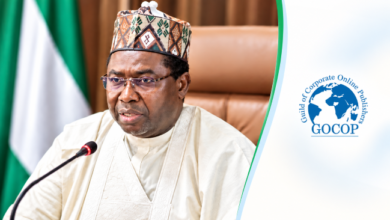
Speaking at the 2026 Nigeria Employers’ Summit in Abuja, organised by the Nigeria Employers’ Consultative Association, the Minister of Finance and Coordinating Minister of the Economy, Mr Taiwo Oyedele, argued that President Bola Tinubu’s early reforms prevented Nigeria from drifting into a far more severe economic breakdown.
Oyedele’s central point was stark: before the removal of petrol subsidy, the country was fast approaching a point where government could no longer sustain the cost of keeping fuel artificially cheap. In his assessment, Nigeria was headed towards a situation in which citizens might possess cash but be unable to find petrol at filling stations because the underlying financing model had become impossible to maintain.
The minister said oil revenues that should have supported national development were increasingly being consumed by subsidy obligations, while government was also borrowing against future crude oil production to keep the system alive.
That model, he suggested, was not merely expensive. It was a threat to fiscal sovereignty.
Nigeria has since moved into a new reform cycle shaped by fuel-price deregulation, exchange-rate adjustments, revenue reforms and a stronger emphasis on fiscal discipline and overall Economic Reforms. Oyedele said the immediate aftermath was painful, marked by higher fuel prices, transportation costs, inflationary pressures and currency volatility. But he maintained that the country has now moved from instability towards a more stable macroeconomic foundation.
The difficult question for government, business and citizens is whether that stability can now become prosperity.
Taiwo Oyedele formally assumed office as Minister of Finance and Coordinating Minister of the Economy in April 2026, succeeding Wale Edun.
A Rescue Argument, Not Yet a Victory Lap
Oyedele’s message to employers was clear: Nigeria should not mistake reform fatigue for reform failure.
The country may have stepped away from an unsustainable subsidy regime, but stability alone does not feed households, employ young people, lower production costs or rebuild purchasing power. It creates the platform from which those outcomes can become possible.
For businesses, this distinction matters.
A stable exchange-rate environment, improved fiscal coordination and better public revenue mobilisation can reduce uncertainty. That gives companies more confidence to plan inventory cycles, price products, negotiate supply contracts, expand capacity and invest in people.
But the benefits will remain incomplete if energy costs, logistics bottlenecks, weak consumer purchasing power, insecurity and limited credit continue to constrain enterprise growth.
The minister said the administration’s next objective is to deliver accelerated, productive and employment-intensive growth. Government is targeting annual real Gross Domestic Product growth of about seven per cent across sectors, with the ambition of generating at least five per cent growth in per-capita income.
That is an ambitious threshold.
The IMF currently projects Nigeria’s real GDP growth at about 4.1 per cent for 2026, meaning that the government’s seven per cent ambition will require a substantially stronger performance from agriculture, manufacturing, services, trade, technology, construction, exports and private investment.
The Subsidy Question: What Nigeria Escaped
The debate over fuel subsidy is emotionally charged because the costs were immediate and visible to households.
Transport became more expensive. Food inflation intensified. Small businesses faced rising operating costs. Salaried workers discovered that their purchasing power had weakened.
Yet Oyedele’s argument is that the alternative would have been worse: a fuel market dependent on public borrowing, depleted oil earnings and increasing commitments against future crude revenue.
In that sense, the Economic Reforms were not presented as a simple economic choice between comfort and discomfort. It was framed as a choice between short-term political relief and long-term fiscal survival.
For years, the subsidy system encouraged an illusion of affordability while pushing the real cost into public debt, foregone infrastructure, weakened social services and reduced fiscal flexibility.
The deeper policy challenge now is ensuring that the savings from reform are seen in the lives of Nigerians.
Citizens will judge the reforms not by macroeconomic language, but by practical outcomes: whether food becomes more affordable, whether transport costs moderate, whether jobs improve, whether businesses grow and whether public services become more reliable.
From Stability to Productive Growth
Oyedele said sustainable economic growth and job creation cannot occur in an environment of persistent instability.
That is broadly true. Investors do not like unpredictable foreign exchange markets, unclear tax obligations, sudden policy reversals or public finances dependent on emergency borrowing.
However, stability must be actively converted into productive capacity.
Nigeria’s growth model cannot depend only on higher oil prices, debt-funded public expenditure or short-term portfolio inflows. It must increasingly rely on businesses that produce, export, employ and innovate.
The critical areas include:
- Lowering the cost of power and logistics for manufacturers.
- Expanding access to affordable financing for small and medium-sized businesses.
- Improving security in food-producing regions.
- Supporting agro-processing and value addition.
- Deepening local manufacturing capacity.
- Building digital infrastructure and skills.
- Creating a tax environment that rewards compliance without punishing growth.
- Strengthening social protection for vulnerable households.
The minister stressed that the sacrifices already made by Nigerians should not be wasted. That statement carries an important political and economic warning.
Reforms can lose public legitimacy when citizens see pain but cannot identify progress.
The government must therefore show visible results: better roads, more reliable power, improved healthcare access, job creation, credible cash-transfer systems and a business climate that reduces the cost of survival.
Debt: A More Complicated Picture
Oyedele described Nigeria’s borrowing profile as favourable, pointing to the country’s debt-to-GDP ratio and access to concessional financing.
That assessment has merit, but debt sustainability cannot be measured by debt-to-GDP ratio alone.
For Nigeria, the more urgent concern is often debt-service-to-revenue. A country can have a moderate debt ratio relative to the size of its economy and still struggle if government revenue is too weak to meet obligations without crowding out investment in education, health, infrastructure and security.
The IMF noted that interest payments absorbed an estimated 53 per cent of Federal Government revenue in 2025, while it expects the 2026 budget to imply a wider fiscal deficit than the previous year.
This is why revenue reform matters so much.
Nigeria cannot build durable welfare systems by borrowing endlessly or by relying on monetary financing. It needs a broader, fairer and more efficient revenue base.
Oyedele’s position is that government must generate sufficient revenue before it can sustainably protect vulnerable citizens and redistribute resources.
The challenge will be to ensure that tax reform is not interpreted as a campaign to squeeze already struggling formal businesses. The credibility of the reform agenda will depend on widening the tax net, reducing leakages, simplifying compliance and showing taxpayers what their contributions are funding.
Why Employers Should Pay Attention
The Nigeria Employers’ Summit was an appropriate venue for the message because employers sit at the centre of the next phase of reform.
Businesses create jobs. They pay salaries. They train workers. They invest in production. They generate tax revenue. They shape consumer confidence.
But businesses also absorb the consequences of policy uncertainty.
For employers, the most valuable reforms will be those that lower friction: clearer tax rules, better transport networks, reliable electricity, improved access to foreign exchange, efficient ports, stronger consumer demand and a workforce healthy enough to remain productive.
That was where the health conversation at the summit became particularly important.
The Director-General of the National Health Insurance Authority, Dr Kelechi Ohiri, urged employers to take health insurance more seriously, arguing that health cover is not only a social responsibility but also a productivity investment.
Ohiri said health insurance enrolment had grown from about 16 million to 22 million Nigerians, representing a 34 per cent increase since reforms associated with the NHIA Act. He added that more than 50,000 women had benefited from free emergency obstetric care in over 270 accredited hospitals, while healthcare benefits were being expanded to respond to non-communicable diseases.
The NHIA’s emergency obstetric and neonatal care programme is designed to reduce catastrophic healthcare expenses for vulnerable families and improve access to life-saving treatment.
For employers, health insurance should no longer be treated merely as a staff benefit. It is a productivity strategy.
A healthier workforce means fewer disruptions, lower absenteeism, better morale, stronger staff retention and greater resilience.
The Brand Implication for Government
Economic reform is not only about policy. It is also about trust.
Government must communicate reforms in a language citizens can understand. People need to see where money is coming from, where it is going and what outcomes it is delivering.
Oyedele urged Nigerians to understand policies before criticising them, arguing that constructive accountability requires knowledge, not anger alone.
That message is valid, but it must be matched by transparency.
Citizens are more likely to support difficult reforms when government publishes credible data, explains trade-offs honestly, acknowledges hardship and demonstrates that public officials are also subject to discipline and sacrifice.
The reform brand cannot be built on speeches alone.
It must be built on evidence.
Market Implications
For the market, Oyedele’s remarks reinforce the view that Nigeria’s economic direction remains anchored on macroeconomic stabilisation, fiscal reforms and stronger domestic revenue mobilisation.
The sectors most likely to benefit if stability deepens include banking, consumer goods, manufacturing, logistics, telecoms, healthcare, agriculture, construction and financial technology.
However, companies remain exposed to high operating costs, weakened consumer purchasing power and external shocks, including oil-price volatility and global geopolitical disruptions.
The biggest immediate opportunity is for businesses that can offer value, efficiency, affordability and local sourcing.
Investor Relevance
Investors will watch whether Nigeria can convert reform momentum into durable macroeconomic credibility.
They will be looking for:
- More predictable foreign exchange conditions.
- Improved revenue performance.
- Clearer tax administration.
- Lower inflationary pressure.
- Better debt management.
- Stronger private-sector credit growth.
- Consistent policy implementation.
- Measurable progress in infrastructure and security.
The investment case for Nigeria is improving only when policy credibility becomes visible in corporate earnings, employment numbers, consumer confidence and long-term capital commitments.
BRANDECONOMY Insight
Tinubus’s Economic Reforms story is no longer just about removing subsidy or stabilising the naira.
It is now about whether Nigeria can build a productive economy that works for businesses, workers, investors and low-income households at the same time.
Taiwo Oyedele’s argument is that Tinubu’s Economic Reforms prevented a deeper fiscal crisis. That may be so. But the ultimate verdict will not be delivered by policy speeches or market sentiment alone.
It will be delivered by whether Nigerians can earn more, live better, run businesses at lower costs and see public institutions work with greater competence.
Stability was the rescue mission.
Shared prosperity must be the destination.