

DJAN Debunks ‘Burna Boy Ban’ as Misinformation Rocks Music Industry
Industry Tensions, Digital Amplification

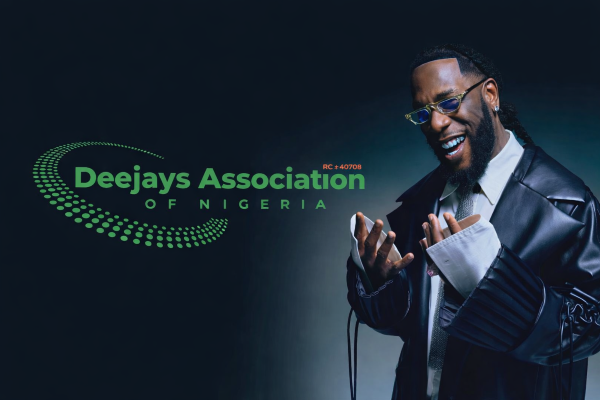 In Nigeria’s fast-moving music economy, where reputation travels at the speed of virality, the Deejays Association of Nigeria (DJAN) has moved swiftly to contain a narrative it says never existed. The association has formally distanced itself from reports suggesting a ban on the music of Afrobeats star Burna Boy, describing the claims as fabricated and unauthorised.
In a statement issued in Abuja, DJAN’s National President, Prince Akim Edeh, dismissed the circulating reports as misinformation amplified by doctored visuals and unauthorised use of the association’s logo—an attempt, he argued, to manufacture legitimacy around a false claim.




A Viral Claim Meets Institutional Pushback
The controversy underscores a growing vulnerability within Nigeria’s entertainment ecosystem: the ease with which unverified claims can gain traction and influence public perception.
According to DJAN, the alleged “ban” did not originate from the association, nor does it reflect the position of its members. The organisation went further, condemning the misuse of its intellectual property—particularly the application of its official logo on misleading graphics—as a calculated effort to mislead audiences.
The association has called on media platforms and digital publishers that amplified the story to issue corrections, signalling a firmer stance against reputational distortions in the industry.
Industry Tensions, Digital Amplification
While DJAN acknowledged reports of a recent incident involving a disc jockey and Burna Boy, it was careful to separate that episode from any institutional action. The body reiterated its opposition to violence and emphasised that it would await the outcome of any ongoing investigations before taking a position.
This calibrated response reflects a broader industry reality: Nigeria’s music sector—now a global cultural export—operates in an increasingly complex intersection of artistry, branding, and digital influence.
In such an environment, even unsubstantiated narratives can carry commercial implications, affecting streaming performance, bookings, and brand partnerships.
Music, Power and Narrative Integrity
DJAN’s intervention also speaks to a deeper issue: the governance of narrative within the creative economy.
As Afrobeats continues its ascent on the global stage, industry institutions are being compelled to evolve—not only as professional bodies but as custodians of credibility in an era of algorithm-driven amplification.
For DJs, who remain critical gatekeepers of music distribution in clubs, radio, and live events, the idea of a “ban” carries symbolic weight—even when unfounded.
BRANDECONOMY Insight
The DJAN–Burna Boy episode is less about a non-existent ban and more about the growing influence of information dynamics in the entertainment economy.
- Virality Is the New Power Broker
In today’s music industry, perception can move markets. A single viral claim—true or false—can shape audience behaviour, streaming patterns, and brand sentiment. - Institutional Credibility Matters More Than Ever
As the industry scales globally, associations like DJAN must play a more active role in safeguarding credibility, enforcing standards, and responding rapidly to misinformation. - Afrobeats Is Now Big Business
With Nigerian music now embedded in global charts and commercial ecosystems, reputational risks carry real financial consequences—for artists, promoters, and platforms alike. - The Need for IP Protection in Media Spaces
The misuse of logos and brand assets highlights a growing gap in digital enforcement. Strengthening intellectual property protection will be critical to maintaining trust.
Ultimately, this episode is a reminder that in Nigeria’s cultural economy, the battle is no longer just for airplay—it is for narrative control.