
China Seeks Global Alliance to Modernise Traditional Medicine with AI

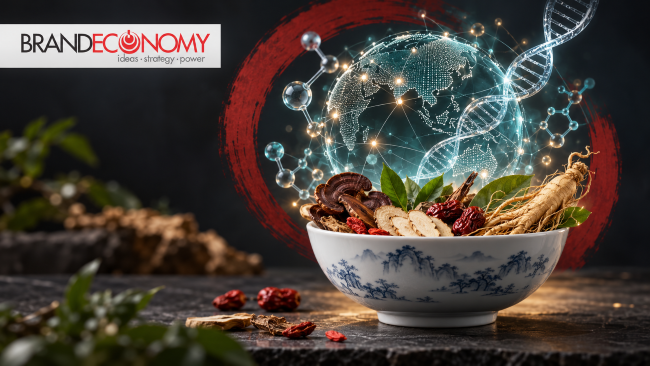 China has called for a new era of international cooperation around traditional medicine, positioning scientific research, artificial intelligence and digital health as bridges between centuries-old medical knowledge and the standards of modern healthcare.
Chinese Premier Li Qiang made the case at the World Conference on Traditional Medicine 2026 in Beijing, where policymakers, researchers, practitioners and industry stakeholders gathered to examine the future of traditional, complementary and integrative medicine.




Li argued that traditional medicine remains an important part of humanity’s health inheritance, reflecting accumulated knowledge about disease prevention, treatment, nature and community wellbeing. Different medical traditions, he said, carry the cultural identities of their societies while offering distinct approaches to diagnosis, prevention and care.
His message extended beyond cultural preservation. China wants traditional medicine to become a more technologically enabled, internationally connected and commercially scalable component of global healthcare.
From cultural heritage to health technology
Traditional Chinese Medicine occupies a central place in China’s healthcare and cultural policy. Li said China had built the world’s largest traditional-medicine system, supported by coordinated policies covering clinical services, research, professional education and industrial development.
TCM institutions, according to the premier, account for roughly one in every 10 medical institutions in China, while traditional-medicine services are available across almost the entire formal healthcare system.
The scale gives China an unusual platform for testing how established traditional practices might coexist with modern diagnostics, pharmaceutical research and digital-health infrastructure.
Li said China would continue combining classical medical knowledge with science and technology to improve treatment outcomes, strengthen preventive healthcare and expand access to affordable services.
The ambition is significant. Artificial intelligence could help researchers analyse large collections of medical literature, identify patterns in patient records, examine potential interactions among compounds and design better clinical studies. Digital platforms could also improve practitioner training, product traceability, remote consultations and post-treatment monitoring.
Technology, however, cannot transform tradition into evidence by declaration. AI can identify promising relationships, but it cannot replace properly designed clinical trials, toxicology studies, manufacturing controls or pharmacovigilance.
Evidence is the price of legitimacy
Li urged countries to deploy AI, modern biomedicine and digital technologies to improve diagnostics and convert promising traditional remedies into evidence-based treatments.
That is the critical threshold. Historical use may justify investigation, but it does not automatically establish safety, dosage, effectiveness or compatibility with conventional medicines.
The World Health Organisation’s Global Traditional Medicine Strategy 2025–2034 similarly supports wider access only within an evidence-led framework. Its priorities include strengthening research, improving safety and regulation, integrating appropriate practices into health systems and unlocking the wider social and economic value of traditional medicine.
For governments, the challenge is to avoid two extremes: dismissing potentially useful indigenous knowledge merely because it originated outside modern laboratories, or approving products and treatments simply because they are culturally familiar.
Credible integration requires standards for ingredients, manufacturing, practitioner qualifications, advertising claims, adverse-event reporting and informed patient consent. Traditional medicine should complement—not displace—tested emergency care, vaccination, surgery, antibiotics or other clinically necessary treatments.
China’s expanding health-market strategy
China says TCM has reached 196 countries and regions. While this demonstrates broad international exposure, it does not mean that every market has granted equivalent regulatory recognition or accepted all TCM practices as clinically validated.
Nevertheless, the international push carries major commercial implications. China is cultivating markets for herbal products, diagnostic systems, wellness services, research collaborations, practitioner training and health technologies.
Li called for stronger partnerships, improved intellectual-property protection, conservation of medicinal resources and greater recognition of professional qualifications. He also indicated that China would support international research institutions and enterprises while expanding cooperation through its medical-service and medicinal-resource initiatives.
This creates opportunities for pharmaceutical companies, biotechnology investors, universities, digital-health platforms and certified producers of medicinal ingredients. It also strengthens China’s health diplomacy and soft power, placing traditional medicine alongside infrastructure, technology and trade as another channel of international engagement.
Implications for Africa and Nigeria
Africa possesses extensive indigenous medicinal knowledge and enormous botanical diversity, but much of its traditional-health economy remains informal, weakly documented and poorly protected.
For Nigeria, China’s strategy offers both a lesson and a warning.
The lesson is that traditional knowledge acquires greater economic value when supported by research institutions, recognised professional standards, intellectual-property protection and reliable manufacturing. Nigeria could develop regulated research programmes around medicinal plants, build databases of indigenous knowledge with community consent and support partnerships among universities, teaching hospitals, traditional practitioners and pharmaceutical manufacturers.
The warning is that poorly structured international cooperation can result in biological resources and community knowledge being commercialised without fair compensation. Agreements must therefore protect indigenous ownership, require informed consent and establish equitable benefit-sharing.
Nigeria must also strengthen the regulation of herbal medicines and advertising. Unverified claims—particularly promises to cure cancer, diabetes, infertility or infectious diseases—can delay effective treatment and damage public trust.
Brand and market implications
Traditional-medicine brands will increasingly compete on evidence rather than folklore alone. Consumers, regulators and healthcare professionals will expect transparent ingredient sourcing, consistent dosage, credible testing and clear warnings about possible interactions.
For China, the global TCM proposition will be judged by whether its research is independently reproducible and its products meet international safety standards. Cultural prestige may open doors, but scientific credibility will determine long-term acceptance.
For African and Nigerian brands, provenance can be a powerful differentiator. However, heritage must be supported by traceability, ethical sourcing and measurable quality. The strongest brands will present tradition as a source of discovery—not a substitute for verification.
Investor relevance
The modernisation agenda could expand investment across medicinal-plant cultivation, standardised extracts, biotechnology, clinical research, diagnostic software, professional education and regulated wellness services.
Investors should distinguish clinically validated products from loosely regulated supplements and lifestyle claims. Regulatory approval, defensible intellectual property, sustainable access to raw materials and credible clinical data will be more valuable than market excitement alone.
Biodiversity risk is equally important. Rapid commercialisation can lead to overharvesting, unstable supplies and environmental degradation. Sustainable cultivation and transparent community partnerships should therefore form part of investment due diligence.
BRANDECONOMY Insight
China is not merely promoting an old medical tradition. It is attempting to convert cultural knowledge into a modern ecosystem of research, technology, manufacturing, services and international influence.
But traditional medicine’s future cannot rest on nationalism, nostalgia or commercial promotion. Its strongest ideas must survive the same questions asked of every serious health intervention: Does it work? Is it safe? For whom? At what dosage? Compared with what alternative—and supported by what evidence?
For Nigeria, the opportunity is not to imitate China’s cultural export machinery. It is to build a system that respects indigenous knowledge while protecting patients, communities and biodiversity.
The winning model will neither reject tradition nor romanticise it. It will investigate rigorously, regulate intelligently and commercialise fairly. That is how ancient knowledge can become credible modern healthcare—and how health heritage can become a trusted economic asset.