

CBN’s Fintech Reset: How Unified Regulation Could Secure Nigeria’s Digital Finance Future
To Ensure Global Best Practice

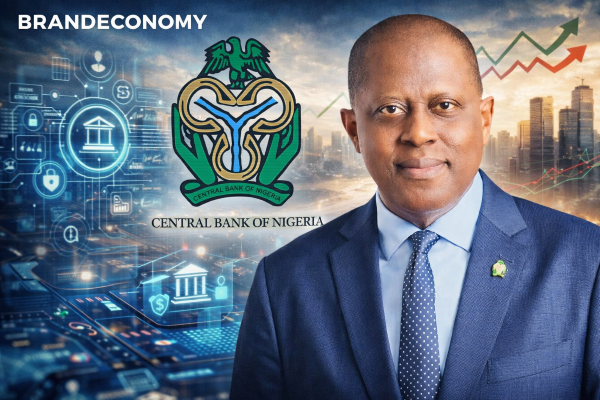 Nigeria’s fintech sector has reached a moment that separates ecosystems that merely grow from those that endure. The release of a comprehensive fintech assessment by the Central Bank of Nigeria (CBN) is more than a stock-take of innovation—it is a strategic signal that Africa’s largest digital finance market is preparing for its next phase: scale with discipline.
After a decade of explosive growth, Nigeria’s fintech story is no longer about proof of concept. It is about regulatory coherence, execution speed, and institutional alignment in a system now large enough to pose both opportunity and risk.




Why This Matters Now
Nigeria hosts one of the most dynamic fintech ecosystems in the Global South, anchored by real-time payments leadership, deep mobile penetration, and a young, digitally fluent population. But success has created its own friction. Rising compliance costs, overlapping regulatory mandates, and elongated approval timelines now threaten to slow innovation precisely when competition—regional and global—is intensifying.
CBN’s latest intervention acknowledges a hard truth: regulation has become the binding constraint on fintech growth, not technology or capital. The policy question is no longer whether to regulate, but how to regulate intelligently.
Context: From Fintech Boom to Institutional Maturity
Nigeria’s fintech ascent was powered by regulatory tolerance, market urgency, and private-sector ingenuity. Payments, wallets, remittances, and agency banking scaled rapidly, expanding financial access and lowering transaction costs.
However, as fintechs matured into systemically relevant players, they became subject to global-grade requirements in anti-money laundering, cybersecurity, risk management, and consumer protection. These safeguards are non-negotiable—but their fragmented implementation across multiple agencies has produced duplication, cost inflation, and strategic uncertainty, particularly for early-stage and fast-scaling firms.
The CBN assessment reframes fintech not as a disruptive outsider, but as a complementary pillar of the financial system—one that must innovate without undermining stability.
Core Analysis: The Regulatory Bottleneck
Three structural tensions now define Nigeria’s fintech landscape:
1. Speed vs Stability
Survey evidence shows that regulatory timelines materially delay product launches for a majority of fintechs, with many reporting time-to-market cycles exceeding a year. In digital finance, such delays are not administrative inconveniences; they are competitive disadvantages.
2. Integrity vs Inclusion
Compliance obligations rooted in are essential, yet they impose disproportionate strain on smaller operators—the very firms most likely to drive inclusion at the margins.
3. National Oversight vs Regional Ambition
Nigerian fintechs are increasingly pan-African by design, but licensing and supervisory fragmentation across jurisdictions limits their ability to scale efficiently.
CBN’s response is notable for its pragmatism rather than doctrinal rigidity.
The Strategic Shift: From Control to Coordination
At the heart of the report is the proposal for a Single Regulatory Window—a harmonised licensing and supervisory interface that would collapse multi-agency approvals into a coordinated process. If executed effectively, this could redefine Nigeria’s regulatory competitiveness by cutting approval timelines and restoring innovation velocity.
Equally significant is the concept of shared regulatory infrastructure, including Compliance-as-a-Service models. This would lower compliance costs, reduce duplicative reporting, and enhance supervisory visibility—aligning efficiency with integrity rather than forcing a trade-off between the two.
The report also signals openness to regulatory passporting, allowing Nigerian fintechs to operate across African markets through mutual licence recognition. Bilateral pilots with peer regulators could place Nigeria at the centre of Africa’s emerging digital finance grid.
Digital Assets, PSBs, and the Next Inclusion Frontier
CBN’s nuanced stance on digital assets marks a clear departure from blanket restrictions. By advocating a risk-based, activity-focused framework, the regulator recognises crypto’s potential in cross-border payments and remittances while isolating illicit risks more precisely.
Equally important is the reassessment of Payment Service Banks (PSBs). Current restrictions prevent PSBs—despite their deep reach into underserved communities—from extending credit. The report’s suggestion of a dedicated digital banking licence points to a more coherent pathway for inclusive lending under stronger prudential oversight.
This recalibration reflects a growing recognition that inclusion without credit is incomplete inclusion.
Institutional Alignment: Why NCC Matters
The report underscores the need for tighter coordination between the CBN and the Nigerian Communications Commission (NCC). As fintech increasingly rides on telecom infrastructure, regulatory silos become operational risks. Alignment between financial and telecom regulators is no longer optional; it is foundational to system resilience.
Leadership Signal
In the foreword, CBN Governor Olayemi Cardoso framed innovation as a strategic imperative rather than a regulatory concession, emphasising that inclusion must reach from urban centres to rural communities. This language matters. It signals a regulator positioning itself as an ecosystem architect, not merely an enforcer.
Implications for Business, Markets, and Policy
For fintech operators, the direction of travel is clear: greater clarity, fewer bottlenecks, higher expectations. For investors, a unified regulatory framework improves predictability and de-risks long-term capital deployment. For policymakers, fintech is now explicitly framed as national infrastructure—critical to productivity, inclusion, and regional competitiveness.
Nigeria’s ability to consolidate its fintech leadership will depend less on unicorn creation and more on execution discipline at the regulatory level.
Forward Outlook: Scenarios and Next Moves
If the Single Regulatory Window and shared compliance infrastructure are implemented credibly, Nigeria could set a continental benchmark for fintech governance—combining innovation velocity with systemic trust.
Failure, however, would entrench regulatory drag and push talent, capital, and experimentation to faster-moving jurisdictions.
The choice before Nigeria is stark but navigable: fragmentation or orchestration.
CBN’s fintech assessment suggests the institution understands what is at stake. The test now lies in delivery.
BRANDECONOMY INSIGHT
Nigeria’s fintech debate has quietly shifted from innovation versus regulation to coordination versus fragmentation. The significance of the CBN’s fintech assessment lies less in its diagnostics—which the industry already understands—and more in its institutional self-awareness: regulation, not capital or talent, has become the primary determinant of competitive advantage.
What the report signals is a regulatory pivot from command-and-control supervision to ecosystem orchestration. A Single Regulatory Window, shared compliance infrastructure, and passporting frameworks are not administrative tweaks; they are economic multipliers. If executed with discipline, they could compress time-to-market cycles, lower innovation costs, and reposition Nigeria as Africa’s most scalable fintech jurisdiction—not merely its largest.
Crucially, the CBN is also reframing risk. By acknowledging that blanket approaches to crypto, payments, and digital banking are economically inefficient, the regulator is aligning supervision with activity-specific risk rather than institutional labels. This is a mature regulatory posture, consistent with jurisdictions that treat fintech as financial infrastructure, not regulatory exception.
For fintech founders, the message is mixed but clear: less friction will come with higher expectations. Compliance will not disappear; it will become more standardised, data-driven, and unforgiving of weak governance. For investors, regulatory coherence improves predictability—often more valuable than incentives. For policymakers, fintech is now explicitly positioned as a tool of inclusion, productivity, and regional influence.
The real test is execution. Nigeria has articulated the right ideas before. What will determine success is whether coordination replaces silos, timelines replace ambiguity, and policy intent translates into operational reality. If it does, Nigeria will not just host fintech champions—it will define the rules by which Africa’s digital finance economy scales.