AfDB President Urges Africa to Move from Political Freedom to Economic Sovereignty

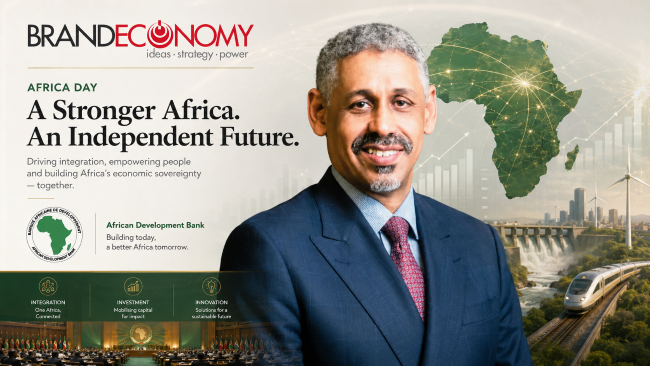
At the AfDB Annual Meetings in Brazzaville, Africa Day became more than a commemoration. It became a call to move from political liberation to financial self-determination, stronger institutions and a more integrated continental economy.
The President of the African Development Bank Group, Sidi Ould Tah, has called for stronger African integration, deeper cooperation and greater economic independence, warning that the continent’s future will depend on its ability to build institutions strong enough to match its ambition.
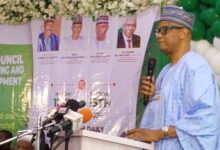
Tah made the call during the Africa Day celebration held on the sidelines of the AfDB Annual Meetings in Brazzaville, Republic of Congo, where African leaders, policymakers, development financiers and private-sector actors gathered to examine the continent’s financing and development priorities.

Reflecting on the creation of the Organisation of African Unity in 1963 by African leaders in Addis Ababa, Tah described that historic moment as a turning point in Africa’s struggle to take charge of its political and economic destiny.
According to him, the founding generation delivered political independence. The responsibility of the current generation, he said, is to convert that political inheritance into economic sovereignty through stronger institutions, deeper integration and collective African agency.
“The generation of 1963 gave us political independence. Our responsibility now is to strengthen Africa’s collective agency through deeper integration and stronger institutions,” he said.
That message sits at the heart of Africa’s present development dilemma. The continent has made considerable political progress since the wave of independence that reshaped the 20th century. Yet economic independence and sovereignty remains unfinished business. Too many African economies still depend heavily on commodity exports, external financing, imported technology, weak value chains and fragmented markets.
For Tah, integration is not a slogan. It is the economic infrastructure of Africa’s future.
Water, Climate and the Economics of Survival
Speaking on this year’s Africa Day theme, the AfDB President described water as central to Africa’s development, food security and climate resilience.
He noted that Africa’s great rivers have historically connected communities, supported livelihoods and enabled trade across regions. Yet millions of Africans still lack access to safe drinking water, even as climate stress, drought, floods and poor infrastructure continue to threaten agriculture, public health and economic stability.
Water, in this sense, is not merely a social-service issue. It is a development-finance issue, a food-security issue, a public-health issue and a climate-resilience issue.
Without water infrastructure, Africa cannot fully unlock agriculture. Without irrigation, food systems remain vulnerable to climate shocks. Without safe drinking water, health burdens rise. Without climate-resilient water management, many African economies will remain exposed to increasingly unpredictable weather patterns.
Tah urged African countries to continue working together despite global economic and political headwinds, arguing that the continent’s development prospects will depend on cooperation rather than fragmentation.
He also commended President Denis Sassou Nguesso of the Republic of Congo for hosting the AfDB Annual Meetings in Brazzaville, describing the gathering as an important platform for continental dialogue.
AU Chair Calls for Unity, Education and Global Reform
Also speaking, Evariste Ndayishimiye, President of Burundi and Chairperson of the African Union, called for greater African unity, peace, education investment and accelerated implementation of the African Continental Free Trade Area.
Ndayishimiye said Africa must strengthen solidarity and move faster on regional integration if it is to secure its development future. He argued that the AfCFTA remains one of the continent’s strongest instruments for building scale, expanding intra-African trade and reducing dependence on external markets.
The AU Chairperson also linked Africa’s domestic development agenda to global governance reform. He said Africa’s admission into the G20 reflected the continent’s growing relevance in global affairs, but insisted that the next frontier must include reform of the United Nations Security Council to give Africa fair and permanent representation.
His point was clear: Africa cannot remain a rule-taker in global governance while representing a major share of the world’s population, resources and future growth potential.
Ndayishimiye also expressed concern over conflicts, terrorism, climate-related disasters and humanitarian crises affecting millions of people across the continent. He said peace and security remain indispensable to development, because no economy can thrive where people are displaced, markets are disrupted and children are denied education.
“An African child denied access to education today is a part of Africa’s future that we are abandoning tomorrow,” he said.
That line captured one of the strongest themes of the Africa Day event: integration must not be only about markets and infrastructure. It must also be about people, especially young Africans whose education, skills and productivity will determine the continent’s competitive future.
From Political Freedom to Economic Independence
The Africa Day message in Brazzaville carried a strategic undertone. Africa’s political independence is no longer in doubt. What remains unresolved is the architecture of economic independence.
That requires more than speeches. It requires functioning regional markets, stronger public institutions, credible development banks, investable infrastructure projects, modern transport corridors, deeper capital markets, value-added production, energy security and peace.
It also requires African leaders to take the idea of integration seriously. Fragmented markets weaken industrialisation. Border friction raises costs. Small national markets limit scale. Poor infrastructure traps trade within narrow corridors. Weak institutions repel long-term capital.
The AfDB and AU messages therefore converge around one proposition: Africa’s future depends on its ability to act more collectively.
The continent’s founding fathers fought for political sovereignty. Today’s leaders must fight for economic agency.
BRANDECONOMY Insight
Africa’s Next Liberation Struggle Is Economic
Africa Day should no longer be treated only as a symbolic commemoration of the continent’s anti-colonial journey. It should now become an annual audit of Africa’s progress toward economic sovereignty.
Sidi Ould Tah’s message is timely. Political independence gave Africa flags, national anthems and sovereign governments. But economic independence requires something deeper: control over capital, markets, infrastructure, value chains, technology and institutions.
This is where integration becomes urgent. No African country, acting alone, can fully overcome the scale disadvantages imposed by fragmented markets and weak infrastructure. But a more integrated Africa can build larger markets, attract bigger investments, deepen trade, industrialise faster and negotiate with greater power in the global economy.
The AfCFTA remains central to this ambition. Yet its success will depend on execution: roads, ports, digital systems, customs reform, payment integration, standards harmonisation and political will.
The emphasis on water is equally important. Africa’s development future will be shaped by climate resilience, food security and sustainable resource management. Water systems, irrigation, sanitation and river-basin cooperation must move from policy statements to bankable investment pipelines.
The deeper lesson from Brazzaville is that Africa’s next liberation struggle will not be fought on the battlefield. It will be fought in capital markets, classrooms, infrastructure corridors, trade agreements, technology platforms and governance institutions.
Africa already has the demographic scale, natural resources and entrepreneurial energy. What it needs now is disciplined integration and economic self-belief backed by execution.