Africa Must Put Its $4trn Savings to Work for Its Development, Says AfDB’s Sidi Ould Tah


AfDB President Sidi Ould Tah says the continent must turn its vast $4 trillion savings domestic savings into productive capital if it is to close its $400 billion annual financing gap and reduce dependence on external funding.
The President of the African Development Bank, Sidi Ould Tah, has urged African countries to mobilise the continent’s estimated $4 trillion in domestic savings to finance infrastructure, industrialisation, jobs and long-term development.
Speaking at a news conference at the close of the 2026 AfDB Annual Meetings in Brazzaville, Republic of Congo, Ould Tah said Africa’s development challenge presents a striking contradiction: the continent faces an annual financing gap estimated at about $400 billion, yet holds vast pools of savings that are not being sufficiently channelled into productive development.



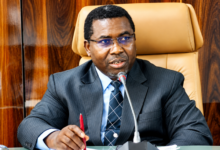
“One of Africa’s greatest paradoxes is that while the continent faces a huge financing gap, it also possesses roughly four trillion dollars in savings that are not invested in development,” he said.
The AfDB meetings, which opened on May 25 and ended on May 29, focused strongly on how Africa can finance its own transformation in a world of tighter global capital, rising debt pressures and declining concessional funding.
According to Ould Tah, regulatory barriers, perceived risks and the fiduciary responsibilities of institutional investors have limited the flow of African savings into African projects. Pension funds, insurance pools, sovereign wealth funds and other long-term savings institutions often remain cautious because they must protect the interests of contributors and beneficiaries.
That caution is understandable. But for Africa, it also creates a development dilemma. The capital exists, but the risk structure of many projects prevents it from moving at scale into infrastructure, energy, manufacturing, transport, housing, agriculture and small business finance.
Risk Mitigation as the Missing Bridge
To address this challenge, Ould Tah said the AfDB is developing risk-mitigation instruments that can encourage long-term investment in African economies.
He cited the African Trade and Development Fund as one of the mechanisms designed to reduce investment risks and attract institutional capital into development projects.
The AfDB President said the Bank had recently increased its participation in the fund’s capital to strengthen investor confidence and crowd in additional partners.
This is important because African institutional investors are not short of money. What they often lack are sufficiently de-risked, well-structured and investable projects. If development-finance institutions can provide guarantees, blended-finance tools, credit enhancement and stronger project preparation, more domestic savings can move into long-term productive assets.
For Ould Tah, mobilising African capital is now central to reducing dependence on external financing and achieving economic sovereignty.
Africa’s Wealth Must Become Prosperity
The AfDB President said Africa possesses enormous natural wealth and demographic potential, but has yet to convert these advantages into commensurate economic power.
He noted that the continent accounts for about 18 per cent of the world’s population and holds more than 30 per cent of global mineral resources, yet its contribution to global Gross Domestic Product remains disproportionately low.
“We cannot continue exporting raw materials and importing finished products while expecting different results,” he said.
That statement captures the structural challenge at the heart of Africa’s development model. For decades, many African economies have exported unprocessed commodities while importing refined goods, machinery, technology, consumer products and industrial inputs. The result has been weak industrialisation, limited value addition, foreign-exchange pressure and dependence on external markets.
Ould Tah said Africa needs large-scale investments that can support industrialisation, job creation and economic transformation. Such investments, he argued, must increasingly be financed by African resources working within African financial systems.
New African Financial Architecture
The AfDB President said the Bank’s Board had approved a roadmap for implementing his four strategic priorities and the New African Financial Architecture.
The decisions taken in Brazzaville, he said, reflected a stronger commitment to African-led development financing.
The new architecture seeks to shift the continent from dependency toward agency. It is built around a simple but powerful idea: Africa must use its own capital more intelligently, strengthen its financial institutions, deepen capital markets and create instruments that can move domestic savings into bankable development.
This does not mean external finance is no longer needed. Africa will still require concessional resources, climate finance, foreign direct investment, multilateral support and global partnerships. But external finance should complement African capital, not substitute for it.
The central message from Brazzaville is clear: Africa’s development cannot be permanently outsourced.
BRANDECONOMY Insight
Africa’s Development Future Is Sitting Inside Its Own Balance Sheet
Sidi Ould Tah’s message is one of the most important development-finance arguments Africa must now confront: the continent is not as capital-poor as it often appears.
Africa has pension savings, sovereign funds, insurance assets, bank liquidity, remittance flows and private capital. Yet much of this money is either underutilised, invested conservatively, trapped by regulatory limitations or directed outside the continent’s most urgent development needs.
The challenge is not merely to “mobilise savings.” The real challenge is to make African projects investable.
Pension funds and institutional investors cannot be asked to gamble with contributors’ money. They need bankable projects, reliable returns, transparent governance, credible guarantees, stable regulation and strong risk-management structures. That is where the AfDB can play a catalytic role.
If Africa can de-risk infrastructure, deepen local capital markets, improve project preparation and strengthen public-private partnership frameworks, its $4 trillion savings pool can become a powerful engine of transformation.
The stakes are enormous. Africa cannot close a $400 billion annual financing gap through aid and borrowing alone. It must unlock the a$4 trillion savings domestic capital. It must process more of its raw materials. It must build industries. It must finance its own infrastructure. It must turn mineral wealth and population scale into productive capacity.
The deeper lesson is simple: Africa’s sovereignty will not be secured only by political declarations. It will be secured when African capital finances African development.