Access Holdings, Coronation Put Nigerian Modernism on the Global Stage as Tate Exhibition Draws 180,000 Visitors

Access Holdings Plc and Coronation Group have celebrated the global success of the Nigerian Modernism exhibition at Tate Modern, London, spotlighting culture as a strategic pillar of national identity, soft power, brand equity and long-term creative-economy value.
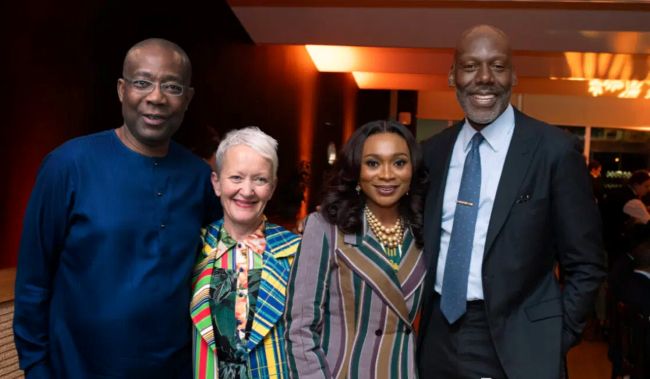
Access Holdings Plc and Coronation Group have marked a defining moment for Nigerian art, culture and corporate patronage, hosting a private reception at Tate Modern, London, to celebrate the success of the Nigerian Modernism exhibition and its wider global cultural impact.


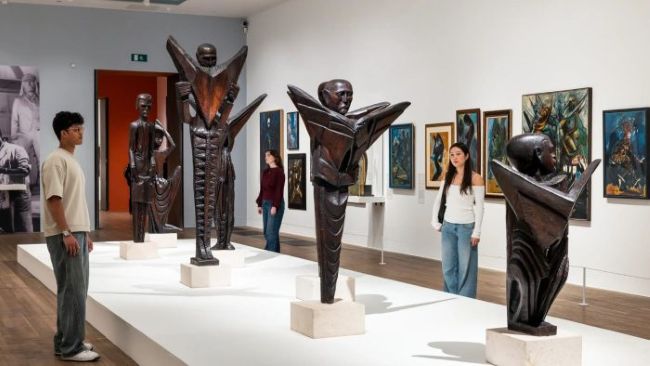 The reception, held on Wednesday, brought together culture leaders, patrons, institutional partners, members of the Nigerian and African diaspora, and stakeholders in the global art ecosystem around an exhibition that has significantly expanded international attention on Nigeria’s modern artistic heritage.
According to the organisers, the exhibition attracted more than 180,000 visitors during its run from October 10, 2025, to May 8, 2026, while reaching millions more through media coverage, digital engagement, education programmes and scholarly conversations.
The show presented nearly 300 works by more than 50 Nigerian artists, spanning five decades of creative production, cultural experimentation and artistic innovation. Earlier information from Access Holdings and Coronation described the exhibition as the first major United Kingdom exhibition to trace the development of modern art in Nigeria, with more than 250 works from over 50 artists from the 1940s to the turn of the century.
For Nigeria, the exhibition is more than a museum success. It is a business, brand and diplomacy story.
It demonstrates how art can travel where politics may struggle, how culture can deepen national identity, and how corporate institutions can use patronage to strengthen not only reputation, but also a country’s place in global imagination.
 Culture as Capital
 Culture as Capital
Chairman of Access Holdings and Coronation Group, Mr Aigboje Aig-Imoukhuede, described the initiative as transformative, especially for young people of African heritage who encountered the works as both art and inheritance.
“One of the aspects of this exhibition that stands out most for me is the opportunity we created for nearly 2,800 students,” he said.
“For many of these young people, the exhibition inspired a deeper appreciation of their heritage, reinforcing their sense of identity and pride in their African roots.”
That point matters.
For a younger generation raised across Nigeria, the United Kingdom, Europe and the wider diaspora, Nigerian Modernism offered something deeper than visual display. It provided cultural confirmation: evidence that Nigerian artists were not merely responding to global modernism, but actively shaping it with their own intellectual force, spiritual vocabulary, political imagination and aesthetic confidence.
Aig-Imoukhuede framed the exhibition within a wider development philosophy.
“I have long believed that great nations are built at the intersection of financial, knowledge and cultural capital,” he said.
That formulation should resonate strongly with policymakers, investors and brand builders.
Nations do not rise on GDP numbers alone. They rise when they can finance their ambitions, produce knowledge, preserve memory, project meaning and tell their own stories with confidence.
Culture is not decoration. Properly stewarded, it becomes strategic infrastructure.
A Major Moment for Nigerian Cultural Diplomacy
Aig-Imoukhuede also linked the exhibition to Nigeria’s cultural diplomacy, recalling President Bola Tinubu’s private tour of the show during his London visit.
“It demonstrated the unique role culture can play in strengthening national identity, global engagement and diplomacy,” he said.
This is a powerful signal.
In a world where national reputation influences tourism, investment, trade, education, talent mobility and diaspora engagement, culture can function as a diplomatic currency.
Nigeria’s global image has long been shaped by its music, film, literature, fashion, food, sport and entrepreneurial energy. Visual art is increasingly becoming another high-value pillar of that identity.
Nigerian Modernism reminds the world that the country’s creative power did not begin with Afrobeats or Nollywood. It has deeper roots in the studios, workshops, schools and intellectual movements of artists who grappled with colonialism, independence, civil war, spirituality, urban transformation and the search for a modern Nigerian identity.
Tate Modern’s Institutional Endorsement
Interim Director of Tate Modern, Ms Karin Hindsbo, said the exhibition presented a story that had not previously been told in a United Kingdom gallery at such scale.
“Nigerian Modernism brought together the works of 50 artists across 50 years, combining African and European traditions through diverse artistic expressions,” she said.
Hindsbo also acknowledged the contribution of Access Holdings and Coronation Group to the project.
“None of this would have been possible without the partnership, generosity and commitment of Access Holdings and Coronation Group,” she said.
That acknowledgement matters because global cultural visibility is rarely accidental.
Major exhibitions require curatorial work, institutional partnerships, financing, logistics, scholarship, conservation, insurance, education programming and global communications. When African corporates step into that space, they help shift the balance from passive representation to active cultural ownership.
Access Holdings and Coronation Group’s support therefore carries implications beyond philanthropy. It shows that African financial institutions can act as custodians of memory, platforms for cultural influence and sponsors of global intellectual exchange.
Ben Enwonwu and the Power of Cultural Recovery
Among the major highlights of the exhibition were seven historic wooden sculptures by renowned Nigerian artist Ben Enwonwu.
The works were originally commissioned in 1960 for the Daily Mirror in London and are now part of the Access Holdings Art Collection. External exhibition documentation also identifies the set as Enwonwu’s Seven Wooden Sculptures commissioned by the Daily Mirror in 1960, presented within the Tate Modern show alongside works by other key Nigerian and African modernist figures.
Their presence carried symbolic force.
Enwonwu remains one of Nigeria’s most important modern artists, a figure whose work helped place African modernism within global art history while refusing the narrow expectations often imposed on African creativity.
By holding such works within a Nigerian corporate collection and enabling their presentation at Tate Modern, Access Holdings is participating in an important act of cultural recovery: returning visibility, context and value to works that speak to Nigeria’s modern identity.
Market Implications: The Creative Economy Beyond Entertainment
The exhibition also highlights the growing commercial importance of Nigeria’s creative economy.
Much of the global conversation around Nigerian culture has focused on music, film and fashion. But visual art is increasingly becoming an investible, collectible and institutionally significant asset class.
Major museum exhibitions can influence artist valuations, deepen collector interest, stimulate academic research, create new demand for catalogues and publications, and strengthen the visibility of galleries, foundations, estates and private collections connected to the featured artists.
For Nigeria, this is an opportunity.
A stronger visual-art ecosystem can support artists, curators, archivists, restorers, auction houses, galleries, art insurers, logistics providers, museums, educational institutions, cultural foundations and creative-tourism platforms.
The market opportunity is not only in selling art. It is in building the infrastructure that allows art to be preserved, studied, exhibited, insured, financed and passed across generations.
Brand Implications for Access Holdings and Coronation
For Access Holdings and Coronation Group, the partnership strengthens a premium brand narrative around legacy, leadership and cultural stewardship.
Access Holdings has often positioned itself around scale, inclusion, innovation and pan-African ambition. Coronation has built a brand around wealth creation, financial services and enduring value. By supporting Nigerian Modernism, both institutions have extended their brand stories into the realm of heritage.
That is smart brand strategy.
Financial institutions that want to build long-term trust must show that they understand more than balance sheets. They must show that they understand society, identity, aspiration and legacy.
Cultural patronage helps humanise corporate power.
It also creates a distinctive reputational advantage: while many brands compete for visibility through advertising, fewer invest meaningfully in the preservation and global projection of national memory.
BRANDECONOMY Insight
The success of Nigerian Modernism at Tate Modern is a reminder that Nigeria’s global brand is not built only in oil fields, banks, boardrooms or stock exchanges.
It is also built in galleries, archives, classrooms, studios and museums.
Access Holdings and Coronation Group have shown that corporate Nigeria can play a serious role in projecting the country’s cultural wealth to the world. That matters because nations that do not invest in their own stories eventually allow others to define them.
Nigerian Modernism is not simply an exhibition of the past.
It is a statement about the future: a future in which African capital protects African memory, African institutions support African creativity, and Nigerian culture stands confidently as a global asset.