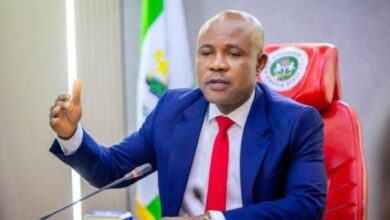


 The former Anambra governor, Peter Obi, says insecurity, corruption, expensive credit and weak opportunity systems are suffocating enterprise in Nigeria — warning that no economy can thrive when politics rewards rent-seeking more than production.
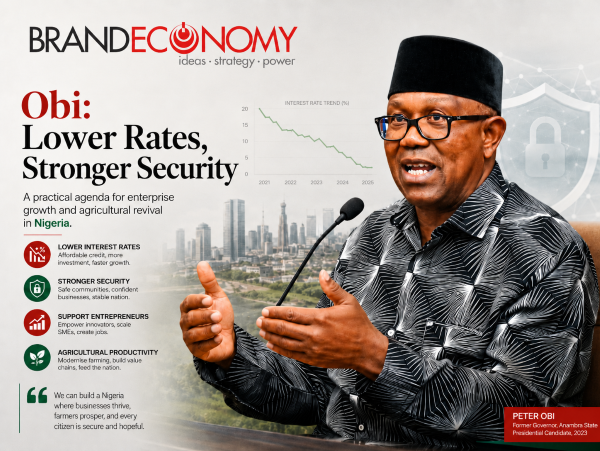 The former Anambra governor, Peter Obi, says insecurity, corruption, expensive credit and weak opportunity systems are suffocating
 Presidential candidate of the Nigeria Democratic Congress, Mr Peter Obi, has called for a decisive reset of Nigeria’s economic priorities, urging government to tackle insecurity, reduce corruption, lower borrowing costs and create a more supportive environment for entrepreneurship.
Peter Obi made the call in Abuja at This Generation Project 2026, the annual conference of Summit Bible Church, themed “Thriving in the Marketplace.”




His message was direct: Nigeria cannot build prosperity when farmers are afraid to go to their farms, businesses cannot access affordable credit, young people lack opportunity, and politics appears more rewarding than productive enterprise.
According to Peter Obi, insecurity has become one of the biggest constraints on agricultural output, food security and rural livelihoods. He argued that Nigeria’s vast agricultural potential remains underutilised because many farmers are unable to cultivate their land safely.
He said it was unacceptable that children could be kept away from school and farmers prevented from accessing their farms because of violence and fear. For him, security is no longer merely a law-and-order issue; it is now a central economic variable.
That point is critical. Insecurity raises food prices, disrupts supply chains, discourages investment, reduces rural income, weakens tax revenue and deepens poverty. It also destroys confidence — the invisible currency of every functioning economy.
Agriculture as Nigeria’s Real Wealth Engine
Obi argued that Nigeria can generate more prosperity from agriculture than from crude oil if it addresses insecurity and builds productive value chains.
His position speaks to one of Nigeria’s oldest economic contradictions. The country has vast arable land, a large population, strong food demand and export potential, yet it remains heavily exposed to food inflation, import dependence and weak agricultural productivity.
Oil has delivered revenue, but agriculture has broader job-creation power. It can absorb labour, support manufacturing, feed households, supply raw materials, build exports and strengthen rural economies.
But agriculture cannot thrive in a climate of violence. Farmers need access to land, storage, roads, finance, extension support, mechanisation, processing capacity and predictable markets.
Obi’s intervention therefore places agriculture within a broader development argument: Nigeria must stop treating farming as subsistence survival and start treating it as industrial strategy.
High Interest Rates and the SME Squeeze
Peter Obi also criticised Nigeria’s lending environment, saying high interest rates were choking business expansion and making it difficult for entrepreneurs to grow.
He argued that borrowing is not the problem; the real issue is whether borrowed funds are directed into productive activities that create value.
His concern reflects the harsh reality facing many Nigerian businesses. Across sectors, entrepreneurs are battling expensive credit, high energy costs, weak consumer purchasing power, exchange-rate pressures, rising logistics costs and uncertain regulation.
For small and medium-sized enterprises, high lending rates can be fatal. They make working capital expensive, discourage investment in equipment, reduce hiring and push businesses toward informal borrowing.
No serious enterprise economy can grow when productive businesses cannot borrow at rates that allow them to compete.
Obi said banks must do more to support businesses, especially entrepreneurs who create jobs and generate real economic value. The argument is simple: finance should support production, not merely speculation and short-term trading.
Entrepreneurship Versus Rent-Seeking
One of Obi’s strongest points was his criticism of a national culture in which politics increasingly appears more profitable than entrepreneurship.
He warned that no society can prosper when politicians become more successful and influential than entrepreneurs.
That statement goes to the heart of Nigeria’s productivity crisis.
Economies grow when enterprise is rewarded, not when access to public office becomes the fastest route to wealth. When young people see that production is difficult but rent-seeking is lucrative, national ambition shifts in the wrong direction.
Obi said entrepreneurs create wealth and jobs, but Nigeria has allowed too many people to make money without producing anything. In his view, corruption weakens the environment for innovation, discourages hard work and teaches young people the wrong lessons about success.
For a country seeking inclusive growth, that is a serious warning.
Youth Opportunity and the Cost of Hopelessness
Obi also expressed concern about the limited opportunities available to young Nigerians, despite their intelligence, energy and creativity.
He said many young people are talented but unsupported, adding that crime grows when millions of people feel excluded, ignored and hopeless.
This is more than political rhetoric. It is a development-economy reality.
Nigeria has one of the world’s largest youth populations. That can be an advantage if young people are educated, skilled, healthy and economically engaged. It can become a risk if they are unemployed, frustrated and disconnected from opportunity.
The solution is not charity. It is systems: skills, credit, mentorship, market access, digital tools, apprenticeships, technical education, industrial clusters and startup support.
Peter Obi specifically advocated the revival of the apprenticeship model, arguing that successful entrepreneurs should help raise the next generation of business owners. Nigeria’s traditional apprenticeship systems, especially in parts of the South-East, have long served as informal business schools, transferring capital, discipline, commercial knowledge and networks across generations.
Modernising that model could help strengthen entrepreneurship at scale.
Marketplace, Faith and Economic Influence
The conference convener and Senior Pastor of Summit Bible Church, Andy Osakwe, described the marketplace as a broad field covering business, careers and all human activities involving engagement with people.
He said thriving in the marketplace should be seen as a mandate for influence, impact and responsible contribution.
That framing gives the event broader meaning. The conversation was not merely about politics. It was about how values, enterprise and public responsibility intersect in national development.
Other speakers at the conference included Sam Odia, Chief Executive Officer of the Millard Fuller Foundation, and Tricia Olufemi-Olumide, Chief Executive Officer of TriciaBiz and Founder of Ziba Beach Resort.
Market Implications
Obi’s comments highlight the core pressures shaping Nigeria’s business environment.
If insecurity persists, agriculture, logistics, rural trade and food supply will remain under strain. If interest rates stay high, SMEs will struggle to expand. If corruption remains entrenched, investors will price in risk. If young people remain excluded, social instability will deepen.
The market implication is clear: Nigeria’s private sector cannot fully perform in a hostile operating environment.
Businesses need security, affordable finance, policy consistency, infrastructure and a government that rewards productivity.
Until those conditions improve, enterprise growth will remain uneven and investment confidence will be cautious.
Investor Relevance
For investors, Obi’s remarks point to the key variables that determine Nigeria’s attractiveness: security, credit conditions, governance quality, corruption risk, youth employment and productive-sector policy.
Investors are not interested only in market size. They want stability, enforceable rules, predictable policy and access to skilled labour.
Nigeria has population scale and major sector opportunities in agriculture, housing, fintech, energy, manufacturing, logistics and consumer markets. But long-term capital will remain selective until security improves and productive businesses can operate with lower risk.
In practical terms, insecurity and corruption are investment taxes. High interest rates are growth brakes. Youth unemployment is a social-risk indicator.
Any government that reduces these pressures will strengthen Nigeria’s investment case.
Brand Implications
Nigeria’s national brand is shaped not only by culture, population and natural resources, but by how easy it is to build, invest and prosper within the country.
Obi’s message challenges Nigeria to reposition itself from a rent-seeking economy to an enterprise-led economy.
A country where farmers cannot farm, businesses cannot borrow affordably and young people cannot find opportunity sends the wrong signal to citizens, investors and the world.
But a Nigeria that secures farms, rewards entrepreneurs, reduces corruption, expands credit and revives apprenticeship can project a stronger brand: productive, youthful, innovative and investable.
For political actors, the brand lesson is equally clear. Economic credibility now depends on practical solutions, not slogans.
BRANDECONOMY Insight
Nigeria’s Growth Problem Is Not Lack of Talent — It Is Lack of an Enabling System
Peter Obi’s intervention at This Generation Project 2026 speaks to a central truth: Nigeria is not poor because its people lack talent. Nigeria is constrained because the system too often frustrates talent.
Farmers want to produce, but insecurity blocks them. Entrepreneurs want to grow, but credit is expensive. Young people want opportunity, but pathways are weak. Investors want returns, but risk is high. Honest enterprise exists, but corruption distorts incentives.
This is why Nigeria’s development challenge must be treated as a system problem.
Security is economic policy. Interest rates are enterprise policy. Anti-corruption is investment policy. Agriculture is industrial policy. Youth opportunity is national stability policy.
Obi’s argument that entrepreneurs must become more important than political rent-seekers is especially important. No economy grows sustainably when production is punished and extraction is rewarded.
The future belongs to countries that build systems where talent can work, capital can flow, farms can produce, businesses can scale and young people can believe effort still matters.
Nigeria has the raw ingredients. What it needs is disciplined execution.