Nigeria’s Aviation Cost Crisis: When Flying Becomes a Survival Business

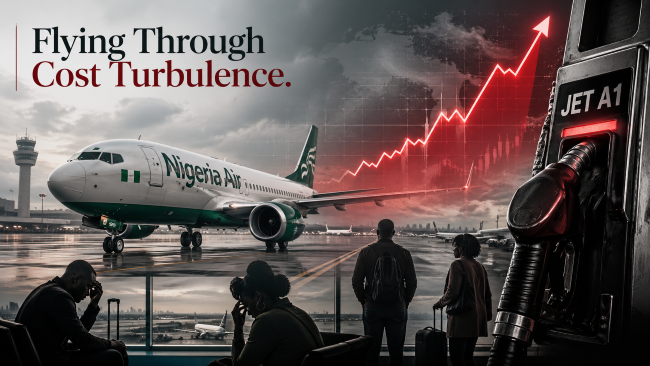 Nigeria’s aviation industry is again flying through heavy turbulence. A sharp rise in Jet A1 prices, foreign-exchange pressure, multiple taxes, offshore maintenance costs, limited aircraft capacity and mounting debts across the aviation value chain are squeezing airlines and passengers alike. Operators warn that without urgent intervention, flight disruptions, higher fares and possible capacity cuts could become unavoidable. The crisis is no longer just about airlines; it is about national mobility, trade, tourism, Hajj operations, business travel and the cost of keeping Nigeria connected.
The Economics of Flying Under Pressure
Air travel in Nigeria has become one of the clearest examples of how macroeconomic pressure moves from balance sheets to ordinary lives.




Domestic airlines are battling a punishing cost structure driven by aviation fuel, foreign exchange scarcity, naira depreciation, multiple statutory charges, high insurance premiums, overseas aircraft maintenance and a constrained fleet base. These pressures are not abstract. They determine whether flights operate on schedule, whether passengers can afford tickets, whether airlines can maintain aircraft safely, and whether airports remain active commercial hubs.
Operators say the biggest pressure point is Jet A1 aviation fuel, whose price has risen sharply in recent months. For airlines, fuel is not just another expense. It is often the single most volatile and unforgiving cost item. When the price rises suddenly, airlines face three bad choices: raise fares, reduce flights, or absorb losses until the business model breaks.
That is where Nigeria’s aviation sector now finds itself.
Jet A1: The Fire Under the Industry
The fuel crisis has become severe enough for indigenous airlines to warn that continued price increases could threaten operations. Airline executives say they have been trying to sustain schedules and avoid major fare shocks, but the economics are becoming increasingly difficult.
Ibom Air’s figures capture the scale of the squeeze. The airline reported that the cost of fuelling a flight rose from about ₦2.1 million in January to roughly ₦7.6 million by April 27, 2026. That is more than a tripling of fuel cost per flight within a short period. The airline said the rise had occurred despite operating fuel-efficient aircraft and sourcing most of its supply locally.
The implication is stark. If a carrier spends far more on fuel but cannot raise fares proportionately because of competition and passenger affordability, the airline begins to subsidise the traveller. That may look patriotic for a few weeks. It is not sustainable as a business model.
Other airlines have sounded similar warnings. United Nigeria Airlines said it had not necessarily cut frequencies, but operations had become strained. Air Peace reportedly maintained domestic frequencies but acknowledged delays linked to fuel availability and pricing pressures. It also reduced some Abuja–London operations, citing the high cost of aviation fuel.
The message from operators is consistent: Nigerian airlines are increasingly flying not for profit, but for survival.
Why Tickets Keep Rising
Passengers often blame airlines when fares rise. But in Nigeria, ticket pricing is now being shaped less by profit ambition and more by survival economics.
Airlines earn mostly in naira but pay for aircraft leases, spare parts, insurance, software, training and major maintenance in foreign currency. When the naira weakens, the cost of staying in the air rises. Nigeria’s limited local maintenance, repair and overhaul capacity worsens the problem because aircraft often need to be serviced abroad, creating another dollar-denominated burden.
Then there are taxes and charges. Operators have long complained that the aviation sector carries too many levies, fees and statutory obligations. Some industry estimates put the combined burden at a level that can consume a significant portion of ticket revenue.
The result is a painful equation. Even before an aircraft departs, the airline must pay for fuel, crew, insurance, maintenance, airport charges, navigation fees, ground handling, security, leasing costs and regulatory obligations. When fuel alone jumps sharply, the fare pressure becomes inevitable.
Government Relief: Helpful, But Not Enough
The Federal Government has moved to ease part of the pressure. Following engagement between airline operators and aviation fuel marketers, authorities announced a 30 per cent reduction in aviation-related taxes and a similar concession on debts owed by domestic airlines to aviation agencies.
That relief may provide breathing space, but operators argue that it does not solve the central problem: fuel pricing.
From the airlines’ perspective, tax relief is welcome, but if Jet A1 remains at unsustainable levels, the industry remains exposed. This is why airline leaders are asking for deeper intervention, including temporary tax suspension, a possible non-taxable fuel surcharge, better scrutiny of marketers’ pricing, and strategic fuel supply arrangements.
The danger is that the sector could slide into a chain reaction. If airlines reduce flights, passengers suffer. If passengers resist higher fares, airline revenues weaken. If airlines delay payments, ground handlers and other service providers come under pressure. If ground handlers withdraw services, airport operations could be disrupted.
Already, ground handling companies are reportedly owed billions and have threatened service withdrawal. That is significant because flights cannot operate smoothly without baggage handling, aircraft marshalling, ramp services and related airport support.
BRANDECONOMY Insight
Nigeria’s aviation crisis is not merely about expensive air tickets. It is about the fragility of a national transport system operating without enough structural protection.
Airlines are essential economic infrastructure. They connect businesses, families, tourists, government officials, investors, emergency travellers, pilgrims and cargo. When airlines struggle, the economy feels it through disrupted meetings, reduced tourism, delayed logistics, higher travel costs and weakened regional connectivity.
The current Jet A1 crisis exposes deeper weaknesses. Nigeria needs a stable aviation fuel pricing framework, transparent supply-chain monitoring, stronger local refining-to-airline arrangements, improved access to foreign exchange for critical aviation inputs, and serious investment in local maintenance facilities.
Tax concessions may help, but they are not a full solution. The long-term answer is to reduce the dollar intensity of Nigerian aviation. That means building local MRO capacity, improving aircraft financing options, reducing duplicative charges, expanding fleet availability, and ensuring fuel supply is predictable and fairly priced.
There is also a safety dimension. Airlines must never be pushed into a situation where they are tempted to compromise maintenance, crew training or operational standards because they are bleeding cash. Aviation is unforgiving. Financial distress and safety pressure must never be allowed to meet.
The industry needs urgent relief, but it also needs reform. Nigeria cannot build a modern travel economy on emergency meetings, fare shocks and shutdown threats.
The cost of flying is becoming too high. The cost of letting airlines fail would be higher.
Strategic Takeaways
For government:
Intervention must go beyond temporary tax relief to address fuel pricing transparency, forex access, aviation charges and local maintenance capacity.
For airlines:
Operators may need to review route economics, capacity deployment and fuel-risk management while protecting safety and reliability.
For passengers:
Higher fares, delays and reduced schedules may persist if fuel costs remain unstable.
For investors:
Nigeria’s aviation sector still has strong demand, but profitability depends on structural reforms that reduce operating cost volatility.