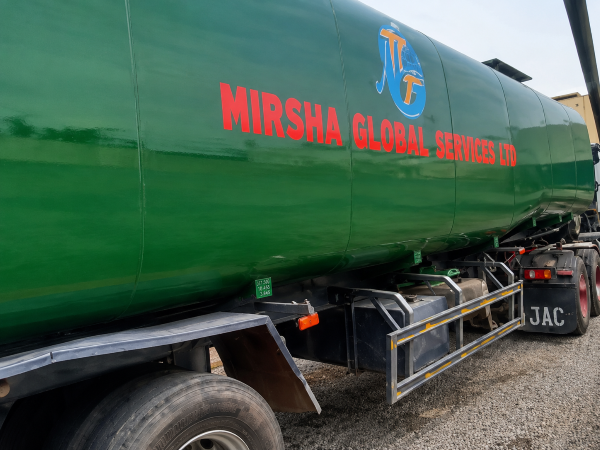
 The National Agency for Food and Drug Administration and Control has intercepted two tankers designated for transporting edible vegetable oil after they were discovered conveying Automotive Gas Oil, commonly known as diesel, in Lagos.
The agency described the practice as a serious violation of food-safety regulations and a direct threat to public health.




NAFDAC’s Director of Investigation and Enforcement, Dr Martins Iluyomade, disclosed the development while briefing journalists in Lagos on Monday.
According to him, the discovery was made during a recent enforcement operation in the state. Subsequent investigation showed that the tankers, which were marked and designated for edible vegetable oil, had instead been loaded with diesel.
Iluyomade said the use of the vehicles for petroleum products violated the requirement that tankers approved for food-grade products must be dedicated exclusively to that purpose.
“Vegetable oil has nothing to do with petrol or petroleum products, and that is why we are very particular about it,” he said.
“Any tanker designated for edible vegetable oil must be dedicated exclusively to that purpose, in line with international best practices for food safety.”
Tankers, drivers taken into custody
The NAFDAC director said the two tankers and their drivers had been taken into custody while investigations continued to determine the full extent of the infraction and the appropriate regulatory response.
He said the manager involved claimed not to understand the colour-coding requirements for edible-oil tankers and maintained that the vehicles had previously been used only for transporting diesel.
That explanation, however, raises deeper compliance questions.
A tanker previously used to carry petroleum products may retain chemical residues capable of contaminating edible oil if it is later introduced into the food-supply chain without approved decontamination, inspection and certification.
Even where no edible oil was found in the affected tankers at the time of interception, the false designation creates a significant food-safety risk because buyers, processors and regulators may assume that the vehicles meet food-grade standards.
Public health and consumer implications
Edible oil is a widely consumed household and industrial food ingredient used by families, restaurants, bakeries and food manufacturers.
Any contamination at the transportation stage could spread across several layers of the food market before detection.
The incident therefore highlights the importance of traceability across Nigeria’s food-distribution chain. Regulation cannot stop at factories and warehouses; it must cover tankers, storage facilities, handlers and logistics operators.
A weak link in transportation can undermine the safety controls maintained by legitimate manufacturers.
For consumers, the case reinforces the need for regulatory vigilance in sectors where unsafe practices may not be immediately visible.
Market implications
Food-grade logistics is a specialised business that requires dedicated equipment, proper cleaning systems, documented cargo histories and trained operators.
The misuse of designated tankers creates unfair competition for compliant transport companies that invest in safety standards.
It also exposes edible-oil manufacturers and distributors to severe commercial and reputational risks. A company that receives contaminated products could face recalls, product losses, legal claims and lasting damage to consumer confidence.
The incident may therefore prompt food processors to strengthen verification procedures for third-party transporters, including inspection of vehicle records, seals and previous cargoes.
Brand implications
For NAFDAC, the interception supports its positioning as a frontline protector of public health and food integrity.
But the agency’s credibility will depend on transparent investigation and proportionate enforcement. The public should be informed of the outcome, including any sanctions and corrective measures imposed.
For logistics and food companies, compliance must become a core brand commitment rather than a regulatory formality. Trust can be destroyed by one contaminated load.
BRANDECONOMY Insight
The Lagos interception is not merely a tanker violation. It is a warning about the hidden vulnerabilities within Nigeria’s food-supply chain.
Food safety depends on every stage—from production and storage to transportation and retail.
NAFDAC must intensify inspections, while operators must understand that a tanker’s designation is not decorative. It is a public-health guarantee.
Protecting consumers requires stricter traceability, industry education and firm punishment for deliberate violations.