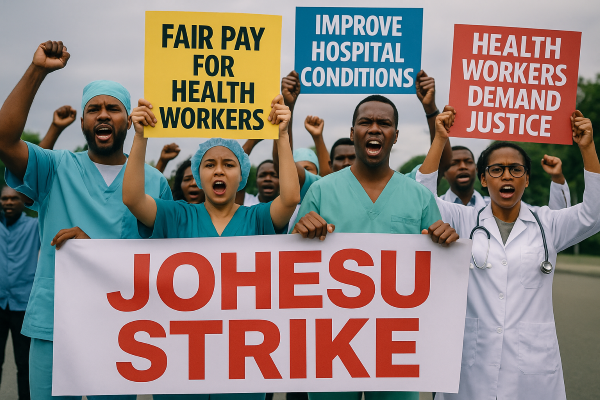
Nigeria’s health sector was plunged into crisis on Friday as the Joint Health Sector Unions (JOHESU) and the Assembly of Healthcare Professional Associations declared an indefinite nationwide strike, citing a staggering 12-year delay in the full implementation of the adjusted Consolidated Health Salary Structure (CONHESS).
The move—described by stakeholders as “long overdue but deeply disruptive”—marks one of the largest coordinated industrial actions in Nigeria’s health sector since 2014.



A 12-Year Salary Dispute That Never Left the Table
Addressing journalists in Abuja at the end of JOHESU’s Expanded National Executive Council meeting, National Chairman Kabiru Minjibir said the unions had reached the end of the road after a decade of dialogue, memoranda, conciliatory committees and government assurances that “never materialised.”
Minjibir said the strike directive was unanimous, mandating all affiliate unions in federal health institutions to withdraw services from midnight Friday, effectively shutting down operations in federal hospitals, laboratories, rehabilitation centres, and allied health facilities.
“This 12-year delay is unacceptable. Health workers have shown maturity and patriotism. Government inaction has made this strike inevitable,”
— Kabiru Minjibir, JOHESU National Chairman
How Nigeria Got Here: Reforms Promised, Committees Formed, Nothing Implemented
The roots of the crisis run deep.
Key flashpoints include:
- 2014 agreement between government and JOHESU promising swift CONHESS adjustments
- Multiple memoranda of understanding that were never activated
- A High-Level Body report submitted in 2022—still gathering dust
- Growing wage disparity between health worker groups
- Increasing attrition within the system as professionals exit to better-paying economies
Despite the union’s decision to exercise restraint for over a decade, Minjibir said workers have now reached a breaking point as the cost-of-living crisis worsens and an underfunded health system increasingly leans on them.
Nationwide Shutdown: States Put on Strike Notice
Beyond federal institutions, JOHESU has also directed its state councils to issue a 15-day strike notice to state governments, warning that nationwide shutdowns could spread if local authorities fail to address parallel welfare demands.
Minjibir apologised to Nigerians for the expected disruptions but stressed that the government had pushed health workers to the limit.
He also warned against intimidation or victimisation of members, noting that JOHESU will respond to any such attempt with “full national force.”
Dialogue Still Possible — But Only on One Condition
While the strike officially begins, the union says it remains open to immediate dialogue but insists that:
“Only full and immediate implementation of adjusted CONHESS will end the strike.”
The union argues that fixing salary distortions will not only restore industrial harmony but also strengthen Nigeria’s fragile health system, already overwhelmed by brain drain, demographic pressures, and funding gaps.
What This Means for Nigeria’s Health System
A prolonged strike will have significant implications:
1. Service disruption:
Laboratories, physiotherapy units, radiography, environmental health, pharmacy support, and emergency rescue services risk paralysis.
2. Increased pressure on doctors:
With allied health workers out, medical doctors may face untenable workload spikes.
3. Health sector instability:
Strikes amplify distrust in the system and deepen the exodus of healthcare talent.
4. Reform urgency:
This crisis may force government to review health funding, human capital policies, and compensation frameworks.
Nigeria’s health sector now stands at a critical crossroads. Whether this becomes another prolonged labour standoff—or a turning point for long-overdue reform—will depend entirely on how quickly the government responds.
BRANDECONOMY will continue to monitor the evolving situation with deep analysis and expert perspectives.