
Ibom Deep Seaport Targets 300,000 Jobs as Akwa Ibom Seeks Investors

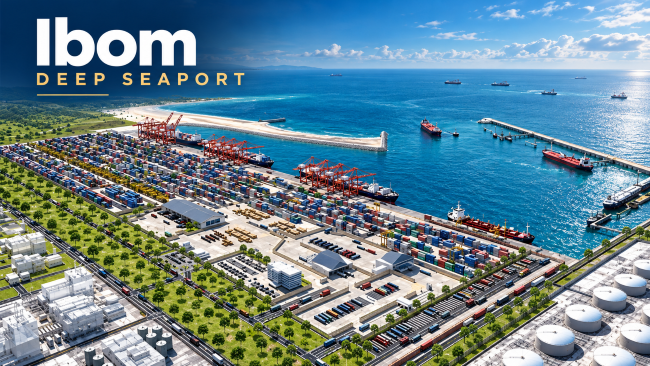 Akwa Ibom State has renewed its promise that the proposed Ibom Deep Seaport and adjoining industrial city could generate more than 300,000 direct and indirect jobs, transform the state into a maritime gateway and create a new centre of industrial growth on Nigeria’s eastern coastline.
The projection is bold. What matters now is whether one of Nigeria’s longest-running port ambitions can finally move from approvals, feasibility reports and investor conversations to financial close, construction and commercial operations.




Commissioner for Special Duties and Ibom Deep Seaport, Emem Bob, told an inter-ministerial media briefing in Uyo on Monday that the project remained the state’s flagship industrial initiative.
According to him, the port master plan, feasibility studies and site-specific technical assessments have been completed. He added that the Full Business Case had secured the approvals of the Infrastructure Concession Regulatory Commission and the Federal Executive Council.
The government is now seeking preferred private-sector participants for the port’s development, Bob said.
The project is expected to create more than 300,000 direct and indirect jobs between 2027 and 2050, with employment and commercial benefits extending beyond Akwa Ibom.
That long time horizon is important. The figure should not be interpreted as 300,000 immediate or permanent port jobs. It potentially combines construction employment, industrial-city activity, logistics services, supply-chain businesses and indirect economic opportunities generated over more than two decades.
For credibility, the state should publish the methodology behind the projection, distinguishing temporary construction jobs from permanent employment and separating direct positions from wider induced activity.
An industrial ecosystem—not simply a harbour
The proposed port is conceived as the anchor of a much larger economic platform.
Bob said the accompanying industrial city would occupy approximately 14,517 hectares and accommodate petrochemical, agro-processing, maritime-services and vehicle-assembly clusters. The plans also include a proposed 2,151-megawatt power plant.
The industrial city has Free Trade Zone status and is expected to be supported by road, proposed rail connectivity and access to Victor Attah International Airport.
This integrated model is economically more compelling than a stand-alone port. Ports create the greatest value when they operate as part of a production, logistics and trade ecosystem—not merely as locations where vessels berth and containers are discharged.
Agro-processing facilities could convert produce from Akwa Ibom and neighbouring states into exportable goods. Petrochemical investments could deepen local value addition around Nigeria’s hydrocarbon resources. Marine-services companies could support ship repair, fabrication, offshore logistics and specialised engineering.
Automotive and light-manufacturing clusters could benefit from lower cargo-handling distances if imported components and finished products move efficiently through the port.
But each element depends on the others. An industrial park without reliable power becomes expensive real estate. A port without efficient road and rail evacuation risks reproducing the congestion that has undermined logistics around Lagos. A free-trade zone without predictable customs processes, security and export infrastructure may attract registrations without attracting productive factories.
The project’s procurement question
The latest announcement comes after years of approvals and shifting descriptions of the project’s commercial structure.
The initial procurement process was launched in 2018. Federal records subsequently indicated that a preferred bidder had been selected and that a 50-year Design-Finance-Build-Operate-and-Transfer concession had been granted to the Bolloré–Africa PCI consortium.
The ICRC previously placed the project’s proposed investment at approximately $2.01 billion for the relevant development phases. Federal Executive Council approval was recorded in 2020, while the Full Business Case compliance process was also reported as completed.
In June 2026, Governor Umo Eno led a technical engagement in Paris with Africa Global Logistics, the business that emerged from Bolloré Africa Logistics. The meeting reviewed a feasibility report prepared by Worley Parsons and considered possible investment, implementation and sustainability pathways.
The state described Africa Global Logistics as a prospective partner and said the governor requested firm timelines and actionable milestones capable of taking the project from planning into execution.
The latest statement that preferred bidders are still being sourced therefore requires clarification.
This does not necessarily mean the project has returned to the beginning. Corporate ownership, financing conditions, technical designs or concession terms may have changed. But investors and the public deserve an updated account of what happened to the earlier preferred-bidder and concession arrangements.
The government should disclose whether the original concession remains valid, is being renegotiated or has been replaced by a new procurement process. It should also state whether Africa Global Logistics is an adviser, prospective equity investor, terminal operator or intended concessionaire.
Infrastructure projects become bankable when roles, risks and revenues are clear.
Approvals are not financial close
The completion of feasibility studies, environmental assessments and business-case approvals represents meaningful progress. Yet these milestones do not automatically produce a port.
The decisive commercial milestones are an executed concession agreement, committed equity, secured debt financing, completion of front-end engineering design, resolution of land and host-community issues, construction procurement and a credible start date.
A deep seaport also requires extensive marine infrastructure. Channels must be dredged and maintained. Breakwaters, berths, terminals, navigation systems, customs facilities, security architecture and cargo-evacuation networks must be financed and built.
Before committing billions of dollars, investors will ask difficult but necessary questions:
- Which shipping lines have indicated a willingness to call at the port?
- What cargo volumes have been independently validated?
- How competitive will tariffs be against Lekki, Onne, Tema, Lomé and Kribi?
- Who bears the cost and risk of maintenance dredging?
- What guarantees or revenue support will government provide?
- How will foreign investors repatriate earnings and manage currency risk?
- Which roads and rail connections will be operational when the port opens?
- How will affected communities participate in the project’s economic value?
These are not arguments against the seaport. They are the questions that separate an investable maritime platform from an enduring political promise.
Nigeria’s eastern trade opportunity
The strategic logic behind Ibom Deep Seaport remains strong.
Nigeria’s trade infrastructure is still heavily concentrated around Lagos. Although Lekki Deep Sea Port has expanded capacity, cargo owners serving the South-East, South-South, North-Central and parts of the North-East frequently incur high inland transportation costs.
A commercially successful port in Akwa Ibom could shorten supply routes for manufacturers and traders across these regions. It could improve access to Cameroon, Equatorial Guinea, Gabon and other Central African markets while supporting coastal shipping and transshipment activity within the Gulf of Guinea.
The project’s official concept envisages a port capable of receiving vessels carrying more than 13,000 containers and transferring cargo to smaller vessels serving other ports and regional destinations.
However, geographical proximity does not guarantee cargo. Shipping lines select ports based on total cost, turnaround time, channel reliability, security, customs efficiency and access to dependable inland markets.
Ibom must therefore compete on performance—not sentiment.
Airport and convention infrastructure widen the proposition
The state government is positioning the seaport within a broader infrastructure and destination-development strategy.
Bob said the 5,000-capacity Ibom International Convention Centre had reached 90 per cent completion and was targeted for delivery in December. The facility is expected to provide 615 parking spaces and accommodate conferences, exhibitions, cultural events and commercial engagements.
Uwem Ekanem, Special Adviser to the Governor on Aviation and Airport Development, reported that Victor Attah International Airport recorded approximately 1.386 million domestic passenger movements between 2023 and September 2026, alongside 1,998 international movements.
The airport’s three-level smart terminal covers about 27,173 square metres and is designed for up to three million passengers annually. Regional operations from Uyo began with Ibom Air’s maiden service to Accra on May 2, 2026.
Together, the airport, convention centre, Ibom Air, industrial city and proposed port support a coherent place-brand proposition: Akwa Ibom as a connected destination for business, tourism, manufacturing and trade.
Yet physical assets alone will not produce that outcome. The state must build a commercially integrated system in which each project generates demand for the others.
Market and investor implications
The seaport and industrial-city plans could open opportunities in marine construction, warehousing, cold-chain logistics, truck terminals, customs technology, renewable and conventional power, industrial housing, hospitality, insurance and trade finance.
Banks, pension funds, infrastructure funds and development-finance institutions will be interested only if the project offers transparent procurement, predictable revenue, acceptable risk allocation and credible protection from political disruption.
The proposed power plant could also become a major investment proposition, but its scale demands clarity on fuel supply, generation licences, transmission arrangements and the identity of industrial offtakers.
For businesses in agriculture and manufacturing, the port could reduce logistics costs and provide new export pathways. But those benefits will materialise only when the port has efficient hinterland connections and a dependable base of cargo.
Brand implications
For Akwa Ibom, the project is becoming a test of the “Land of Promise” brand.
The 300,000-job estimate has circulated in public discussions since at least 2020. Repeating it without corresponding milestones could create promise fatigue and weaken confidence in government communications.
The stronger brand strategy is radical transparency: publish the commercial structure, implementation timetable, investor commitments, procurement status and verified progress.
That approach would signal that Akwa Ibom is not merely selling ambition but building an institutionally credible investment destination.
BRANDECONOMY Insight
A deep seaport does not become transformational because its channel is deep, its land allocation is vast or its job projection is impressive. It becomes transformational when shipping lines use it, manufacturers locate around it, cargo moves efficiently and private investors earn sustainable returns.
Ibom Deep Seaport has passed important administrative milestones. But approval is not construction, feasibility is not financing, and a preferred bidder is not the same as commercial close.
The government should now publish an updated execution dashboard covering the concessionaire, equity structure, debt plan, project cost, engineering status, cargo commitments, access infrastructure, community agreements and construction timeline.
It should also reconcile the earlier concession announcements with the current search for investors or preferred bidders.
Akwa Ibom’s opportunity is real. Nigeria needs additional competitive port capacity, particularly outside Lagos. The state’s aviation, tourism and industrial investments could give the project a broader economic foundation.
But the next announcement must be bigger than another projection.
It should be financial close, a binding concession, mobilised capital and contractors on site. That is when 300,000 jobs will begin to look like an economic programme rather than a recurring promise.