

 The Cross River Internal Revenue Service has sealed parts of the Federal Neuropsychiatric Hospital and the Cross River Basin Development Authority in Calabar over alleged unpaid tax liabilities totalling more than ₦154 million. The enforcement action, according to the state tax authority, followed repeated notices, failed reconciliation windows and non-response from the institutions. The case underscores a widening fiscal reality: in an era of tighter public revenues, even federal agencies are no longer insulated from state-level tax enforcement.
A Tax Enforcement Signal From Calabar
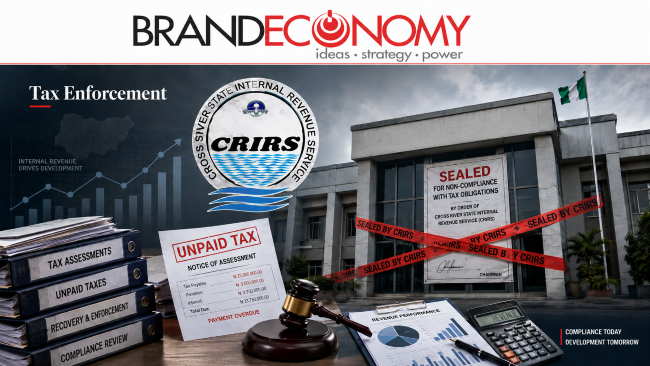
The Cross River Internal Revenue Service has intensified its compliance campaign, sealing the Federal Neuropsychiatric Hospital and the Cross River Basin Development Authority in Calabar over unpaid tax liabilities estimated at more than ₦154 million.



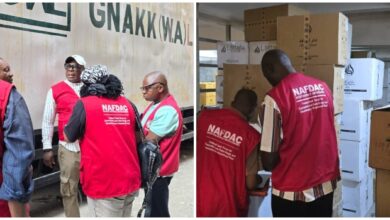
The action was carried out during a compliance enforcement exercise on Friday, with officials of the revenue service insisting that both federal institutions had failed to respond adequately to earlier administrative steps aimed at recovering outstanding taxes.
For Cross River State, this is more than a routine enforcement matter. It is a statement of fiscal intent.
Across Nigeria, state governments are under pressure to expand internally generated revenue, reduce dependence on federal allocations and enforce compliance among public and private-sector taxpayers. In that environment, tax authorities are becoming more assertive, especially where deductions have allegedly been made but not remitted.
Neuropsychiatric Hospital Accused of ₦101m PAYE, Withholding Tax Debt
The larger liability was attributed to the Federal Neuropsychiatric Hospital, which CRIRS said owed more than ₦101 million in Pay As You Earn and withholding tax liabilities for 2022 and 2023.
PAYE is particularly sensitive because it involves taxes deducted from employees’ salaries for remittance to the relevant tax authority. Where an employer deducts from workers but fails to remit, the issue becomes more serious than a simple accounting delay. It becomes a trust and compliance problem.
Bassey said the hospital received assessment notices in October 2025, followed by demand and pre-action notices in February and March 2026. He added that the hospital later requested detailed computation of the liabilities, which CRIRS provided, giving the institution a seven-day window for reconciliation.
According to the tax authority, more than one month passed after the computation was sent without a response, leading to the enforcement action.
This sequence is important. Tax enforcement typically rests on procedure: assessment, objection window, demand, warning, and then distraint where there is persistent non-compliance. CRIRS appears to be positioning its action as the outcome of exhausted administrative options.
Basin Authority Owes Over ₦53m, Says CRIRS
Speaking during the enforcement exercise, Mr Ayi Bassey, Director of Compliance at CRIRS, said the Cross River Basin Development Authority owed more than ₦53 million in tax audit liabilities covering the period between 2019 and 2021.
According to him, the revenue service had issued several notices to the agency, including assessment notices, demand notices and pre-distraint notices. He said the agency failed to respond to these steps or take advantage of the timelines provided for objection, reconciliation or payment.
Bassey said the service had attempted to resolve the matter administratively before resorting to enforcement.
His position was clear: tax compliance is not optional, even for public institutions.
The sealing of the Basin Authority therefore sends a strong warning to agencies that ignore tax notices or treat state revenue authorities as secondary creditors.
Legal Backing and the Distraint Question
The Director of Legal Services and Enforcement at CRIRS, Mr Emmanuel Esira, said federal institutions are legally required to deduct and remit taxes due from employees and other taxable transactions.
He argued that failure to deduct or remit taxes attracts penalties and interest under Nigerian tax laws, and said the enforcement action was backed by Section 61 of the Nigerian Tax Administration Act.
Esira described the operation as distraint, a legal enforcement process that allows a tax authority to seal premises or seize property to compel compliance with established tax liabilities.
The use of distraint is a powerful tool because it converts a tax dispute from correspondence into operational disruption. It also places reputational pressure on institutions, especially public agencies whose credibility depends on lawful conduct.
However, tax authorities must always apply such powers carefully. Enforcement must be procedurally sound, proportionate and sensitive to public service obligations.
In this case, CRIRS said it avoided sensitive areas of the Neuropsychiatric Hospital, including wards and the pharmacy, to ensure that medical services were not disrupted. The enforcement reportedly targeted administrative offices.
That distinction matters. A tax authority may have the power to enforce, but enforcement at a health facility must never endanger patients.
Why Federal Institutions Are Not Exempt
A recurring misunderstanding in Nigeria’s tax culture is the belief that federal institutions are somehow beyond the reach of state revenue authorities.
They are not.
Where employees work within a state, PAYE obligations are typically payable to the state tax authority. Similarly, withholding tax obligations may arise from transactions, contracts and payments handled by public institutions.
Federal ownership does not erase statutory tax responsibilities. If anything, public institutions should model compliance because they are funded by citizens and exist within the framework of law.
When government agencies fail to remit taxes, the damage goes beyond revenue loss. It weakens public trust, undermines tax morale and gives private taxpayers an excuse to resist compliance.
The question ordinary taxpayers may ask is simple: if government institutions do not obey tax laws, why should businesses and individuals carry the burden?
That is why enforcement against public agencies carries symbolic weight.
The Fiscal Context: States Are Looking Inward
Cross River’s action reflects a broader fiscal shift.
State governments are increasingly under pressure to raise more revenue internally. Public spending demands are rising: salaries, infrastructure, health, education, security, debt service and social programmes all require funding. Federal allocations alone cannot meet these obligations sustainably.
This is why state tax authorities are widening audits, improving compliance systems, reviewing PAYE remittances, pursuing withholding tax liabilities and enforcing against defaulters.
For businesses and public institutions, the message is clear: the tax environment is becoming less tolerant of silence, delay and weak documentation.
Compliance now requires active engagement. When assessment notices are served, institutions must respond. When computations are disputed, reconciliation must be timely. When liabilities are valid, payment plans must be negotiated.
Ignoring notices is now a high-risk strategy.
BRANDECONOMY Insight
The sealing of the Federal Neuropsychiatric Hospital and the Cross River Basin Development Authority is a strong reminder that tax compliance is becoming one of the defining governance tests in Nigeria’s public sector.
For years, tax enforcement was often seen as something aimed mainly at private businesses, traders, contractors and individuals. But the fiscal realities facing states have changed. Revenue authorities are now looking more closely at public institutions, including federal agencies operating within state boundaries.
This is the right direction, provided enforcement is fair, legal and humane.
The issue is especially important because PAYE and withholding taxes are not abstract levies. PAYE is deducted from workers. Withholding tax is often deducted at source from contractors and service providers. When institutions fail to remit such deductions, they are not merely delaying tax payments; they are holding funds that belong to the public revenue system.
That weakens fiscal credibility.
Cross River IRS must, however, ensure transparency and due process at every stage. Tax authorities must publish clear procedures, give fair hearing, provide accurate computations and avoid enforcement tactics that disrupt essential public services. The decision to avoid hospital wards and pharmacy operations was therefore important.
For federal agencies, the lesson is clear: institutional status is not a tax shield. Public bodies must respond to notices, reconcile liabilities promptly and remit deductions as required by law.
For state governments, stronger tax enforcement must be matched with better service delivery. Citizens and institutions are more likely to comply when they see taxes funding roads, health, schools, waste management and public infrastructure.
Tax compliance is not just about collection. It is about trust.
Strategic Takeaways
For public institutions:
Federal status does not exempt agencies from PAYE and withholding tax obligations owed within a state.
For tax authorities:
Enforcement must remain lawful, transparent, proportionate and sensitive to essential public services.
For employees and contractors:
Taxes deducted from salaries or payments must be remitted promptly; non-remittance can affect public accountability.
For state governments:
Revenue mobilisation is necessary, but it must be linked to visible governance outcomes.
For taxpayers:
Ignoring tax notices can escalate into distraint, sealing of premises and reputational damage.