

Benfruit Juice Factory Ready for Full-Scale Production, Says BIPC

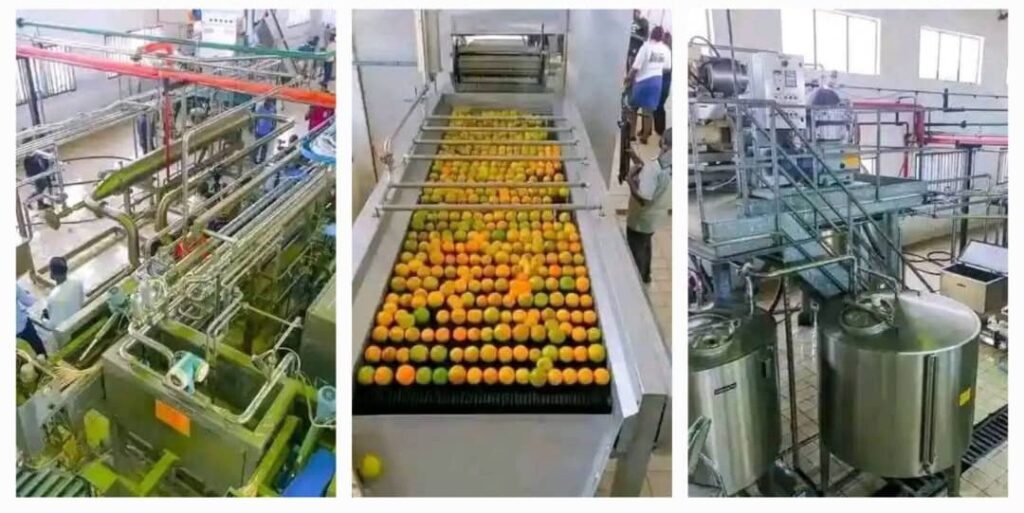 Benue’s ambition to move from raw agricultural abundance to value-added industrial production has received a fresh boost, with the Benfruit Juice Factory now set for full-scale operations after a successful final test run. The facility, owned by the Benue Investment and Property Company, is expected to process fruit into concentrate, create jobs, deepen local value chains and strengthen the state’s claim as Nigeria’s food basket with industrial muscle.
From Food Basket to Processing Hub
Benue State has long carried the proud label of Nigeria’s food basket. The challenge has always been how to convert that agricultural identity into industrial value, jobs, export income and durable wealth.




That is why the readiness of the Benfruit Juice Factory for full-scale production matters.
The Benue Investment and Property Company has disclosed that its subsidiary, Benfruit Juice Factory, is now positioned to commence full operations following the successful completion of its final test run in Makurdi.
The Group Managing Director of BIPC, Dr Raymond Asemakaha, made the disclosure through the company’s Maintenance Manager, Mr Henry Boager, who addressed journalists during the final testing phase of the facility.
According to the company, the test run was successful, with the production system operating concurrently and crushing activities already underway. The factory reportedly began the final phase at a cautious processing level of two tonnes per hour before gradually increasing output to three tonnes per hour, with the target of reaching its installed capacity of four tonnes per hour.
For Benue, this is more than a factory update. It is a statement about the future of agro-processing in a state that produces significant agricultural output but has historically lost too much value through weak processing, storage and market-integration infrastructure.
The Economics of Processing
Agriculture creates value at the farm gate. Processing multiplies it.
When fruits are sold raw, farmers and traders capture only a limited share of the final market value. When those fruits are processed into juice, concentrate, puree, packaging inputs or industrial ingredients, the value chain expands. Jobs are created in sourcing, transport, sorting, processing, packaging, maintenance, warehousing, distribution, marketing and quality assurance.
That is the real promise of Benfruit.
A fruit-processing plant can help reduce post-harvest losses, stabilise demand for farmers, create structured off-take channels and give Benue a stronger role in Nigeria’s food and beverage supply chain. It can also support smallholder farmers if procurement is properly organised and linked to predictable pricing and quality standards.
This is where development economics meets industrial strategy. States do not become prosperous merely by producing raw commodities. They grow when they process, brand and distribute them at scale.
Benue’s comparative advantage is agriculture. Its growth opportunity is agro-industry.
Test Run Points to Production Potential
The figures from the test run suggest that the plant has meaningful production potential.
Asemakaha explained that during the testing phase, the factory crushed 6,000 litres and successfully extracted juice. The process involved preheating the product, moving it to the refinery for pulp separation, and transferring it into the concentration chamber.
The company said its system can move about 400 litres into the juice tank every 30 minutes, while approximately 2,200 litres per hour can be transferred into the concentration chamber.
On the basis of current calculations, the factory is expected to produce up to 75 drums of concentrate daily, which could translate to about two container loads per week.
If achieved consistently, this would give Benfruit a potentially strong commercial base. Concentrate production can supply beverage manufacturers, institutional buyers, wholesalers and possibly export channels, depending on quality certification, packaging standards, shelf stability and market access.
However, successful industrial production is never only about installed capacity. It depends on reliable raw material supply, power, water, maintenance, skilled labour, quality control, working capital and market offtake.
The final test run is encouraging. The real test begins when commercial production starts.
Governor Alia’s Industrialisation Signal
BIPC commended Governor Hyacinth Alia for prioritising industrialisation as a pathway to economic growth and youth employment.
That policy direction is important. State governments across Nigeria are increasingly realising that they must move beyond salary payment and routine administration. The most competitive states are those building production platforms: agro-processing facilities, industrial parks, logistics corridors, power solutions, investment agencies and export-ready clusters.
For Benue, the logic is strong. The state has agricultural depth, but it must build industries around that strength. Fruit processing, rice milling, cassava processing, sesame value addition, livestock products, packaging, cold chains and storage infrastructure can all form part of a wider agro-industrial strategy.
Benfruit could become an anchor project if it is managed commercially, supplied consistently and linked to farmers, distributors and manufacturers.
But if it is treated merely as a government-owned symbolic project, it risks the familiar fate of many state industrial ventures: early excitement, weak utilisation, poor maintenance and eventual decline.
The difference will be governance.
What Must Happen Next
For Benfruit to become a true economic asset, several things must be put in place.
First, the factory needs a structured raw material supply system. Fruit processing depends on volume, consistency and quality. BIPC will need organised farmer clusters, aggregation centres, quality standards and logistics support to ensure that the plant does not suffer supply interruptions.
Second, power reliability will be critical. Processing plants are energy-intensive. Any frequent disruption can raise costs, damage products and reduce operating efficiency. The factory must have a dependable energy arrangement.
Third, quality certification must be treated as non-negotiable. If Benfruit wants to compete beyond the local market, it must meet food safety, hygiene, packaging and industrial standards required by beverage manufacturers and regulators.
Fourth, the company must develop clear commercial offtake agreements. Producing concentrate is one thing; selling it profitably is another. Strategic partnerships with beverage companies, supermarkets, institutional buyers and export merchants will be essential.
Fifth, the project must be insulated from political cycles. Industrial assets require professional management, transparent accounting, reinvestment, maintenance discipline and market-facing strategy.
A factory is not a campaign poster. It is a living business.
A Wider Lesson for Nigerian States
Benfruit’s readiness speaks to a wider national challenge.
Nigeria has too many raw commodities and too little processing capacity. The country produces fruits, grains, tubers, livestock, oilseeds and cash crops, yet still imports many processed food products and industrial inputs. This gap weakens rural income, raises food costs, wastes harvests and limits manufacturing depth.
State-led investment companies can play a catalytic role, but they must operate with private-sector discipline. They should not crowd out entrepreneurs. They should de-risk sectors, build anchor infrastructure, attract investors and create bankable value chains.
BIPC’s involvement suggests that Benue is trying to use its investment arm as an economic development vehicle. That is the right instinct. The next challenge is performance.
The factory must produce, sell, earn and grow.
BRANDECONOMY Insight
The Benfruit Juice Factory could become one of Benue’s most important agro-industrial assets if it is run with discipline and commercial seriousness.
The opportunity is clear. Benue has the agricultural base. Nigeria has a growing consumer market. The food and beverage sector needs reliable inputs. Farmers need structured demand. Young people need jobs. The state needs internally generated revenue. A functioning juice-concentrate plant can connect all these interests.
But the project’s success will depend on execution after commissioning.
Many government-backed factories fail not because the idea is weak, but because the business model is not protected. They suffer from poor supply chains, weak maintenance, political interference, inadequate working capital and lack of market discipline.
Benfruit must avoid that path.
The plant should be integrated into a wider fruit value chain involving farmers, aggregators, transporters, packaging suppliers, food technologists, distributors and beverage manufacturers. It should publish production targets, pursue quality certifications, secure offtake agreements and maintain transparent financial reporting.
The reported capacity of up to 75 drums of concentrate daily is promising. But capacity on paper must become consistent output, and output must become revenue.
For Benue, this is a chance to prove that the “Food Basket” identity can become an industrial strategy. The state should not only grow fruits; it should process, package, brand and trade them.
If Benfruit succeeds, it can become a model for state-led agro-processing in Nigeria: local raw materials, local jobs, local value addition and wider market reach.
That is how development becomes tangible.
Full SEO Pack
SEO Headline:
Benfruit Juice Factory Ready for Full-Scale Production, Says BIPC
Alternative Headlines:
- Benue’s Benfruit Juice Factory Set for Full Production After Successful Test Run
- BIPC Says Benfruit Factory Can Produce 75 Drums of Concentrate Daily
- Benue Pushes Agro-Industrial Growth as Benfruit Juice Factory Nears Take-Off
- Benfruit Factory Signals Benue’s Shift From Farming to Value Addition
- Benue’s Food Basket Ambition Gets Industrial Boost With Benfruit Factory
URL Slug:
benfruit-juice-factory-full-scale-production-benue-bipc
Meta Description:
BIPC says Benfruit Juice Factory is ready for full-scale production after a successful final test run, with capacity rising toward four tonnes per hour and up to 75 drums of concentrate daily.
Focus Keyphrase:
Benfruit Juice Factory
Secondary Keyphrases:
Benue Investment and Property Company, BIPC Benfruit Factory, Benue agro-processing, fruit juice concentrate Nigeria, Raymond Asemakaha, Hyacinth Alia industrialisation
SEO Keywords:
Benfruit Juice Factory, BIPC, Benue Investment and Property Company, Raymond Asemakaha, Henry Boager, Hyacinth Alia, Benue State, agro-processing, juice concentrate, industrialisation, food basket, value addition, manufacturing, youth employment, BRANDECONOMY
Hashtags:
Benfruit, Benue, BIPC, AgroProcessing, Industrialisation, FoodBasket, Manufacturing, ValueAddition, NigerianBusiness, BRANDECONOMY
Suggested Excerpt:
Benue’s Benfruit Juice Factory is set for full-scale production after a successful final test run, with BIPC projecting up to 75 drums of juice concentrate daily as the state pushes agro-industrial growth.