

AfDB Approves $61m Financing Package for Nigerian Women-Owned Businesses

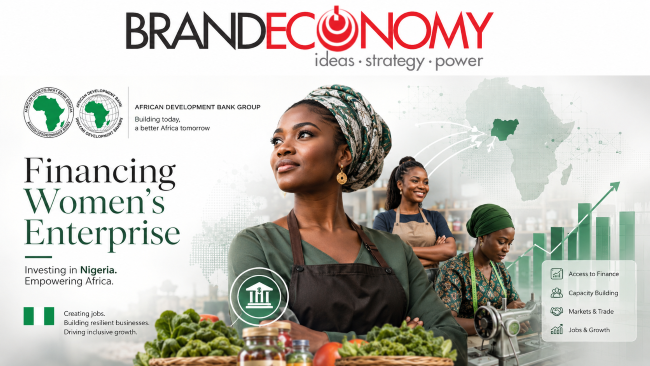 The African Development Bank has approved a $61 million financing package for the Development Bank of Nigeria to expand affordable credit to women-owned and women-led businesses, with a strong focus on agriculture and underserved sectors. The facility combines a gender-focused line of credit, concessional agrifood financing and grant support under AFAWA. If effectively deployed through participating financial institutions, it could help unlock one of Nigeria’s most powerful but underfinanced growth engines: women entrepreneurs.
A Fresh Development-Finance Push for Women-Owned Businesses
The African Development Bank Group has approved a $61 million financing package aimed at expanding access to affordable credit for Nigerian women-owned and women-led businesses.




The financing will be channelled through the Development Bank of Nigeria, the country’s wholesale development-finance institution that works through participating financial institutions to on-lend to micro, small and medium enterprises. The AfDB said the package is designed to deepen lending to women entrepreneurs, particularly in agriculture, while also supporting other priority sectors such as clean energy, healthcare and small-scale enterprise development.
The structure of the package is deliberate. It consists of a $50 million gender-focused line of credit, an $8 million concessional facility under the Agri-Food SME Catalytic Financing Mechanism, and a $3 million grant under the Affirmative Finance Action for Women in Africa initiative, funded through the Women Entrepreneurs Finance Initiative. More than 95 per cent of the package is earmarked for women-owned and women-led small and medium enterprises.
In development-finance terms, this is not merely a loan. It is a blended instrument: credit, concessionary capital, risk-sharing support and capacity-building combined to solve a market failure.
Why Women’s Credit Matters
Nigeria’s women entrepreneurs are everywhere: in farms, markets, logistics, food processing, fashion, healthcare, education, retail, technology, services and informal trade. Yet they remain undercapitalised.
Many operate businesses with strong cash-flow potential but limited collateral. Others face high interest rates, short loan tenors, poor documentation systems, weak access to formal banking and gender bias in credit assessment. For women in agriculture, the burden is even heavier: seasonal income, climate risk, land-access constraints, post-harvest losses and weak storage or logistics infrastructure.
This is why the AfDB facility is significant.
It is attempting to move women entrepreneurs from survival finance to growth finance. The goal is not only to give women loans, but to help financial institutions lend to them more confidently, at better terms and with stronger support structures.
Abdul Kamara, Director-General of the AfDB’s Nigeria Country Department, described women entrepreneurs as one of Nigeria’s greatest economic assets and one of its most underleveraged sectors. His point goes to the heart of Nigeria’s development challenge: the country cannot talk seriously about inclusive growth while leaving women-led enterprises trapped outside affordable finance.
The DBN Channel
The choice of DBN as the delivery channel is important.
DBN is not a conventional retail bank. It operates as a wholesale development-finance institution, providing funds and risk-sharing support to eligible financial intermediaries, which then lend to MSMEs. This model allows development capital to travel through the existing financial system while targeting underserved businesses.
For the AfDB facility to succeed, however, the participating financial institutions must do more than repackage funds at high rates. The money must reach real women-owned businesses at terms that improve viability: longer tenors, manageable interest costs, practical collateral requirements and technical support.
That is where monitoring will matter.
The test is not how much money is approved in boardrooms. The test is how much reaches women entrepreneurs, how quickly, at what cost, and with what measurable business impact.
Agriculture as the Strategic Centre
The strong agriculture focus is economically sound.
Nigeria’s agrifood sector remains one of the country’s largest employers and one of the most important channels for rural income. Women play a major role across farming, processing, packaging, trading and food distribution. But many remain stuck at the lower end of the value chain because they lack the finance to mechanise, store, process, brand or scale.
A well-designed credit window could help women-led agribusinesses purchase equipment, improve working capital, reduce post-harvest losses, expand processing, meet quality standards and access wider markets.
That matters for food security. It also matters for jobs.
If women-led agrifood businesses grow, they can absorb labour, deepen rural enterprise, improve household income and strengthen domestic supply chains. In a country struggling with inflation and food-price pressure, this is not a peripheral issue. It is central to economic stability.
AFAWA and the Gender-Finance Gap
The inclusion of AFAWA is also important. The Affirmative Finance Action for Women in Africa is AfDB’s flagship initiative for narrowing the financing gap faced by women entrepreneurs across the continent. It uses financial instruments, guarantees, incentives and capacity support to encourage banks and financial institutions to lend more effectively to women-owned businesses.
In this Nigerian transaction, performance-based incentives under AFAWA are expected to increase the number of eligible women-owned enterprises and expand women-focused lending within DBN’s MSME portfolio.
AfDB says that incentive structure is useful because financial institutions often need both capital and motivation to change lending behaviour. If banks are rewarded for expanding viable credit to women-led businesses, they are more likely to invest in better products, better data and better risk assessment.
But the system must guard against box-ticking. Women should not merely be counted as beneficiaries; their businesses must be strengthened.
BRANDECONOMY Insight
AfDB’s $61 million facility is a strategic vote of confidence in Nigerian women entrepreneurs. But it is also a test of Nigeria’s development-finance plumbing.
The country does not lack entrepreneurial energy. It lacks affordable, patient and intelligently structured capital. Women-led enterprises feel that gap more sharply because they often face collateral barriers, smaller balance sheets, weaker formal records and less access to bankable networks.
The AfDB-DBN package can help change that if it is deployed with discipline.
The most important thing is delivery. The funds must not be trapped in institutional comfort zones. They must reach the women who run farms, food-processing firms, small factories, clinics, clean-energy businesses, trading platforms and service companies. They must be priced sensibly, monitored properly and supported with capacity building.
This is where development finance succeeds or fails.
A $61 million approval is not impact. Impact is the woman who expands her cassava-processing line, hires more workers, buys solar equipment, increases inventory, formalises her business, enters a new market, or graduates from microenterprise to structured SME.
For Nigeria, women’s enterprise finance is not charity. It is productivity policy. It is jobs policy. It is food-security policy. It is private-sector policy.
The AfDB opportunity is clear: unlock women’s businesses, and Nigeria unlocks a deeper layer of growth.