
FIFA 2026: Rema Named Among Stars for Los Angeles Opening Celebration

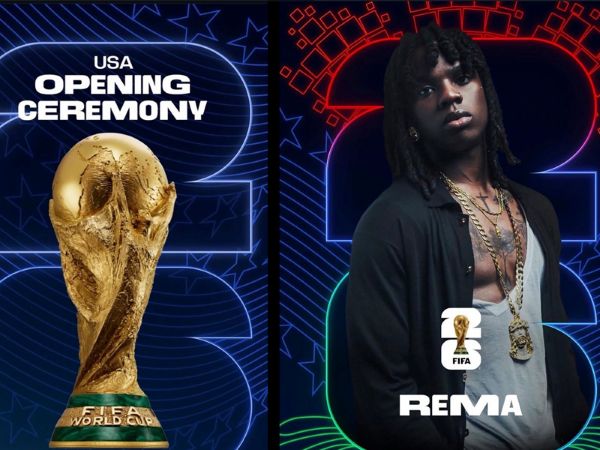 Nigerian Afrobeats star Rema has been named among the global performers for the United States opening celebration of the 2026 FIFA World Cup in Los Angeles. He will share the stage with international acts including Katy Perry, Future, Anitta, LISA and Tyla, as FIFA turns the first tri-nation World Cup into a fusion of football, music, culture and global entertainment. For Nigeria, the moment is bigger than celebrity visibility. It is another signal that Afrobeats has become a serious export in the global attention economy.
Afrobeats Meets Football’s Global Cathedral
Nigerian singer Divine Ikubor, globally known as Rema, has been listed among the international stars billed to perform during the United States opening celebration of the 2026 FIFA World Cup in Los Angeles.




FIFA’s planned United States show will also feature Katy Perry, Future, Anitta, LISA of BLACKPINK, Tyla and other performers, placing Rema on one of the most watched entertainment stages in global sport. The United States ceremony is scheduled for June 12, ahead of the host nation’s opening match, with the event forming part of FIFA’s expanded entertainment programme for the first World Cup to be hosted across three countries.
This is not merely another performance booking. It is a cultural marker.
The FIFA World Cup is football’s grandest theatre. It is watched by billions, sponsored by some of the world’s largest brands and staged as a global ritual of sport, nationalism, commerce, celebrity and soft power. For Rema to stand on that platform is to confirm what the streaming charts, stadium tours and social media numbers have already suggested: Afrobeats is no longer an African export seeking validation. It is now part of the global entertainment infrastructure.
A World Cup Built for Spectacle
The 2026 World Cup will be unlike any before it. It will be staged across Canada, Mexico and the United States, with a record 48 teams and 104 matches across 16 host cities. The tournament begins on June 11 at Estadio Azteca in Mexico City, while the final is scheduled for July 19 at the New York/New Jersey stadium.
FIFA is also breaking with tradition by staging separate opening celebrations across the three host countries. Mexico City will host its ceremony on June 11, while Toronto and Los Angeles will stage ceremonies on June 12. The Los Angeles event is designed as a high-energy American entertainment spectacle, drawing from pop, hip-hop, Latin music, K-pop, Afrobeats and Amapiano.
That structure matters. FIFA is not simply opening a tournament. It is programming a continent-wide entertainment economy.
The World Cup has become more than football. It is tourism, television, streaming, sponsorship, music rights, city branding, hospitality, merchandising and social media. In that economy, artists are no longer side attractions. They are audience multipliers.
Rema’s Inclusion Implication
Rema’s inclusion speaks to the commercial power of African music.
Over the past decade, Afrobeats has moved from Nigerian clubs and diaspora circuits into global playlists, international festivals, brand campaigns and stadium culture. Rema’s own rise has been accelerated by the global success of “Calm Down,” which carried his sound across markets and demographics. His later international appearances, including his performance at the 2023 Ballon d’Or ceremony in Paris, helped further position him as one of the young African artists capable of crossing from music into global sports entertainment.
The 2026 World Cup stage deepens that crossover.
Football and Afrobeats share a natural relationship. Both are rhythm-driven, youth-powered and global in reach. Nigerian football culture has always carried music, dance, fashion and street language with it. Now the relationship is moving in reverse: Nigerian music is carrying the country’s cultural identity into football’s biggest event.
For Rema, the performance is a brand milestone. For Afrobeats, it is another institutional endorsement. For Nigeria, it is soft power.
Africa’s Cultural Double Moment
Rema will not be the only African star in the Los Angeles lineup. South Africa’s Tyla is also listed among the performers, giving the United States ceremony a strong African pop presence.
That pairing is significant because it represents two of Africa’s most exportable contemporary sounds: Afrobeats and Amapiano-inflected pop. These genres are not only musical styles; they are economic assets. They support streaming revenue, touring, fashion, dance culture, brand partnerships, tourism interest and continental cultural influence.
The global entertainment industry is increasingly driven by cultural hybridity. A World Cup show that can place Rema beside Katy Perry, Future, Anitta, LISA and Tyla reflects how international audiences are consuming sound today: borderlessly.
Africa is no longer waiting for a seat at the table. It is now part of the soundtrack.
The Business of Global Visibility
For artists, World Cup visibility is not just prestige. It can reshape market value.
A performance linked to FIFA’s global platform can expand an artist’s reach among fans who may not actively follow African music. It can increase search interest, streaming activity, booking demand, brand appeal and international media attention. For labels, managers and sponsors, that exposure is commercially valuable.
For Nigeria’s creative economy, the bigger lesson is clear: cultural exports are now serious economic instruments.
Music has become one of the country’s strongest reputational assets. Even when the economy struggles, Nigerian artists continue to sell confidence, energy and modern African identity to the world. That brand capital can support tourism, investment perception, fashion, digital media and youth entrepreneurship.
But Nigeria must learn to convert visibility into value. The country needs stronger music business infrastructure: publishing administration, touring support, creative financing, intellectual-property enforcement, tax clarity, export promotion and cultural diplomacy.
The world is listening. The question is whether Nigeria is building enough structures to profit from that attention.
BRANDECONOMY Insight
Rema’s place on the 2026 FIFA World Cup stage is more than entertainment news. It is a business story, a soft-power story and a signal of Africa’s rising cultural leverage.
The global economy increasingly rewards attention. Countries that can export music, film, sport, fashion and storytelling gain influence beyond traditional diplomacy. Nigeria’s Afrobeats movement has become one of the clearest examples of that new power.
Rema’s performance alongside stars from the United States, Brazil, South Korea/Thailand and South Africa shows that Afrobeats is now part of the mainstream global entertainment marketplace. It is no longer being invited as an exotic addition. It is being programmed as a core ingredient in a global spectacle.
For the Nigerian creative industry, the opportunity is enormous. A World Cup-stage performance can open doors for more collaborations, sponsorships, festival bookings and global brand partnerships. It can also deepen the association between Nigeria and youthful cultural energy.
But the country must not confuse individual success with industry success. Rema’s rise is impressive, but Nigeria needs systems that allow more artists, producers, dancers, songwriters, managers and creative entrepreneurs to benefit from global demand. Talent has done its job. Policy and business infrastructure must now catch up.
The 2026 World Cup will be watched as football. It will also be watched as culture.
And when Rema steps onto that stage, Nigeria will not only be represented by a singer. It will be represented by an industry that has turned rhythm into global capital.