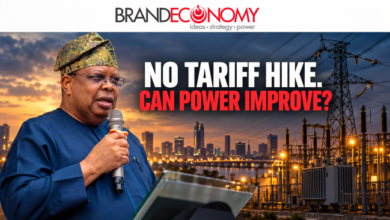
The Minister of Power, Mr Adebayo Adelabu, has assured Nigerians that the Federal Government’s priority in 2026 is reliable, accessible and sustainable electricity supply.
The assurance is contained in a statement issued on Friday in Abuja by his Special Adviser on Strategic Communications and Media Relations, Mr Bolaji Tunji.



Tunji said Adelabu gave the assurance in his New Year message to Nigerians and the people of Oyo State.
“Looking ahead, our focus remains unshakable: to deliver reliable, accessible and sustainable electricity to power our homes, industries and dreams,” Adelabu said.
He said the path forward would be driven by continuity and renewed vigour, with efforts to enhance grid stability and expand transmission infrastructure.
Adelabu said collaboration with Electricity Distribution Companies would be intensified to improve service delivery and ensure metering initiatives reach every community.
“Our Light Up Nigeria initiative remains a priority, focusing on industrial clusters and agricultural hubs to stimulate economic growth and job creation,” he said.
The minister said renewable energy development would also be prioritised, with solar and hydropower deployed to serve underserved communities.
He described 2025 as a year of focused groundwork and deliberate strides in the power sector, despite prevailing challenges.
According to him, progress was recorded in strengthening the national grid and improving overall stability during the year.
Adelabu said the Presidential Power Initiative, known as the Siemens deal, had helped curb frequent grid collapses experienced in previous years.
“As Phase One of the PPI continues, we assure Nigerians of a strengthened grid that will make disturbances a thing of the past,” he said.
The minister thanked Nigerians for their resilience, saying their support remained critical to building a robust energy future.
“The journey ahead requires a united front,” Adelabu said, calling on governments, communities, the private sector and citizens to partner in reforms.
He urged Nigerians to protect power infrastructure and adopt energy-efficient practices, describing them as vital national contributions.
Extending greetings to Oyo State residents, Adelabu said the new year would usher in measurable progress in the power sector.
“To my kinsmen and women in Oyo State, your unwavering support continues to fuel my dedication at the national level,” he said.
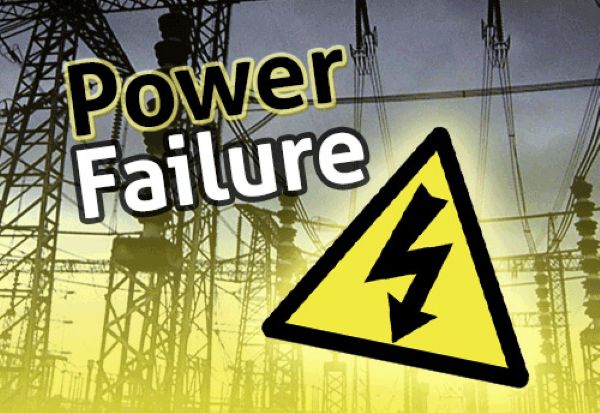
Nigeria’s Power Supply Reality: Chronic Shortfall, Structural Weakness, and a Reform Race Against Demand
Nigeria’s power supply situation remains one of the country’s most binding economic constraints—shaping productivity, inflation, investment confidence, and household welfare across Nigeria.
Despite over a decade of power sector reforms and privatisation, electricity supply continues to lag far behind demand, forcing businesses and households into expensive self-generation and eroding competitiveness.
1. Generation: Installed Capacity vs Reality
Nigeria’s installed generation capacity stands at over 13,000 megawatts, largely from gas-fired plants and hydropower. However, actual available power rarely exceeds 4,000–5,000MW on a good day—and often drops much lower.
The gap is driven by:
- Gas supply constraints and pipeline vandalism
- Ageing and poorly maintained plants
- Water level volatility affecting hydropower
- Payment arrears across the value chain
In practical terms, Africa’s most populous country generates less electricity than some single global cities.
2. Transmission: The Fragile Middle
The national grid, operated by Transmission Company of Nigeria, is widely regarded as the weakest link.
Key challenges include:
- Limited wheeling capacity (around 8,000MW in theory, far less in practice)
- Ageing infrastructure
- Frequent system collapses—partial and total—several times a year
Each grid collapse ripples through the economy, disrupting factories, hospitals, data centres, banks, and telecoms infrastructure.
3. Distribution: Commercial and Technical Losses
The 11 privatised Distribution Companies (DisCos) struggle with:
- High technical and commercial losses
- Poor metering coverage
- Electricity theft and tariff resistance
- Weak balance sheets
As a result, revenue leakages persist, starving generators of cash and reinforcing a cycle of underinvestment.
4. Costly Self-Generation Becomes the Norm
With unreliable grid power:
- Businesses rely heavily on diesel and petrol generators
- Energy costs consume 30–40% of operating expenses for many manufacturers and SMEs
- Nigeria is one of the largest importers of diesel in Africa
This directly fuels inflation, weakens exports, and discourages manufacturing scale.
5. Reform Efforts: Momentum, But Not Yet Breakthrough
Recent reforms show intent:
- Electricity Act 2023 decentralising power to states
- Gradual tariff rationalisation
- Embedded and captive power frameworks
- Growing interest in solar, mini-grids, and gas-to-power
Several states are now pursuing independent power markets, while private players increasingly bypass the grid entirely.
Yet, reforms remain incremental, while demand growth is exponential—driven by population growth, urbanisation, digitalisation, and industrial ambition.
6. The Strategic Implication
Nigeria’s power crisis is no longer just an infrastructure problem—it is:
- A competitiveness issue
- A fiscal and inflationary pressure point
- A defining factor in investment location decisions
Until electricity becomes reliable, affordable, and scalable, Nigeria’s aspiration for industrialisation, export growth, and a $1-trillion economy will remain constrained.
BRANDECONOMY Bottom Line
Nigeria does not suffer from a lack of energy resources—it suffers from structural inefficiency, weak coordination, and slow execution. The power sector is now a race between reform momentum and economic demand. The winner will determine Nigeria’s growth trajectory for the next decade.