
Lagos Inferno: Eight Confirmed Dead as Controlled Demolition Begins at Iconic Island High-Rise

A tragic blaze exposes deep structural failures in urban fire safety, market regulation, and building compliance in Nigeria’s commercial capital.
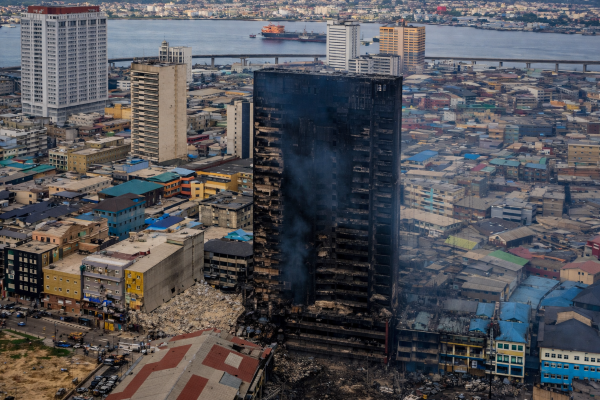
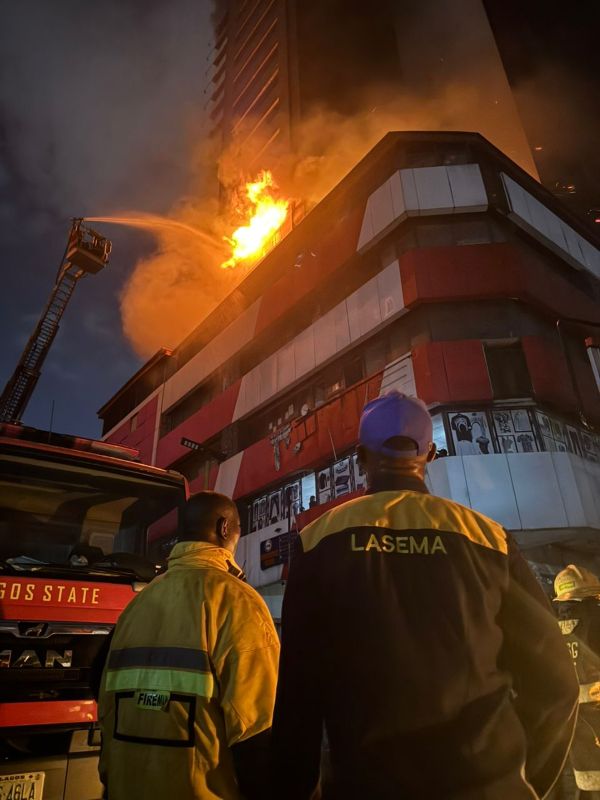
The deadly inferno that engulfed the 25-storey Great Nigeria Insurance House on Lagos Island has entered a decisive recovery phase, with eight fatalities confirmed and a controlled demolition now underway, marking one of the most complex post-fire operations in Lagos’ recent history.
According to the Lagos State Fire and Rescue Service, the scale of structural compromise, persistent internal fires, and severe safety violations within the building have rendered it beyond salvage, prompting the Lagos State Government to activate a full technical recovery protocol.



From Fire Incident to Urban Disaster Management Operation
The fire, which broke out on December 24, rapidly escalated into a high-risk urban disaster due to the building’s height, internal use pattern, and combustible load. A second on-site assessment conducted on January 2 led Babajide Sanwo-Olu to approve the immediate formation of a Technical Recovery and Demolition Committee.
The committee—chaired by the Commissioner for Special Duties and Inter-Governmental Relations—has been mandated to:
- Design and execute a phased, safety-first demolition plan
- Secure surrounding properties and public spaces
- Protect emergency responders operating within a volatile structure
Why Demolition Became Inevitable
Emergency officials confirmed that the building’s foundation and load-bearing systems were critically compromised by intense heat exposure. In several sections, collapsed debris is now providing temporary, unstable structural support, meaning any uncoordinated intervention could trigger catastrophic secondary collapse.
More critically, intermittent pockets of fire continue to burn deep within the rubble—fuelled not by the building’s structure, but by massive quantities of textiles, clothing, and flammable goods stored floor-to-ceiling.
These conditions, experts say, place the site in the category of “prolonged recovery incidents”, which globally can take weeks or months to fully resolve.
Casualties, Rescues, and the Human Cost
The fire service confirmed:
- 8 fatalities, with 5 identified and 3 awaiting identification
- 13 individuals rescued alive
- Ongoing search operations in structurally safer zones to ensure no one remains trapped
An on-site Information Centre has been established to support families, business owners, and the wider public with verified updates—an important step in managing misinformation during large-scale emergencies.
A Disturbing Pattern of Fire Safety Violations
Preliminary assessments revealed systemic fire safety breaches, including:
- Extreme overstocking of combustible materials with no ventilation
- Absence of functional fire detection and suppression systems
- Use of generators inside enclosed commercial spaces
- Shops constructed dangerously close to electrical transformers
According to safety experts, such conditions create thermal traps, where heat builds to ignition point—even without an external fire source.
This is not an isolated failure; it reflects deep regulatory enforcement gaps in high-density commercial buildings across Lagos.
Global Context: Why These Operations Take Time
Officials drew parallels with major international incidents—including the World Trade Center recovery in New York, which extended for months—underscoring that speed must never override responder safety.
As authorities stressed repeatedly:
A safe rescuer is the foundation of a safe rescue.
Economic and Policy Implications
Beyond the tragic loss of life, the incident raises urgent questions about:
- Enforcement of building use regulations
- Informal commercial conversion of office towers
- Fire risk management in legacy high-rise structures
- Insurance exposure and liability frameworks
For Lagos—Africa’s most economically dense city—the incident is a stark reminder that urban safety is economic infrastructure.
BRANDECONOMY INSIGHT
This tragedy is not merely a fire incident; it is a systems failure at the intersection of urban planning, market regulation, safety enforcement, and emergency preparedness.
If Lagos is to sustain its role as West Africa’s commercial nerve centre, fire safety compliance must shift from reactive enforcement to proactive risk governance—especially in high-rise, mixed-use, and legacy buildings.