Abuja–Kaduna Train Accident: How Coupling Failure Exposed Nigeria’s Rail Safety Gaps

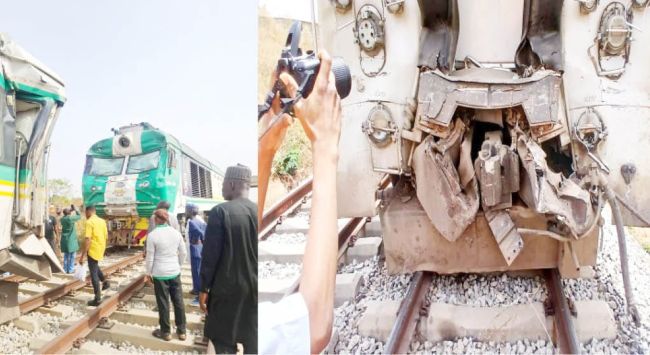 Nigeria’s most strategic passenger rail corridor—the Abuja–Kaduna line—has once again come under scrutiny after a technical incident injured at least 26 passengers and exposed operational vulnerabilities within the system, resulting in yet another Abuja–Kaduna Train Accident
While the train ultimately completed its journey, arriving at Idu Station just 38 minutes behind schedule, the event raises deeper concerns about safety engineering, operational discipline, and the resilience of Nigeria’s rail modernisation agenda.



For a country increasingly dependent on rail as a safer alternative to insecure highways, the implications extend far beyond a single incident—they strike at the heart of public trust and infrastructure credibility.
What Happened: A Timeline of Failure
Preliminary findings from the Nigerian Safety Investigation Bureau (NSIB) about the Abuja–Kaduna Train Accident provide a structured reconstruction of the incident:
- 07:15 – Train KA2 departed Rigasa Station, Kaduna, en route to Abuja
- 08:52 – Arrived Jere Station
- 08:59 – Departed Jere after a rear locomotive was attached for additional traction
- ~09:16 – Incident occurred along the Jere–Asham corridor, a downward gradient section
According to Mrs Funke Arowojobe, Director of Public Affairs, NSIB, the critical failure occurred shortly after departure:
“The rear locomotive became detached while the train proceeded along the downward gradient… it subsequently rolled forward and struck the rear portion of the train.”
The train configuration included:
- Two locomotives (front and rear)
- One power car
- Two business class coaches
- Six standard coaches
Onboard were:
- 429 passengers
- 46 crew members
- 24 security personnel
Despite the impact:
- No fatalities were recorded
- 26 passengers sustained injuries
- Emergency response was activated immediately
- The train resumed movement and completed its journey by 10:39 a.m.
Operational Reality: Not a Derailment—But a Red Flag
The Nigerian Railway Corporation (NRC), led by Dr Kayode Opeifa, Managing Director, clarified that the incident was not a derailment, as the train remained on track throughout.
Instead, it was a coupling system failure, where a detached locomotive collided with the train it was meant to support.
“Emergency response protocols were immediately activated… safety remains our top priority,” Opeifa stated.
However, within global rail safety standards, coupling failures—especially on gradient sections—are classified as high-risk operational breaches, often linked to:
- Mechanical fatigue
- Inadequate locking mechanisms
- Procedural lapses during attachment
- Insufficient fail-safe systems
Eyewitness Accounts: Human Impact Behind the Data
Passenger testimonies reveal the intensity of the impact:
- Multiple passengers were thrown off seats
- Reports of head injuries, fractures, and bleeding
- At least six to seven coaches affected
- Onboard medical personnel were overwhelmed
One passenger described the moment:
“We heard a loud bang and the train jolted… people were flung across, many were bleeding.”
Another account pointed to possible procedural gaps:
“There should be a standard process… if a disconnect happens, there must be a way to create safe distance.”
Yet, even amid the chaos, emergency response systems received cautious commendation:
- Ambulances were mobilised ahead of arrival
- Injured passengers were treated promptly at Idu
A Pattern of Strain: The Abuja–Kaduna Corridor
This latest incident adds to a growing list of disruptions on Nigeria’s most critical rail line:
- 2022: Terrorist attack killing passengers and abducting over 60
- 2024: Derailment linked to suspected vandalism
- 2025: Another derailment with multiple injuries
The frequency of incidents prompted the Nigerian Senate in 2025 to initiate a nationwide probe into rail system failures, including:
- Infrastructure quality
- Imported rail materials
- Loan utilisation (notably Chinese financing)
Core Analysis: Where the System is Breaking
From a transport systems perspective, the Abuja–Kaduna incident reveals four structural fault lines:
1. Mechanical Integrity vs. Operational Pressure
High utilisation without commensurate maintenance upgrades increases failure probability in critical components like couplers.
2. Gradient Risk Mismanagement
Operating on downward slopes without automated braking safeguards or coupling redundancy introduces compounded risk.
3. Human Factor in Emergency Handling
Reports of abrupt braking suggest potential gaps in operator training under stress conditions.
4. Safety Architecture Deficit
Nigeria’s rail system remains largely reactive, not predictive—lacking:
- Sensor-based monitoring
- Real-time diagnostics
- Automated failure alerts
As Prof. Ibe Callistus, Transport Analyst, observed:
“We must improve efficiency and deploy automatic systems that alert operators before such incidents occur.”
Implications for Economy, Mobility, and Investment
For Mobility & Public Confidence
- Rail remains safer than roads—but repeated incidents erode this perception
- Passenger trust is now conditional, not absolute
For Government & Policy
- Moves the debate from infrastructure expansion to system reliability
- Raises urgency for regulatory enforcement and safety audits
For Investors
- Signals risk in transport infrastructure ROI without strong maintenance frameworks
- Highlights need for lifecycle asset management models
For National Productivity
- Disruptions on a key economic corridor impact business travel, logistics, and time efficiency
Forward Outlook: The Case for a Smart Rail System
Nigeria’s rail future now depends on a strategic pivot from infrastructure building to system intelligence.
Key priorities include:
- AI-powered predictive maintenance systems
- Automated coupling integrity sensors
- Centralised operational command centres
- Independent safety compliance audits
Without these, incidents like Asham will remain recurring—not exceptional.
BRANDECONOMY Insight
Nigeria’s rail crisis is not about movement—it is about control.
The Abuja–Kaduna corridor has evolved into a national mobility backbone. But backbone systems require precision engineering, not just capital investment.
The recent Abuja–Kaduna Train Accident lesson is clear:
You cannot run 21st-century transport systems with 20th-century safety frameworks.
The next phase of Nigeria’s rail evolution must prioritise:
- Data-driven safety systems
- Local technical capacity development
- Accountability across operators and contractors
If executed effectively, Nigeria can still transform rail into a competitive economic advantage.
If not, it risks normalising preventable disruptions in a system designed to deliver certainty.