NLNG Train 7 Graduates 70 Young Professionals to Strengthen Nigeria’s Oil and Gas Industry

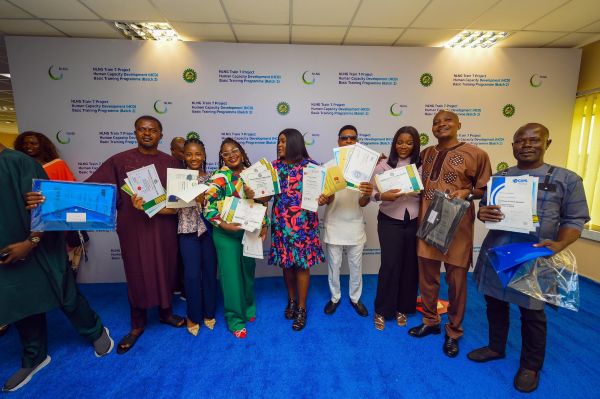
Seventy young Nigerians have completed a year-long Human Capacity Development programme under the NLNG Train 7 Project, expanding the pool of technical and business talent available to Nigeria’s oil, gas and wider energy value chain.
Beyond their core specialisations, the graduates received practical exposure in key oil and gas support areas, including Health, Safety and Environment, Business Management, Information Technology, Document Management, Nigerian Content awareness, and on-the-job training, a blend of technical and workplace skills critical to the industry value chain.
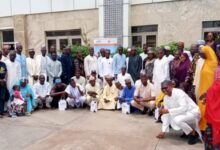


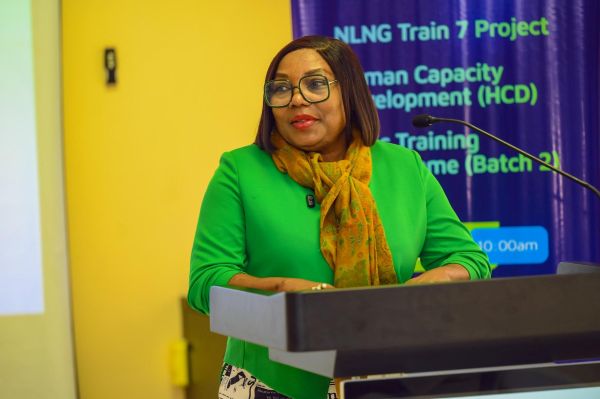
Speaking at the close-out ceremony, Sophia Horsfall, NLNG’s General Manger, External Relations & Sustainable Development stated that the successful completion of the 12-month programme demonstrated what strategic investment in human capacity can achieve. She noted that the graduates had been equipped with the professional intellect, discipline, and character required to contribute meaningfully to their chosen fields. She charged them to see themselves as products of a national investment and to apply their skills with integrity, precision, and excellence.
“You started this journey as candidates, and today, we are showing you off as professionals. From here, I urge you to continue to demonstrate the discipline you have learnt and never forget that you are the dividends of a national investment,” she said.
Project Director, NLNG Train 7 Project, Engr. Ali Uwais, stated that the programme showed the strength of NLNG and NCDMB’s collaboration in closing critical competency gaps in the oil and gas industry. He noted that with 401 candidates trained across Batch 1 and Batch 2, the initiative had strengthened Nigeria’s pool of industry-ready professionals. He urged the graduates to remain committed to innovation and continuous learning in a fast-changing technology-driven industry.
“The success of this programme is a testament to the effective collaboration of NCDMB and NLNG to close competency gaps in relevant industry skills,” he said.
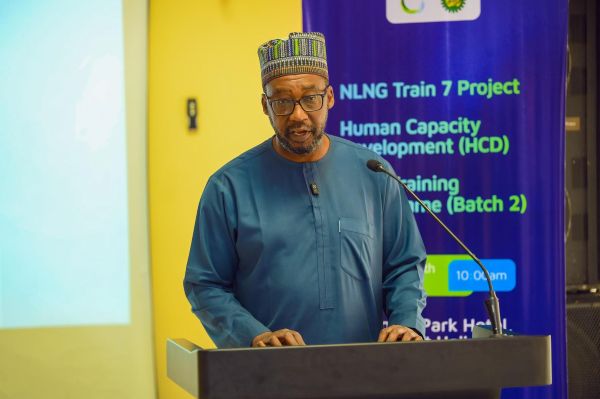
Engr. Uwais also commended the Oil and Gas Trainers Association of Nigeria, OGTAN, as custodian of the training standards, for ensuring that the programme delivered the required competencies.
Speaking on behalf of the Executive Secretary of the Nigerian Content Development and Monitoring Board, Ms. Alexis Emelle, General Manager, Human Capacity Development, applauded the strong collaboration between NCDMB and NLNG. She described the Human Capacity Development component of the Train 7 Project as a practical demonstration of the successful implementation of the Board’s Human Capital Development Guideline, 2020, which mandates major oil and gas projects to deliberately support the training, empowerment and capacity development of Nigerians.
 Emelle noted that the Train 7 Project, one of the largest gas infrastructure developments in Africa, had not only created jobs but also provided a platform to groom young Nigerians with advanced technical and managerial competencies. “The training provided hands-on experience on a live LNG project, complementing the trainees’ academic and theoretical knowledge. It also exposed them to specialized advanced technical disciplines, project management, health and safety, and emerging technologies critical to the future of the industry,” she said.
The close-out ceremony brought the NLNG Train 7 Project Human Capacity Development Basic Training Programme to a formal conclusion, with 70 trainees graduating from Batch 2 and the total number of beneficiaries under the NCDMB/NLNG-sponsored initiative rising to 401.
The programme adds to Nigeria’s pool of local talent trained in technical, safety, business, and professional areas relevant to the oil and gas value chain, while reinforcing NLNG’s support for the country’s human capital development agenda and NCDMB’s mandate to deepen local capacity and close industry skills gaps.
Nigeria’s gas future will not be secured by infrastructure alone. It will also depend on the people equipped to operate, maintain, analyse, procure, manage and improve that infrastructure.
That is why the graduation of 70 young professionals from the NLNG Train 7 Project Human Capacity Development Basic Training Programme matters beyond the ceremony itself.
The trainees completed a 12-month programme focused on Data Analysis and Supply Chain Management, alongside practical exposure to Health, Safety and Environment, business management, information technology, document control, Nigerian-content awareness and on-the-job learning.
With the latest batch, the number of beneficiaries trained under the NCDMB/NLNG-sponsored initiative has risen to 401 across two batches.
The programme is part of the wider Nigerian-content agenda embedded in the Train 7 expansion project, one of the most important gas infrastructure developments currently underway in Africa.
For Nigeria, the immediate outcome is a larger pool of young professionals with industry-relevant exposure. The bigger opportunity is to convert that pool into durable local capability that can support LNG operations, project delivery, engineering services, logistics, digital systems, procurement, safety management and the wider gas economy.
More Than Graduation: Building Capability for a Larger LNG Economy
NLNG Train 7 is designed to increase Nigeria LNG’s production capacity from 22 million tonnes per annum to 30 million tonnes per annum, strengthening Nigeria’s standing in the global LNG market and widening the scale of activities surrounding Bonny Island’s gas ecosystem.
But an expanded LNG platform requires more than new facilities.
It needs skilled technicians, project professionals, supply-chain analysts, HSE specialists, data professionals, contract administrators, logistics planners and managers who understand the complexity of modern energy operations.
The Human Capacity Development programme is therefore not merely a corporate social-investment initiative. It is part of the industrial ecosystem required to make major infrastructure investments productive long after construction has ended.
Sophia Horsfall, NLNG’s General Manager for External Relations and Sustainable Development, said the programme had moved participants from candidates to professionals, with the discipline, technical grounding and personal responsibility required to contribute meaningfully to industry.
Her message captures the larger point: talent development is not charity. It is national capability-building.
Why Data and Supply Chain Skills Mean So Much
The decision to concentrate the training on Data Analysis and Supply Chain Management is particularly strategic.
The modern oil and gas sector is becoming more digitally intensive, more data-driven and more dependent on resilient supply networks.
A major LNG project relies on complex flows of equipment, materials, documentation, maintenance inputs, contractor services, schedules, compliance systems and logistics. The ability to manage these processes efficiently can affect cost, safety, uptime, reliability and project delivery.
Data capability is equally important.
Energy companies increasingly depend on data to improve maintenance planning, monitor asset performance, optimise procurement, manage inventories, assess safety risks, forecast demand, support emissions reporting and make faster commercial decisions.
For young professionals entering the sector, technical knowledge alone is no longer sufficient. They must understand how information, systems, operations and commercial decisions connect.
That is where programmes such as the NLNG Train 7 initiative can create value: they help bridge the gap between academic learning and the practical demands of a global energy business.
The Local-Content Logic
Nigeria’s oil and gas sector has spent years debating local content. The strongest version of local content is not simply about awarding contracts to Nigerian companies or increasing the number of Nigerians on project sites.
It is about building capabilities that survive after a project is completed.
The Nigerian Content Development and Monitoring Board’s Human Capital Development framework seeks to ensure that major industry projects deliberately create skills, knowledge and practical experience for Nigerians.
The Train 7 programme reflects that principle.
By training participants in specialist and cross-functional areas, the initiative helps create a more employable workforce for not only NLNG and its contractors, but also service companies, engineering firms, logistics providers, technology businesses, consultancies and emerging energy ventures.
Ali Uwais, Project Director for the NLNG Train 7 Project, described the programme as evidence of collaboration between NLNG and NCDMB in addressing competency gaps in relevant industry skills.
That collaboration matters because the gaps are real.
Nigeria has a large youth population and significant graduate output, but many employers still struggle to find candidates with relevant technical exposure, workplace discipline, project understanding and practical industry readiness.
The solution is not simply more degrees. It is more structured pathways between education and employment.
The Real Test Begins After Training
The graduation of 70 trainees is an achievement. But the ultimate success of the programme will depend on what happens next.
Will the graduates secure placements in the sector? Will they be retained and mentored? Will their skills be deployed on real projects? Will they gain access to further technical certifications and career progression? Will Nigerian firms be able to absorb them into productive roles?
These questions are important because talent programmes can lose impact when they are not linked to employment pathways, internships, apprenticeships, vendor ecosystems and enterprise opportunities.
The strongest Human Capacity Development initiatives are those that move participants through a clear sequence:
Training.
Practical deployment.
Mentorship.
Certification.
Employment or enterprise creation.
Continuous learning.
Nigeria’s energy sector needs more of this model.
The country has no shortage of young people with ambition. What it needs is a more deliberate system for converting ambition into specialised capability and specialised capability into value creation.
Market Implications: Skills Are Becoming a Strategic Energy Asset
For Nigeria’s energy market, the Train 7 talent programme points to a broader structural reality.
The country’s competitiveness in gas will increasingly depend on the quality of its people, not only the quantity of its reserves.
Nigeria possesses substantial gas resources. Yet reserves alone do not guarantee commercial success. Gas must be developed, processed, transported, monetised and managed through complex systems that require globally competitive technical and commercial expertise.
As Train 7 moves closer to operations, the demand for qualified Nigerian professionals will rise across several areas:
- LNG operations and maintenance
- Procurement and supply-chain management
- Data and digital systems
- Marine logistics
- Health, safety and environmental management
- Project controls and documentation
- Engineering support services
- Contract management and compliance
- Vendor development and local fabrication
- Decarbonisation and emissions reporting
The companies that can build, attract and retain these skills will be better positioned to win contracts, improve performance and capture more value from Nigeria’s gas expansion.
Brand Implications for NLNG
For NLNG, the programme strengthens a brand position that goes beyond LNG exports.
It presents the company as an institution investing in the capacity Nigeria needs to sustain a modern energy economy.
That is important at a time when large energy companies are under pressure to demonstrate broader economic value: not only through revenue and infrastructure, but also through jobs, skills transfer, supplier development, community impact and long-term national capability.
A well-designed Human Capacity Development programme can enhance corporate reputation because it tells a more compelling story than sponsorship alone.
It says: this project is creating people who can build, manage and improve Nigeria’s future.
The brand advantage, however, will be strongest where results are visible. Stakeholders will want to see graduates placed into meaningful roles, Nigerian vendors developing deeper capabilities and local talent moving into more advanced technical and managerial positions.
Investor Relevance: Human Capital Protects Project Value
For investors, lenders, partners and policymakers, human-capital development may appear secondary to production capacity, export volumes and project economics.
It is not.
Large infrastructure projects depend on competent people. Weak skills can raise costs, delay projects, increase safety risks, reduce asset reliability and deepen reliance on expensive expatriate expertise.
Strong local capability, by contrast, can improve execution, reduce operational friction, strengthen local supply chains and support better long-term economics.
For NLNG Train 7, the development of 401 trained beneficiaries should be viewed as part of the project’s wider value-creation architecture.
The project’s financial and strategic impact will ultimately depend not only on the LNG volumes it produces, but also on whether it leaves Nigeria with stronger industrial capabilities, better suppliers, more experienced professionals and a deeper ecosystem of supporting services.
The Wider Development Lesson
Nigeria often celebrates major projects at the point of groundbreaking or commissioning. But the deepest development benefit comes when a project changes the capability of the people and businesses around it.
Train 7 has the potential to do that.
The project can create a broader platform for skills development, local fabrication, professional services, logistics, digital solutions, safety systems and technical innovation.
The challenge is to ensure that these gains do not disappear once construction winds down.
This will require deliberate follow-through by NLNG, NCDMB, contractors, training institutions, universities, service firms and government agencies.
The focus should be on creating an enduring talent pipeline for Nigeria’s gas economy, rather than a one-off training outcome tied only to a single project.
BRANDECONOMY Insight
The real legacy of NLNG Train 7 should not be measured only in additional LNG capacity.
It should also be measured in the quality of Nigerian capability it leaves behind.
Seventy new professionals may appear modest against the scale of a multibillion-dollar energy project. But when training is practical, targeted and linked to real industry needs, it can become a powerful multiplier.
Nigeria’s gas future will depend on its ability to turn large infrastructure investments into stronger local institutions, more competitive businesses and skilled citizens who can operate at global standards.
The next step is clear: move the graduates from classrooms and training centres into employment pipelines, vendor ecosystems, digital-energy roles and long-term professional development.
That is how human-capital investment becomes national industrial power.